Best Non-Spicy Korean Restaurants in Seoul for First-Time Visitors
Introduction: Korean Food Is Not Always Spicy
Many first-time visitors arrive in Seoul with one big food question: “Is all Korean food spicy?”
The answer is no. While Korea is famous for dishes like tteokbokki, kimchi jjigae, spicy ramyeon, and fiery chicken dishes, Seoul also has many mild, comforting, beginner-friendly Korean restaurants that are perfect for travelers who cannot eat spicy food.
If you are sensitive to chili, traveling with children, visiting Korea for the first time, or simply want a gentler introduction to Korean cuisine, this guide will help you choose safe dishes and restaurants with confidence.
In this Seoul Plate guide, you will find non-spicy Korean restaurants in Seoul, what to order, what to avoid, useful Korean phrases, and easy ways to pair each meal with nearby tourist attractions.
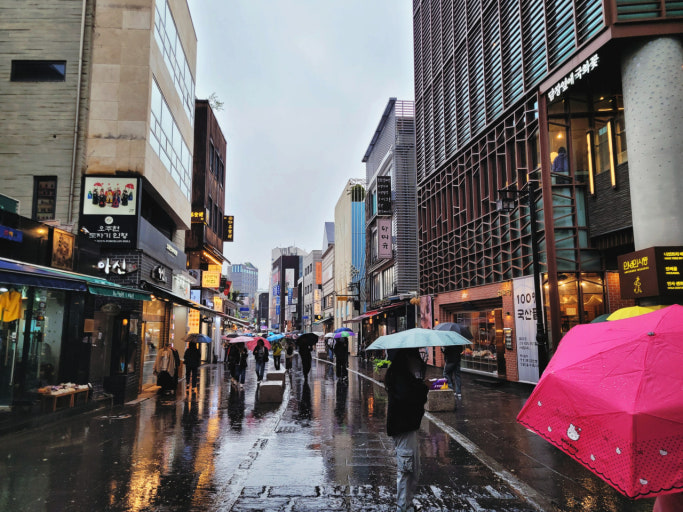
Before visiting any restaurant in Seoul, it is a good idea to check the latest opening hours and route on Naver Map. For navigation in Korea, Naver Map is usually more reliable than Google Maps. If you are new to Korea, check both links before visiting.
How to Use Naver Map in Korea: A Beginner-Friendly Guide for Foreign Travelers
Quick Guide to Non-Spicy Korean Foods in Seoul
Here are some of the easiest non-spicy Korean dishes to try in Seoul.
| Korean Food | What It Is | Spice Level | Best For | Ordering Tip |
|---|---|---|---|---|
| Seolleongtang | Milky beef bone soup with rice | Mild | Breakfast, solo dining, cold weather | Add salt and green onions yourself |
| Gomtang | Clear beef soup with rice | Mild | Simple Korean comfort food | Kimchi is served separately |
| Samgyetang | Whole chicken soup with ginseng | Mild | Traditional Korean meal | Great near palaces |
| Kalguksu | Knife-cut noodle soup | Usually mild | Lunch in Myeongdong or Insadong | Kimchi may be very spicy |
| Mandu | Korean dumplings | Usually mild | Quick meal or snack | Avoid kimchi mandu if you dislike spice |
| Dakhanmari | Whole chicken soup | Mild broth, spicy sauce optional | Group dining | Keep the dipping sauce separate |
| Bulgogi | Marinated grilled beef | Mild-sweet | Korean BBQ alternative | Confirm it is not spicy marinated |
| Bossam / Jokbal | Boiled pork or braised pig’s feet | Mild meat, spicy sides optional | Sharing meal | Avoid spicy noodles or spicy kimchi sides |
| Bindaetteok | Mung bean pancake | Mild to medium | Market food experience | Some versions include kimchi |
| Temple Cuisine | Seasonal Buddhist-style Korean food | Usually mild | Vegetarian-friendly meal | Reservation may be needed |
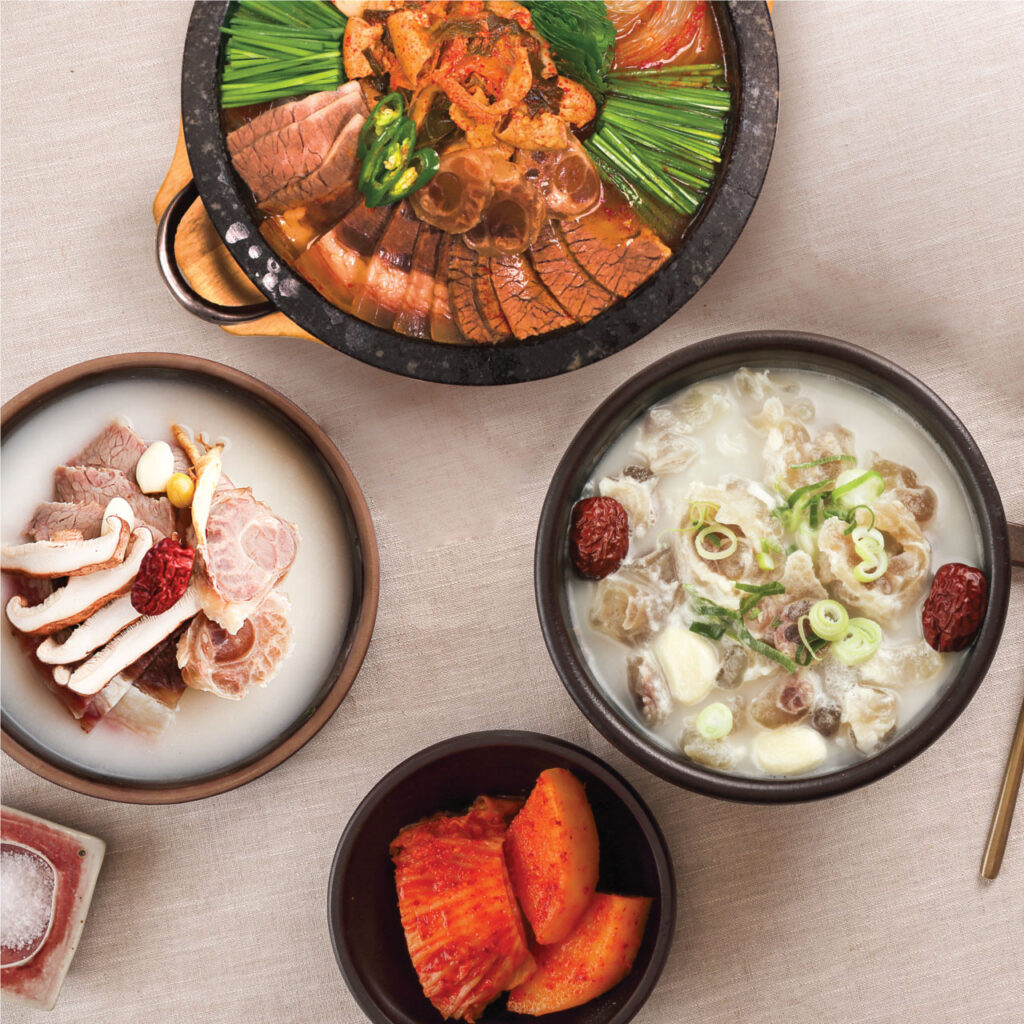
The key is not just choosing the right restaurant. You also need to know which sauces, side dishes, and menu variations can be spicy.
Best Non-Spicy Korean Restaurants in Seoul for First-Time Visitors
The restaurants below are good starting points for travelers who want mild Korean food in Seoul. Some are famous old-school restaurants, while others are practical choices near major tourist areas.
Always check the latest business hours, closing days, and waiting time before visiting.
1. Imun Seolnongtang — Jongno / Insadong
Best for: classic seolleongtang
Recommended order: seolleongtang
Nearby attractions: Insadong, Jogyesa Temple, Cheonggyecheon Stream, Ikseondong Hanok Village
Good for first-time visitors because: the main dish is mild, simple, traditional, and easy to understand.
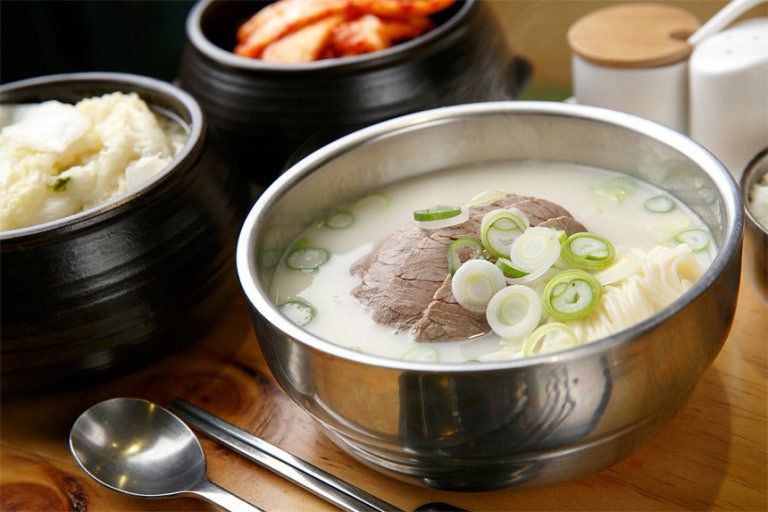
Imun Seolnongtang is one of Seoul’s classic restaurants for seolleongtang, a milky beef bone soup served with rice. The broth itself is mild, warm, and comforting rather than spicy.
This is a great choice if you want a traditional Korean meal without worrying about chili heat. The soup may taste lightly seasoned at first, but that is part of the experience. Many Korean diners add salt, pepper, chopped green onions, or kimchi according to their taste.
If you are sensitive to spice, you can simply skip the kimchi or taste a very small amount first.
What to order:
Start with seolleongtang. Add salt slowly, taste the broth, and eat it with rice.
Spice warning:
The soup itself is not spicy. However, kimchi and kkakdugi served on the side can be spicy.
Easy itinerary pairing:
Visit Jogyesa Temple or Insadong first, then walk to the restaurant for a calm Korean lunch.
2. Hadongkwan — Myeongdong
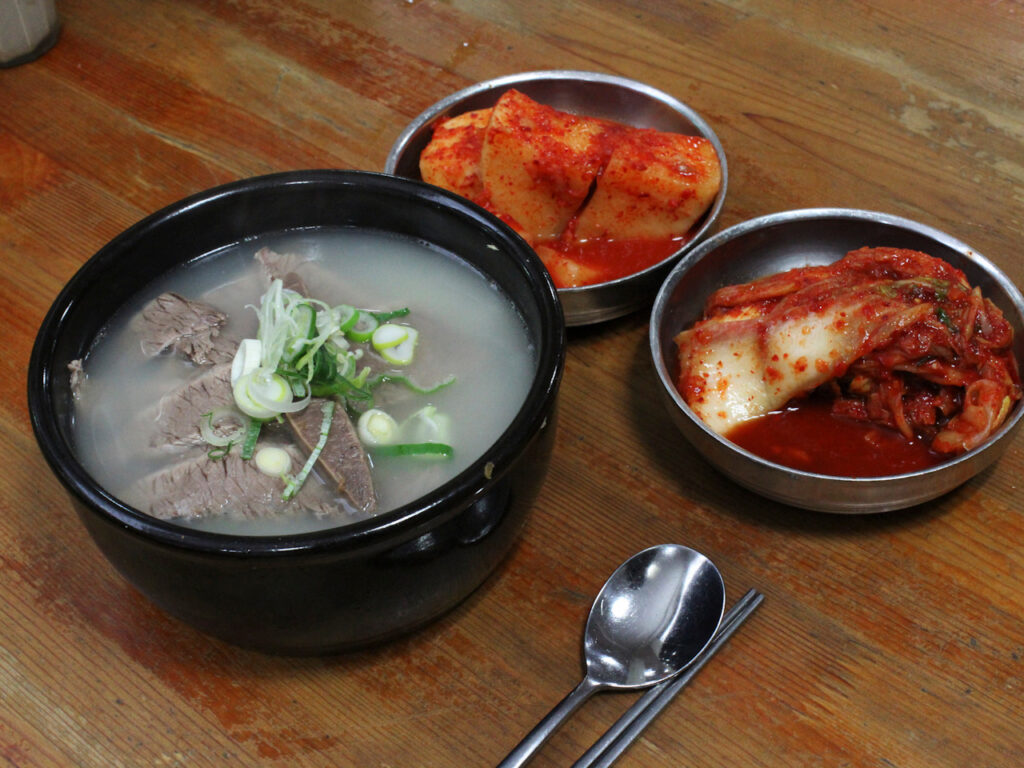
Best for: gomtang
Recommended order: gomtang
Nearby attractions: Myeongdong, Lotte Department Store, Namsan Seoul Tower, Namdaemun Market
Good for first-time visitors because: it is central, traditional, and easy to combine with shopping.
Hadongkwan is a well-known Seoul restaurant for gomtang, a clear beef soup served with rice and beef. Compared with spicy stews, gomtang is much easier for non-spicy eaters.
The broth is clean and savory, and the dish is simple enough for first-time visitors to understand without needing a complicated ordering process.
This is especially convenient if you are staying in or near Myeongdong. It can also be paired with Namdaemun Market, Namsan Seoul Tower, or a shopping day around central Seoul.
What to Eat at Namdaemun Market: Food Guide for First-Time Visitors
What to order:
Order gomtang. If you are not comfortable with offal or tripe, check the menu carefully before ordering or ask staff which version is best for beginners.
Spice warning:
The soup is mild, but the side kimchi or radish kimchi may be spicy.
Easy itinerary pairing:
Have gomtang for breakfast or lunch, then continue to Myeongdong shopping streets or Namdaemun Market.
3. Mapo Ok — Mapo / Gongdeok
Best for: seolleongtang
Recommended order: seolleongtang or beef soup
Nearby attractions: Gongdeok, Mapo, Yeouido, Hongdae by subway
Good for first-time visitors because: it is a classic comfort-food option outside the busiest tourist streets.
Mapo Ok is another good choice for travelers who want a mild Korean soup meal. It is known for seolleongtang-style beef soup, which makes it useful if you want a calm, filling meal before exploring western Seoul.
This area is less touristy than Myeongdong, so it may feel more local. However, the food itself is beginner-friendly because beef soup is one of the safest non-spicy Korean dishes.
What to order:
Choose the basic seolleongtang or beef soup option if available.
Spice warning:
The soup is mild. Side dishes may include spicy kimchi.
Easy itinerary pairing:
Pair this with a day around Gongdeok, Yeouido, or Hongdae. It can also work well before taking public transportation across the city.
T-Money Card Guide for First-Time Visitors to Korea
4. Tosokchon Samgyetang — Gyeongbokgung
Best for: samgyetang
Recommended order: samgyetang
Nearby attractions: Gyeongbokgung Palace, Seochon, Bukchon Hanok Village, Cheongwadae area
Good for first-time visitors because: it is one of the most famous non-spicy traditional Korean meals near a major tourist attraction.
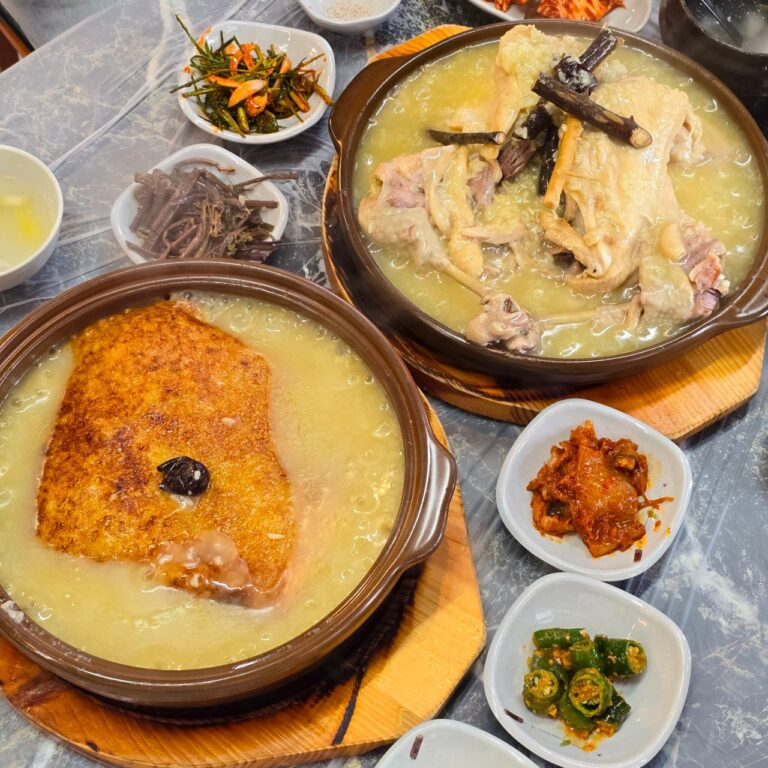
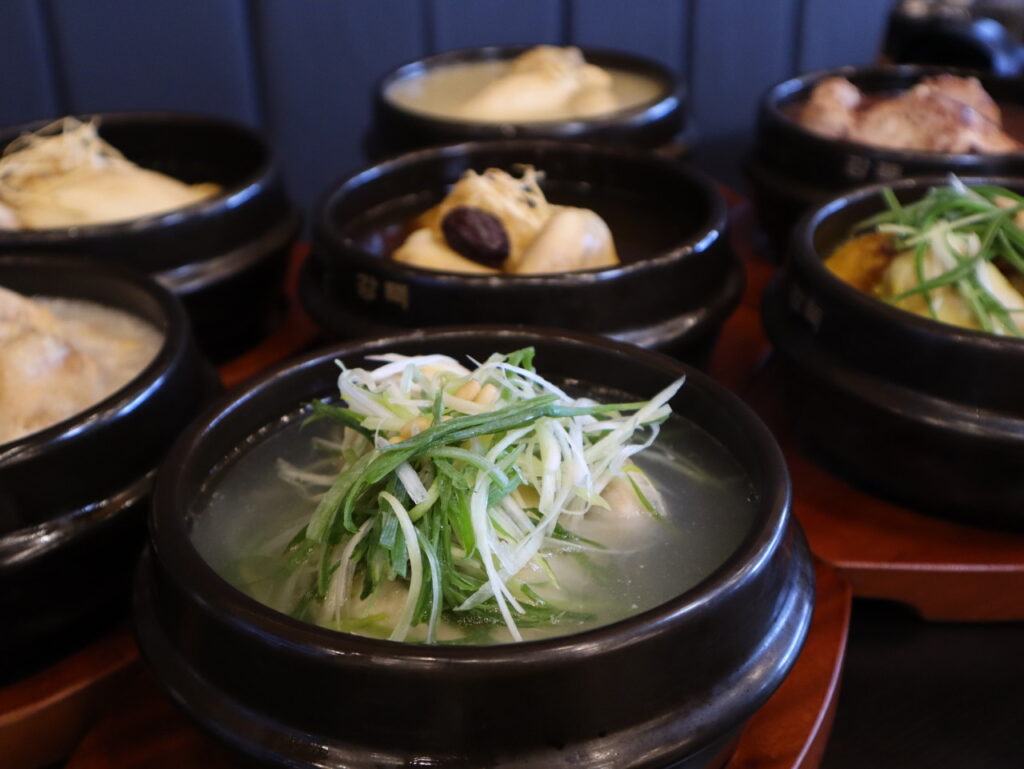
Samgyetang is Korean ginseng chicken soup. It is usually made with a whole young chicken stuffed with rice, garlic, jujube, and ginseng. Despite the strong-looking ingredients, the soup is not spicy.
Tosokchon Samgyetang is a popular choice near Gyeongbokgung Palace, making it easy to add to a first-time Seoul itinerary. It is especially comforting after walking around the palace or nearby hanok streets.
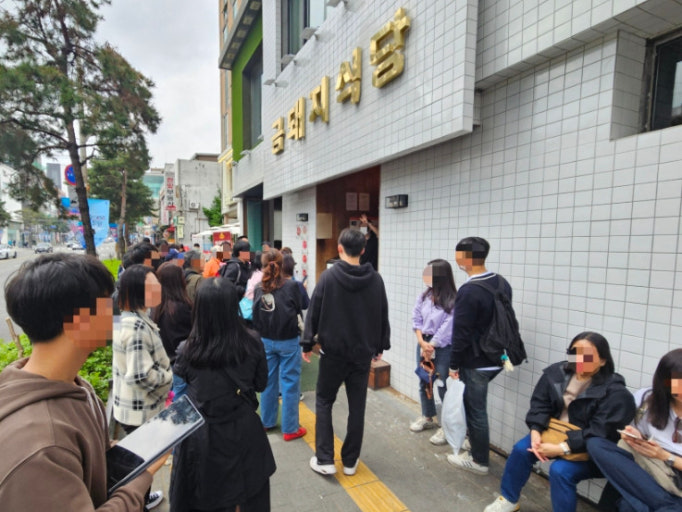
The restaurant can be busy, so avoid peak meal times if you dislike waiting.
What to order:
Order samgyetang. It is filling enough for one person.
Spice warning:
The soup is mild. Some side dishes may be spicy, and some restaurants may offer additional spicy condiments. Keep sauces separate.
Easy itinerary pairing:
Visit Gyeongbokgung Palace in the morning, then eat samgyetang nearby for lunch.
For more choices around the palace, including Korean BBQ, royal cuisine, and contemporary Korean dining, see our guide to the best Korean restaurants near Gyeongbokgung Palace.
5. Myeongdong Kyoja — Myeongdong
Best for: kalguksu and mandu
Recommended order: kalguksu, mandu
Nearby attractions: Myeongdong, Namsan Seoul Tower, Lotte Department Store, Namdaemun Market
Good for first-time visitors because: the menu is simple and the location is very convenient.
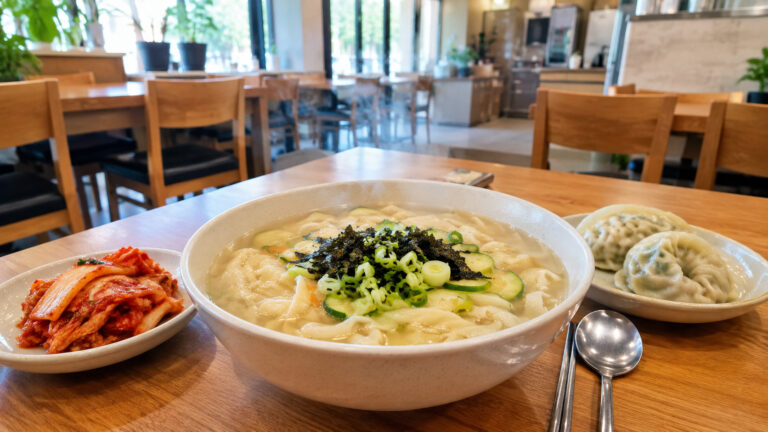
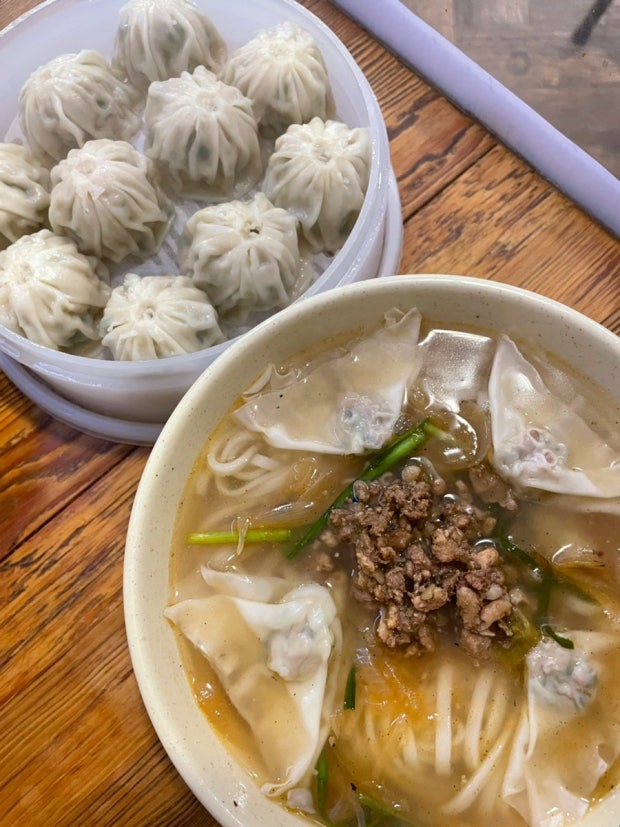
Myeongdong Kyoja is one of the easiest Korean noodle restaurants for first-time visitors. The restaurant is known for kalguksu, a warm noodle soup, and mandu, Korean dumplings.
The main noodle soup is not a fiery red dish, making it a practical choice for people who want Korean food but cannot handle spicy stews.
However, there is one important warning: the kimchi served here can be very garlicky and spicy. If you are sensitive to spice, try a tiny amount first or skip it entirely.
What to order:
Kalguksu and mandu are the classic choices. If you are traveling with another person, sharing both is a good idea.
Spice warning:
The noodle soup and dumplings are generally manageable, but the kimchi can be intense.
Easy itinerary pairing:
Eat here during a Myeongdong shopping day, then walk toward Namsan or Namdaemun.
If you prefer grilled meat for dinner, our guide to Korean BBQ near Myeongdong includes convenient restaurants and beginner-friendly ordering tips. Plain grilled meat is usually mild, but check spicy marinades, sauces, kimchi, and side dishes separately.
6. Jinokhwa Halmae Wonjo Dakhanmari — Dongdaemun
Best for: dakhanmari
Recommended order: dakhanmari with noodles added at the end
Nearby attractions: Dongdaemun Design Plaza, Dongdaemun Market, Gwangjang Market, Heunginjimun Gate
Good for first-time visitors because: the broth is mild and the meal is fun to share.
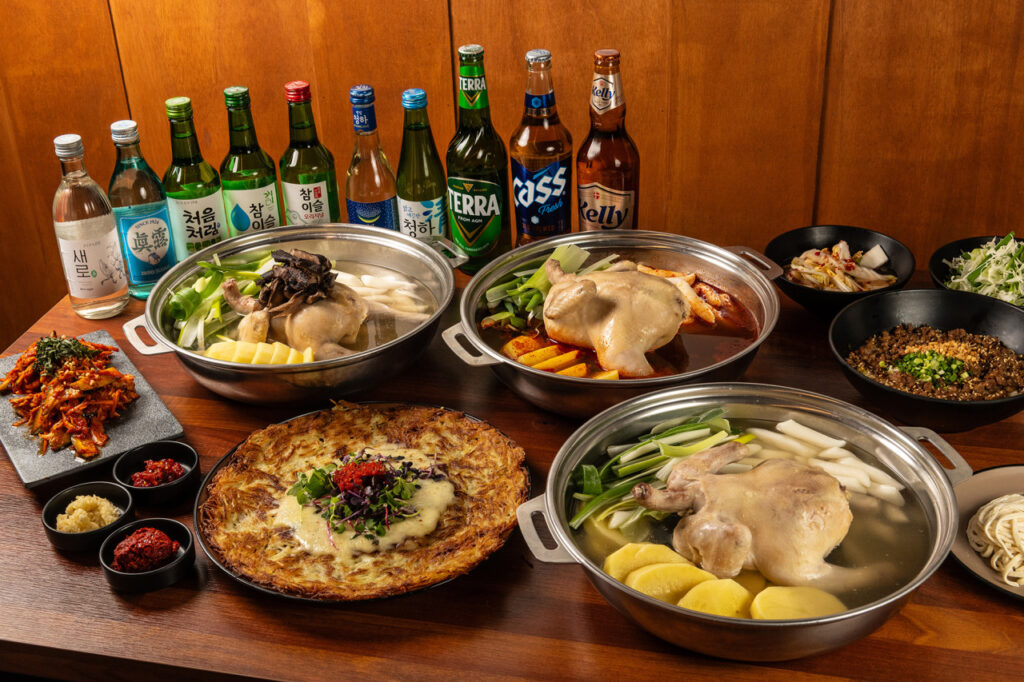
Dakhanmari means “one whole chicken.” At this style of restaurant, a whole chicken is boiled in a mild broth, often with potatoes, rice cakes, and later noodles.
The chicken soup itself is not spicy. The part you need to watch is the dipping sauce. Many locals mix soy sauce, vinegar, mustard, garlic, and spicy red sauce to make a stronger dip. If you cannot eat spicy food, keep the red sauce separate or do not add it.
This is a great meal for two or more people, especially after shopping or sightseeing around Dongdaemun.
What to order:
Order dakhanmari and add kalguksu noodles at the end if available.
Spice warning:
The broth is mild. The dipping sauce can become spicy depending on how you mix it.
Easy itinerary pairing:
Visit Dongdaemun Design Plaza, then eat dakhanmari for dinner. You can also combine this area with Gwangjang Market.
What to Eat at Gwangjang Market for First-Time Visitors
7. Woo Lae Oak — Euljiro
Best for: Pyongyang naengmyeon and bulgogi
Recommended order: bulgogi, Pyongyang naengmyeon
Nearby attractions: Euljiro, Cheonggyecheon Stream, Dongdaemun, Jongno
Good for first-time visitors because: it offers a refined version of mild Korean flavors.
Woo Lae Oak is a long-standing Seoul restaurant known for Pyongyang naengmyeon, a cold buckwheat noodle dish in a clean, mild broth, and bulgogi, a sweet-savory marinated beef dish.
This is a good option if you want something less spicy but still very Korean. Pyongyang naengmyeon can taste subtle if you are used to bold sauces, but that is exactly why it works well for travelers who dislike chili heat.
Bulgogi is also one of the safest Korean dishes for first-time visitors because it is usually sweet, savory, and not spicy.
What to order:
Order bulgogi if you want a familiar grilled beef experience. Try Pyongyang naengmyeon if you are curious about a lighter, more traditional noodle dish.
Spice warning:
Pyongyang naengmyeon is mild, but some cold noodle dishes in Korea can include spicy sauce. Make sure you are ordering the broth-based version, not spicy bibim naengmyeon.
Easy itinerary pairing:
Eat here while exploring Euljiro, Cheonggyecheon, or the Dongdaemun area.
8. Manjok Ohyang Jokbal — City Hall
Best for: jokbal
Recommended order: jokbal
Nearby attractions: Deoksugung Palace, Seoul Plaza, City Hall, Namdaemun Gate
Good for first-time visitors because: the main meat dish is not spicy and works well for sharing.
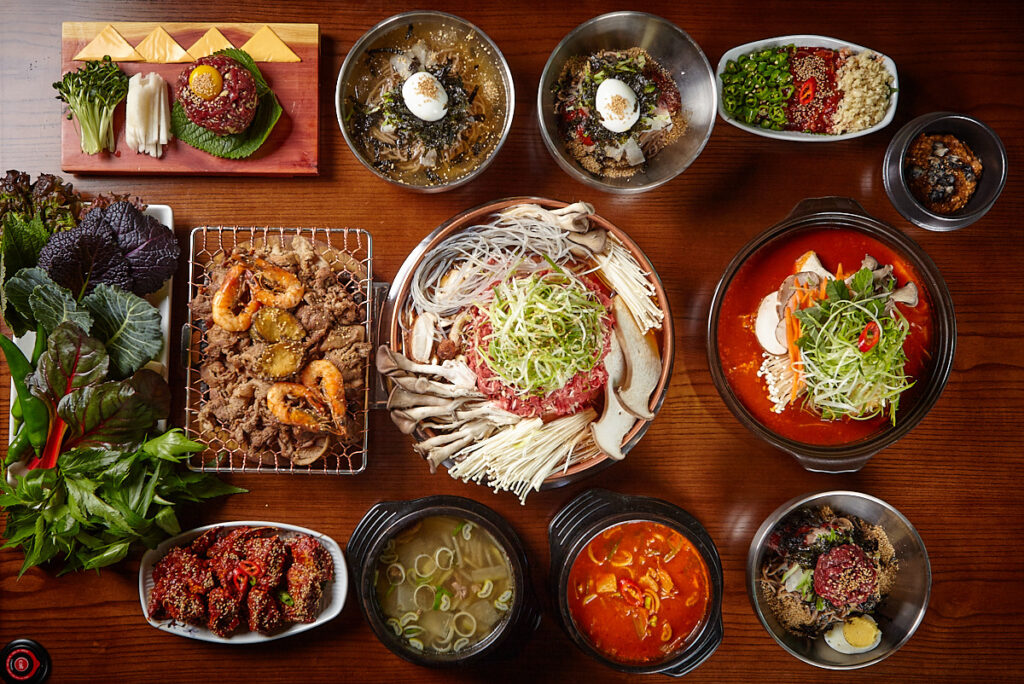
Jokbal is braised pig’s feet, usually sliced and served with side dishes and dipping sauces. The meat itself is not spicy. It is savory, slightly chewy, and often served as a sharing dish.
Manjok Ohyang Jokbal near City Hall is convenient for travelers visiting Deoksugung Palace or central Seoul. It is also a good option if you want a Korean meal that is not soup or noodles.
However, jokbal may feel unfamiliar to some first-time visitors because of the texture. If you prefer something safer, bossam, which is boiled pork slices, may be easier to enjoy.
What to order:
Order the basic jokbal. Avoid spicy versions or spicy noodle side dishes if you cannot eat chili.
Spice warning:
The meat is mild, but sauces, kimchi, and spicy noodles can be hot.
Easy itinerary pairing:
Visit Deoksugung Palace, then eat jokbal around City Hall for dinner.
9. Bukchon Son Mandu — Bukchon / Insadong
Best for: mandu
Recommended order: steamed mandu or fried mandu
Nearby attractions: Bukchon Hanok Village, Insadong, Changdeokgung Palace, Ikseondong
Good for first-time visitors because: dumplings are easy to understand and work well as a quick meal or snack.
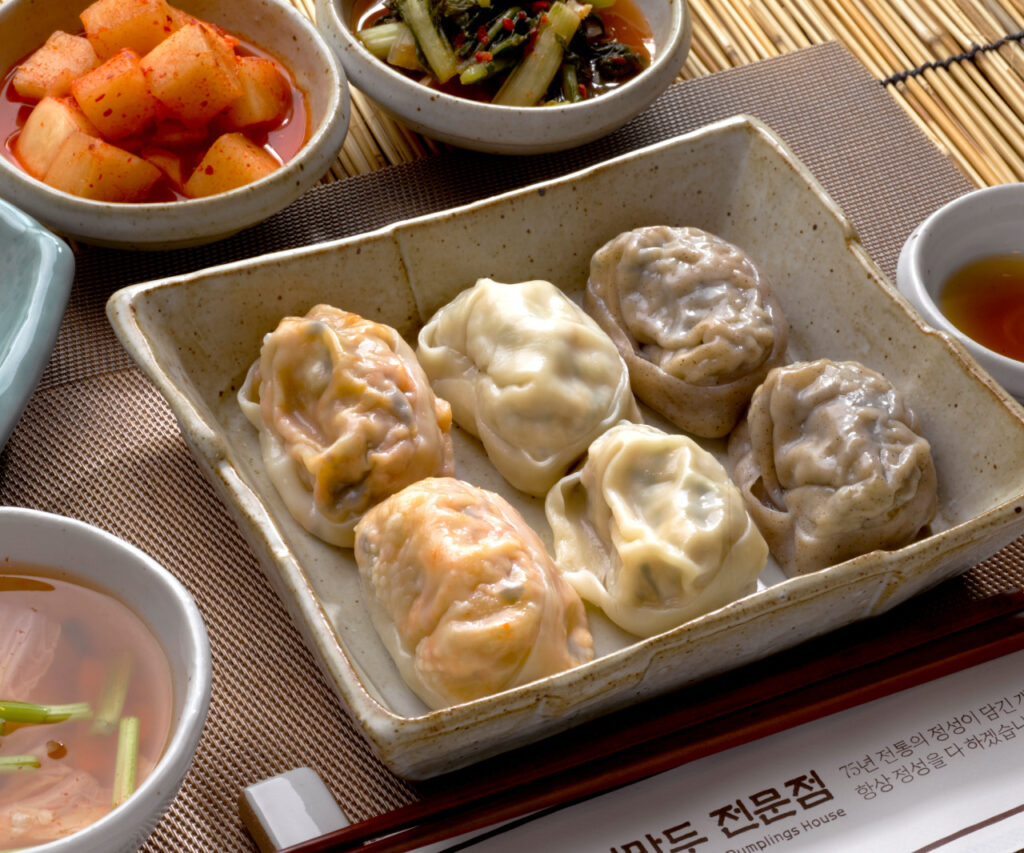
Mandu is one of the easiest Korean foods for travelers who are nervous about spice. At Bukchon Son Mandu, you can try Korean dumplings in a casual setting.
For non-spicy eaters, choose plain steamed or fried mandu. Avoid kimchi mandu if you are very sensitive to chili. Some cold noodle options may also be spicy, so check before ordering.
This is a practical stop when walking around Bukchon, Insadong, or Ikseondong.
Best Cafes in Ikseondong Hanok Village for First-Time Visitors
What to order:
Steamed mandu or fried mandu are the safest choices.
Spice warning:
Kimchi mandu can be spicy. Sauces may also have chili.
Easy itinerary pairing:
Explore Bukchon Hanok Village or Insadong, then stop for mandu before going to a cafe.
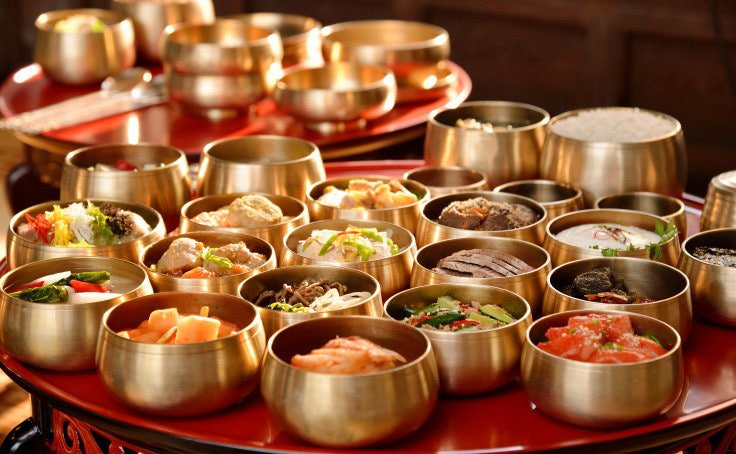
10. Balwoo Gongyang — Jogyesa / Insadong
Best for: Korean temple cuisine
Recommended order: seasonal temple cuisine course
Nearby attractions: Jogyesa Temple, Insadong, Gwanghwamun, Cheonggyecheon Stream
Good for first-time visitors because: it offers a calm, vegetarian-friendly Korean dining experience.
Balwoo Gongyang is a Korean temple cuisine restaurant near Jogyesa Temple. Temple cuisine is usually based on vegetables, grains, fermentation, and seasonal ingredients. It is generally much milder than spicy Korean stews or barbecue sauces.
This is not the cheapest or quickest option on the list, but it can be a memorable meal for travelers who want a peaceful Korean food experience without heavy spice.
Because it may operate more like a course-meal restaurant, check reservation rules, prices, and menu options before visiting.
What to order:
Choose a course that matches your budget and schedule.
Spice warning:
Most temple cuisine is mild, but some fermented sauces or seasonal dishes may still have strong flavors.
Easy itinerary pairing:
Visit Jogyesa Temple and Insadong, then enjoy a calm temple cuisine meal nearby.
Bonus Option: Soonheenae Bindaetteok — Gwangjang Market
Best for: bindaetteok
Recommended order: mung bean pancake
Nearby attractions: Gwangjang Market, Jongno 5-ga, Dongdaemun, Cheonggyecheon Stream
Good for first-time visitors because: it is a classic market food that is crispy, savory, and usually not too spicy.
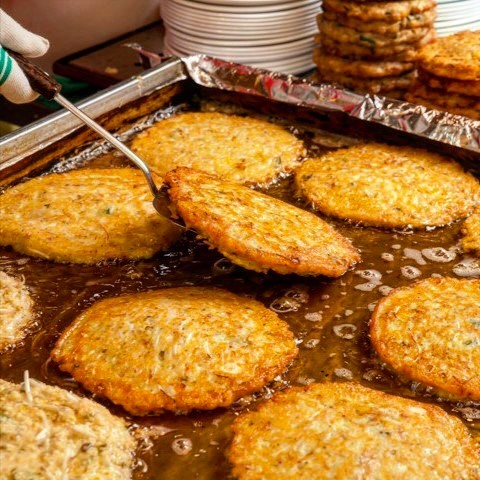
Bindaetteok is a Korean mung bean pancake. It is fried until crispy outside and soft inside, making it one of the most approachable foods at Gwangjang Market.
Some versions may include kimchi, so it may not be completely spice-free. Still, compared with tteokbokki or spicy stews, bindaetteok is usually a much safer choice for people who want mild Korean market food.
What to Eat at Gwangjang Market for First-Time Visitors
What to order:
Order bindaetteok and taste the dipping sauce first.
Spice warning:
Some pancakes may include kimchi, and the dipping sauce may be salty or sharp.
Easy itinerary pairing:
Visit Gwangjang Market for snacks, then walk toward Cheonggyecheon or Dongdaemun.
What to Order If You Cannot Eat Spicy Food
If you are not sure what to order in a Korean restaurant, start with these beginner-friendly choices:
- Seolleongtang
- Gomtang
- Samgyetang
- Kalguksu
- Mandu
- Dakhanmari
- Bulgogi
- Bossam
- Jokbal
- Pyongyang naengmyeon
- Bindaetteok
- Temple cuisine
A good rule is to look for dishes that are white, clear, grilled, steamed, or boiled rather than bright red.
However, color is not always enough. Some mild-looking sauces can still contain chili, and some side dishes may be much spicier than the main dish.
Useful Korean Phrases for Non-Spicy Food
These simple Korean phrases can help a lot when ordering food in Seoul.
| English Meaning | Korean | Pronunciation |
| Please make it not spicy. | 안 맵게 해주세요. | An maepge haejuseyo. |
| Is this spicy? | 이거 매워요? | Igeo maewoyo? |
| Do you have any non-spicy dishes? | 맵지 않은 메뉴 있어요? | Maepji aneun menu isseoyo? |
| I cannot eat spicy food. | 매운 음식 못 먹어요. | Maeun eumsik mot meogeoyo. |
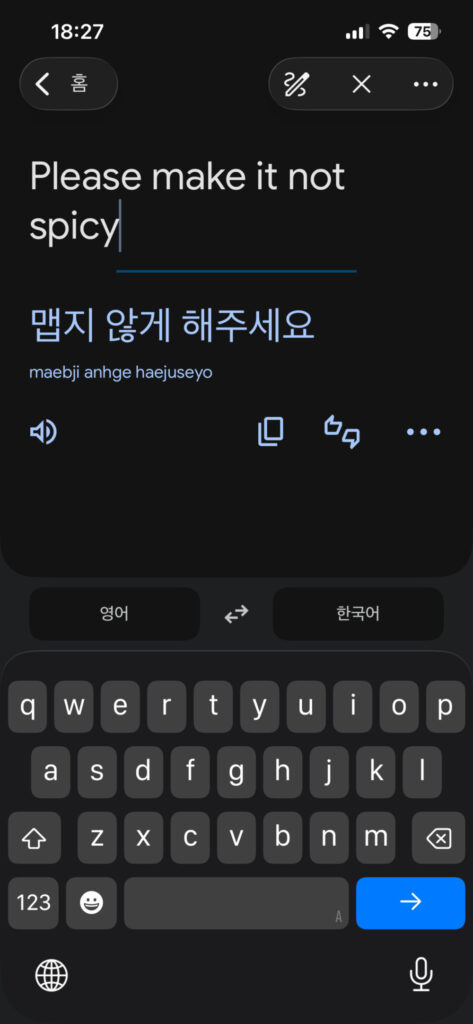
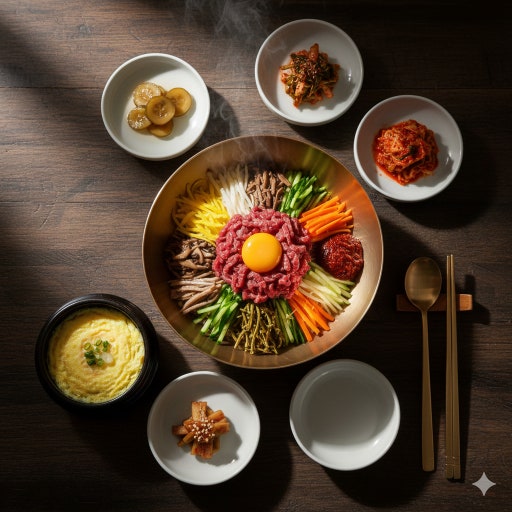
A practical tip: if you are ordering bibimbap, cold noodles, or any dish with sauce, ask for the sauce on the side. This gives you control over the spice level.
Foods That Look Mild But Can Be Spicy
Some Korean dishes may look safe at first but can surprise you.
Bibimbap
Bibimbap is not always spicy by itself, but it usually comes with gochujang, Korean red chili paste. Ask for the gochujang separately.
Naengmyeon
Pyongyang naengmyeon is usually mild, but bibim naengmyeon is spicy. Make sure you are ordering the broth-based version.
Kalguksu
The noodle soup is usually mild, but the kimchi served with kalguksu can be very spicy.
Bossam and Jokbal
The meat is usually mild, but spicy kimchi, dipping sauce, or spicy noodles may come with the meal.
Dakhanmari
The chicken broth is mild, but the dipping sauce can become spicy if you add red chili sauce.
Korean BBQ
Grilled meat itself is usually not spicy, but spicy marinades, ssamjang, kimchi, and stews served on the side may contain chili.
Best Korean BBQ Restaurants in Seoul for First-Time Visitors
Common Mistakes First-Time Visitors Make
Mistake 1: Assuming all Korean food is spicy
Korea has many spicy dishes, but it also has many mild soups, noodles, dumplings, pancakes, grilled meats, and vegetable-based meals.
Mistake 2: Forgetting that side dishes can be spicy
Even if your main dish is mild, kimchi, kkakdugi, seasoned vegetables, or dipping sauces may be spicy.
Mistake 3: Mixing all the sauce into the dish immediately
For dishes like bibimbap or cold noodles, taste the sauce first. Add a small amount, mix, and adjust slowly.
Mistake 4: Ordering the spicy version by accident
Words like “bibim,” “maeun,” “yangnyeom,” and “dakgalbi” often signal stronger seasoning or spice.
Mistake 5: Choosing only restaurants with English menus
English menus are helpful, but they do not always explain spice level clearly. Checking photos on Naver Map can be more useful.
How to Use Naver Map in Korea: A Beginner-Friendly Guide for Foreign Travelers
Mistake 6: Visiting famous restaurants at peak lunch time
Popular restaurants in Seoul can have long lines. If you want a calmer experience, visit before or after the main lunch rush.
Easy Itinerary Pairings by Seoul Neighborhood
Myeongdong
Good non-spicy options: Hadongkwan, Myeongdong Kyoja
Pair with: Myeongdong shopping, Namsan Seoul Tower, Namdaemun Market
Best Korean BBQ Near Myeongdong Station for First-Time Visitors
Jongno / Insadong
Good non-spicy options: Imun Seolnongtang, Bukchon Son Mandu, Balwoo Gongyang
Pair with: Insadong, Jogyesa Temple, Ikseondong, Changdeokgung Palace
Gyeongbokgung / Seochon
Good non-spicy option: Tosokchon Samgyetang
Pair with: Gyeongbokgung Palace, Bukchon Hanok Village, Seochon cafes
Dongdaemun
Good non-spicy option: Jinokhwa Halmae Wonjo Dakhanmari
Pair with: Dongdaemun Design Plaza, Dongdaemun Market, Gwangjang Market
City Hall
Good non-spicy option: Manjok Ohyang Jokbal
Pair with: Deoksugung Palace, Seoul Plaza, Namdaemun Gate
Euljiro
Good non-spicy option: Woo Lae Oak
Pair with: Cheonggyecheon Stream, Euljiro alleys, Dongdaemun
Mapo / Gongdeok
Good non-spicy option: Mapo Ok
Pair with: Gongdeok, Yeouido, Hongdae by subway
If you are traveling alone, many soup and noodle restaurants are easier than large sharing-style restaurants.
Solo Dining in Seoul: Best Restaurants for First-Time Visitors
Final Tips for Eating Non-Spicy Korean Food in Seoul
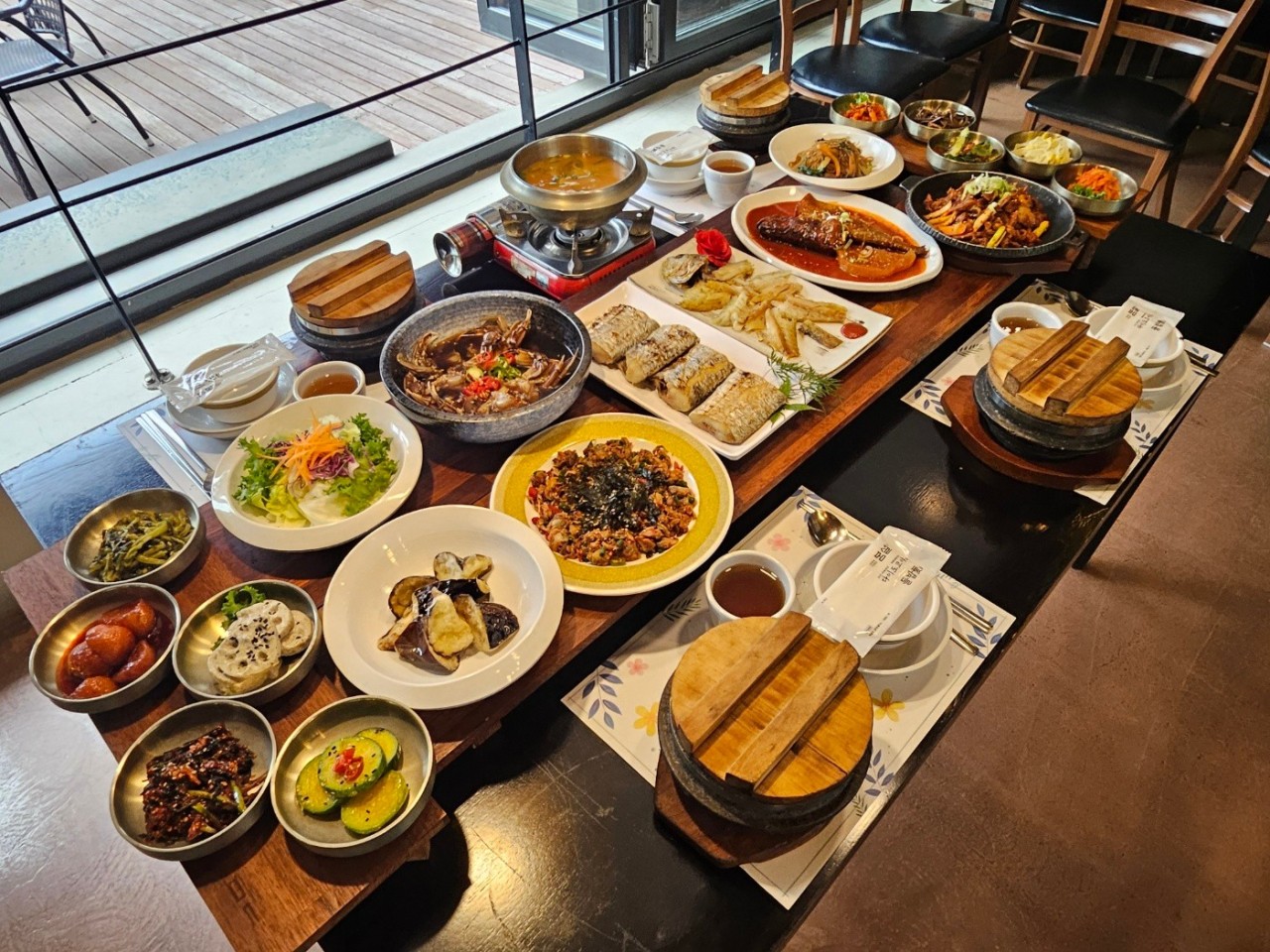
Eating non-spicy Korean food in Seoul is much easier than many first-time visitors expect. The safest choices are usually beef soups, chicken soups, dumplings, noodles, grilled meats, and simple boiled pork dishes.
The main thing to remember is that the main dish may be mild, but the side dishes or sauces may be spicy. Ask for sauces separately, taste small amounts first, and use simple Korean phrases when needed.
With a little preparation, you can enjoy Korean food in Seoul without feeling overwhelmed by chili heat.
FAQ
Is Korean food always spicy?
No. Korea has many spicy dishes, but it also has many mild foods such as seolleongtang, gomtang, samgyetang, kalguksu, mandu, dakhanmari, bulgogi, and temple cuisine.
What is the best non-spicy Korean food for first-time visitors?
Seolleongtang, gomtang, samgyetang, kalguksu, and mandu are some of the easiest non-spicy Korean foods for first-time visitors.
Is Korean BBQ spicy?
The grilled meat itself is usually not spicy. However, sauces, spicy marinades, kimchi, and stews served with Korean BBQ can be spicy.
Can I eat bibimbap if I cannot eat spicy food?
Yes, but ask for the gochujang separately. Bibimbap becomes spicy when the red chili paste is mixed in.
What Korean phrase should I use for non-spicy food?
You can say “An maepge haejuseyo,” which means “Please make it not spicy.” You can also say “Gochujang ttaro juseyo,” meaning “Please give me the gochujang separately.”
Are Korean side dishes spicy?
Some are, especially kimchi and kkakdugi. Others may be mild. Taste a small amount first if you are unsure.
How This Guide Was Checked
This guide was researched by H. Jung, the Korea-based editor of Seoul Plate, with particular attention to travelers who prefer milder Korean food. Dish ingredients, typical spice levels, restaurant specialties, and practical ordering options were reviewed using current menu information and Korean restaurant listings. “Non-spicy” does not mean allergy-safe, and recipes or sauces may vary, so travelers with dietary restrictions should confirm ingredients directly with the restaurant.