What to Eat at Gwangjang Market for First-Time Visitors
If you are visiting Seoul for the first time and searching for what to eat at Gwangjang Market, you are probably looking for more than a simple list of famous foods. Gwangjang Market can be exciting, crowded, noisy, and slightly overwhelming all at once. The food looks amazing, vendors move quickly, seats are often shared, and many dishes may be unfamiliar if this is your first Korean market food experience.
The good news is that Gwangjang Market is one of the easiest places in Seoul to try several classic Korean dishes in one visit. You can sit at a small counter, watch the food being made in front of you, and taste dishes that feel very different from restaurant meals in tourist districts.
This guide is written for first-time visitors who want to know the best food at Gwangjang Market, what each dish tastes like, how spicy it is, how to order, what to avoid, and how to plan a simple food route without wasting time or money.
What Is Gwangjang Market?
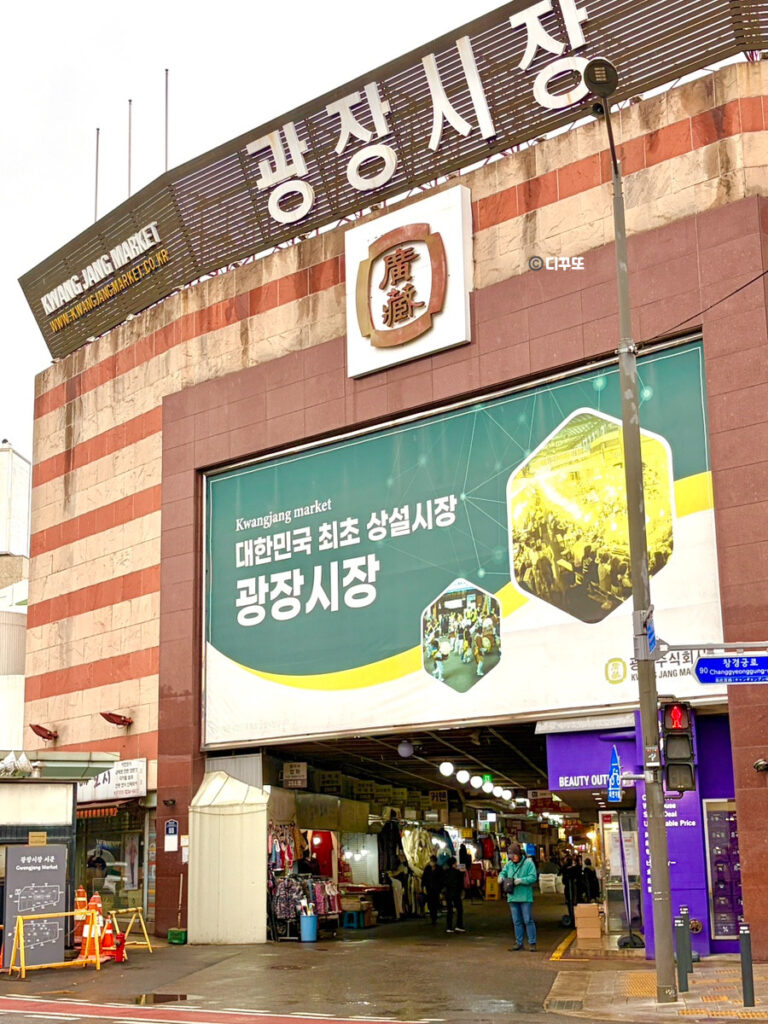
Gwangjang Market is one of Seoul’s most famous traditional markets and a popular stop for travelers who want to experience Korean market food in a lively local setting. The market is located in Jongno, a central area of Seoul that is easy to connect with palaces, Cheonggyecheon Stream, Dongdaemun, and Ikseon-dong.
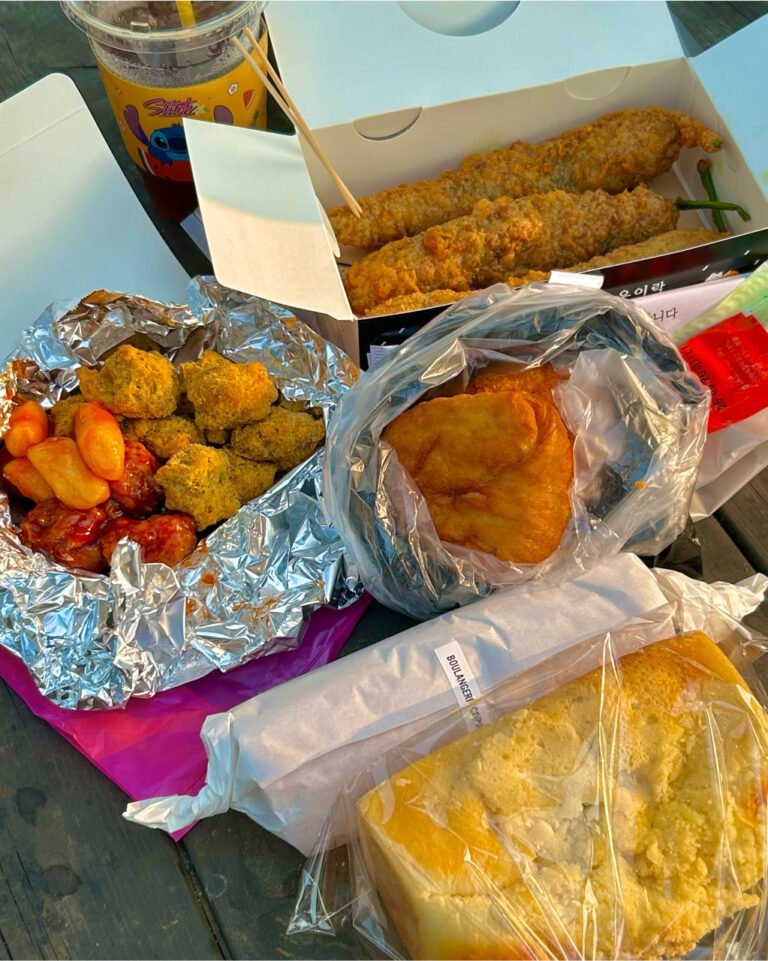
While the market sells many things, including textiles, hanbok, bedding, groceries, dried foods, and traditional goods, most first-time visitors come for the food alley. This is where you will find sizzling pancakes, knife-cut noodles, mini gimbap, spicy rice cakes, dumplings, raw beef, and sweet snacks all packed into a busy market atmosphere.
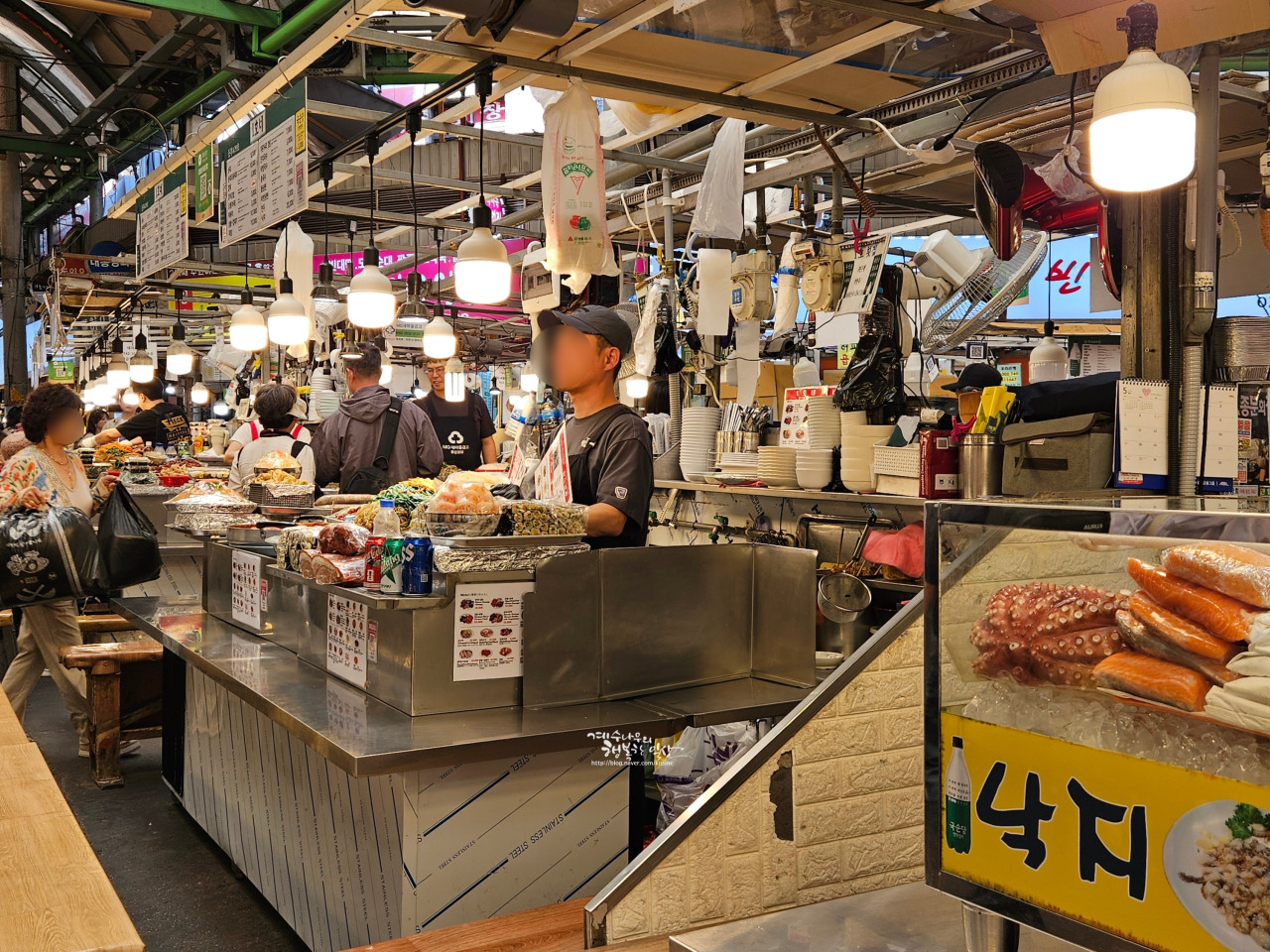
Gwangjang Market is not a polished food court. That is part of the appeal. Expect narrow walkways, quick service, shared seating, steam, oil, loud conversations, and vendors calling out to passersby. If you want a quiet meal, this may not be the best place. But if you want a memorable Seoul food market experience, it is one of the best places to start.
Table of Contents
Why First-Time Visitors Should Go to Gwangjang Market
Gwangjang Market is especially good for first-time visitors because it gives you a quick introduction to several types of Korean market food in one place.
You do not need to plan a complicated restaurant itinerary. You can walk through the food alley, choose dishes by sight, and eat small portions from different stalls. This makes the market useful for travelers who have limited time in Seoul but still want to try classic foods like bindaetteok, mayak gimbap, kalguksu, mandu, and tteokbokki.
It is also a good place to learn what Korean street food actually feels like outside the more tourist-focused atmosphere of Myeongdong. Gwangjang Market is still popular with tourists, but many of the dishes are rooted in older market food culture: filling, practical, warm, and made for quick meals.
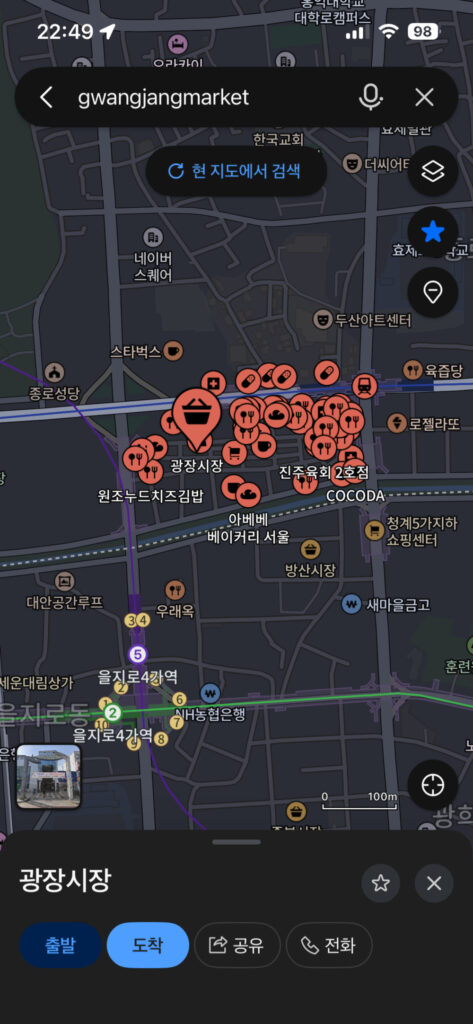
How to Use Naver Map in Korea.
Quick Answer: What to Eat at Gwangjang Market
For a first visit, the best foods to try at Gwangjang Market are:
| Food | Best For | Spice Level | Good for Solo Travelers? |
|---|---|---|---|
| Bindaetteok | Crispy, savory Korean pancake | Mild | Yes |
| Mayak gimbap | Light snack or starter | Mild | Yes |
| Yukhoe | Adventurous raw beef dish | Mild | Better shared |
| Kalguksu | Warm noodle meal | Mild | Yes |
| Mandu | Dumplings with noodles or alone | Mild to medium | Yes |
| Tteokbokki | Classic spicy street food | Medium to spicy | Yes |
| Hotteok or sweet snack | Dessert after a market meal | Mild | Yes |
If you only have time for three foods, start with bindaetteok, mayak gimbap, and kalguksu. These are approachable, filling, and easy to enjoy even if you are not used to spicy Korean food.
If you want something more unique, add yukhoe, Korean-style seasoned raw beef. It is one of the most famous foods around Gwangjang Market, but it is not for everyone, especially if you are uncomfortable with raw meat.
Best Food at Gwangjang Market for First-Time Visitors
1. Bindaetteok: Crispy Mung Bean Pancake
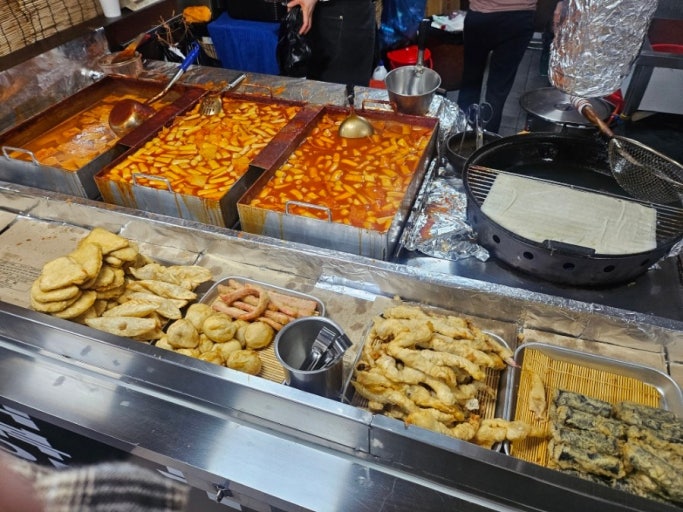
Bindaetteok is one of the most iconic foods at Gwangjang Market. It is a savory mung bean pancake, usually pan-fried in oil until the outside becomes crisp and golden while the inside stays soft and hearty.
The flavor is nutty, savory, and comforting. It is not usually spicy, which makes it a safe choice for first-time visitors or anyone who wants something filling without too much heat. Many vendors serve it with a soy-vinegar dipping sauce and sometimes onions or pickled vegetables on the side.
Bindaetteok is a great first stop because it feels immediately satisfying. You can watch the pancakes frying on large griddles, and the smell alone makes it hard to walk past.
Taste: Crispy outside, soft inside, savory and slightly nutty
Spice level: Mild
Good for solo travelers: Yes, but one pancake can be filling
Good for sharing: Very good
Approximate price: 5,000 krw
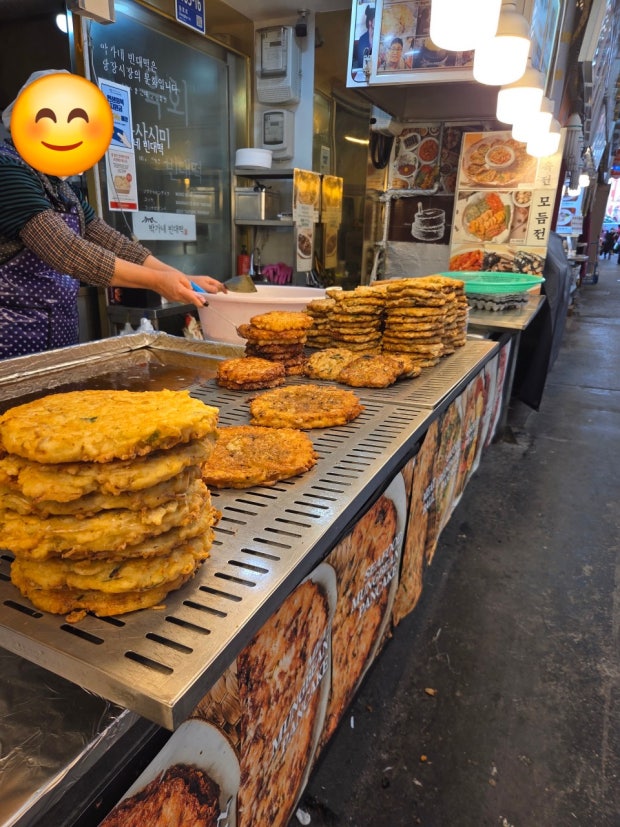
First-time tip: Eat it while it is hot. Bindaetteok tastes best when the edges are still crisp.
2. Mayak Gimbap: Small Seaweed Rice Rolls
Mayak gimbap is another must-try Gwangjang Market food. These are small seaweed rice rolls, usually filled with simple ingredients such as pickled radish, carrot, and seasoned rice. They are often served with a mustard-style dipping sauce.
Despite the name, mayak gimbap does not contain anything illegal. The word “mayak” is often used casually in Korean food culture to mean something is very addictive or hard to stop eating. For travelers, it is one of the easiest market foods to try because the flavor is mild, familiar, and not messy.
The rolls are small, so they work well as a starter before heavier dishes like bindaetteok or kalguksu.
Taste: Mild, sesame-forward, slightly tangy with dipping sauce
Spice level: Mild
Good for solo travelers: Yes
Good for sharing: Yes
Approximate price: 5,000 krw
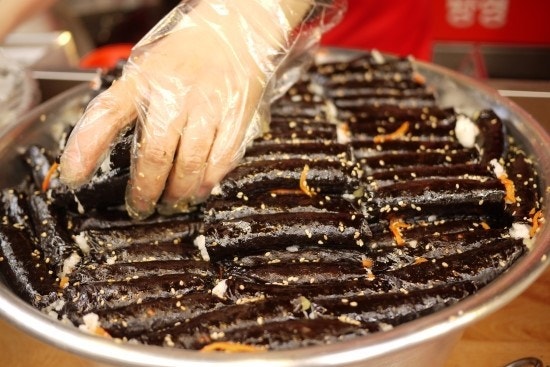
First-time tip: Do not skip the dipping sauce. The rolls themselves are simple, but the sauce gives them a sharper flavor.
If you want to compare Gwangjang Market’s mini gimbap with other styles around the city, see our guide to the best gimbap in Seoul.
3. Yukhoe: Korean-Style Raw Beef
Yukhoe is Korean-style seasoned raw beef, often served with sesame oil, garlic, pear, egg yolk, and sometimes pine nuts. Around Gwangjang Market, yukhoe restaurants are especially popular, and some visitors come to the area mainly to try this dish.
The texture is tender and cool, while the flavor is rich, nutty, and slightly sweet from the pear. It is not spicy, but it can feel adventurous if you are not used to eating raw beef.
Yukhoe is usually better as a sit-down dish rather than a quick snack. It is also better for travelers who are comfortable with raw meat and can judge their own dietary restrictions. If you are pregnant, immunocompromised, elderly, or simply cautious about raw foods, it is better to skip this dish and choose cooked options instead.
Taste: Tender, rich, nutty, lightly sweet
Spice level: Mild
Good for solo travelers: Possible, but the portion may be better shared
Good for sharing: Very good
Approximate price: 20,000 krw
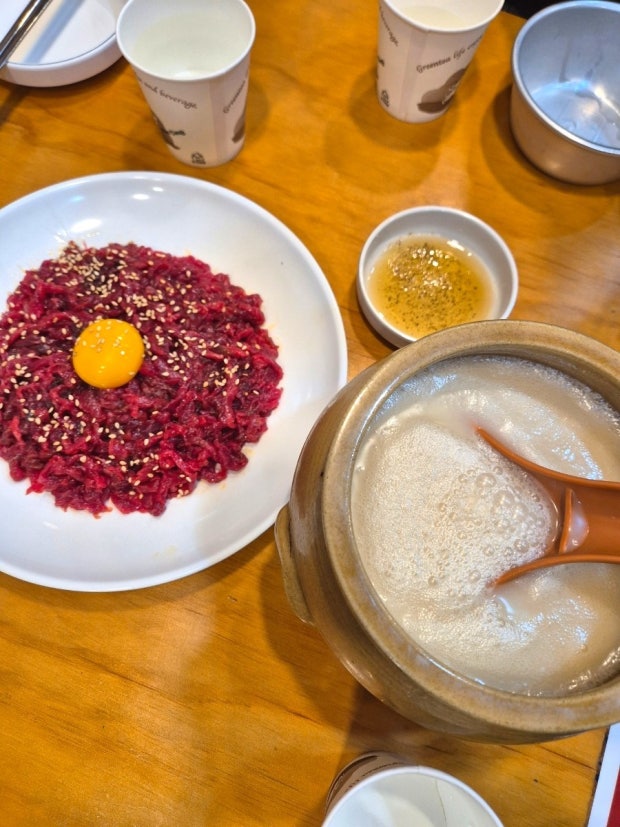
First-time tip: If you are unsure, try yukhoe at a dedicated restaurant rather than choosing it randomly. Check the menu, hygiene, and current reviews before ordering.
4. Kalguksu: Knife-Cut Noodle Soup
Kalguksu is a warm Korean noodle soup made with hand-cut wheat noodles. At Gwangjang Market, it is often served quickly at small counters, sometimes with dumplings or kimchi on the side.
This is one of the best choices if you want a real meal instead of only snacks. The broth is usually mild and comforting, and the noodles have a soft, chewy texture. It is also a good option in winter or on a rainy day.
For first-time visitors, kalguksu is a safe and satisfying choice because it is not usually spicy unless you add spicy seasoning or eat it with strong kimchi.
Taste: Warm, savory, comforting, noodle-focused
Spice level: Mild, but kimchi may be spicy
Good for solo travelers: Yes
Good for sharing: Less ideal, better as an individual bowl
Approximate price: 7,000 krw
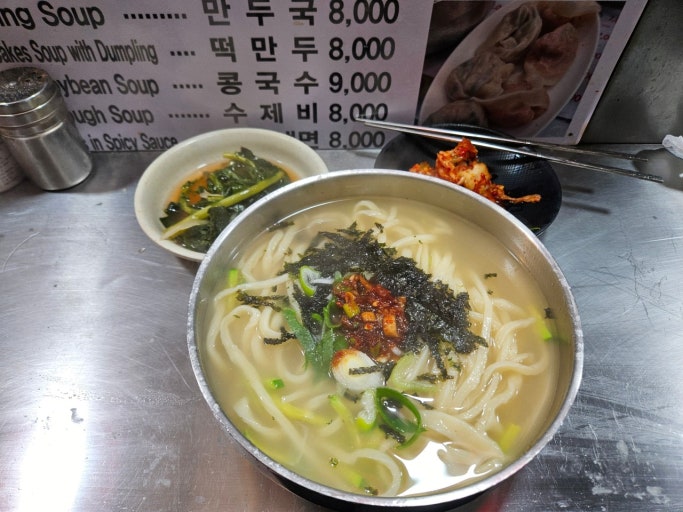
First-time tip: If you want a full meal, choose kalguksu before snacking on smaller foods. It helps you avoid buying too many fried foods at once.
5. Mandu: Korean Dumplings
Mandu are Korean dumplings, and they are easy to find in and around Gwangjang Market. They may be steamed, boiled in soup, or served with noodles. Fillings vary, but common versions include pork, vegetables, tofu, glass noodles, kimchi, or a mixture of these.
Mandu are good for visitors who want something familiar but still Korean. If you are traveling with children or older parents, dumplings are usually one of the safest choices because they are warm, soft, and easy to share.
Some mandu contain kimchi or spicy seasoning, so ask or check the menu if you cannot eat spicy food.
Taste: Savory, soft, meaty or vegetable-rich
Spice level: Mild to medium, depending on filling
Good for solo travelers: Yes
Good for sharing: Yes
Approximate price: 7,000 krw
First-time tip: If you order kalguksu, check whether the stall also offers mandu. A noodle-and-dumpling combination makes a simple, filling market meal.
6. Tteokbokki: Spicy Rice Cakes
Tteokbokki is one of Korea’s most famous street foods. It is made with chewy rice cakes cooked in a red sauce that is usually sweet, spicy, and savory.
At Gwangjang Market, tteokbokki is a good choice if you want the classic Korean street food experience. However, it may be spicier than it looks, especially if you are sensitive to chili. The texture is chewy, and the sauce can be addictive, but it is not the best first dish if you cannot handle spice.
Taste: Sweet, spicy, chewy, saucy
Spice level: Medium to spicy
Good for solo travelers: Yes
Good for sharing: Yes
Approximate price: 10,000 krw
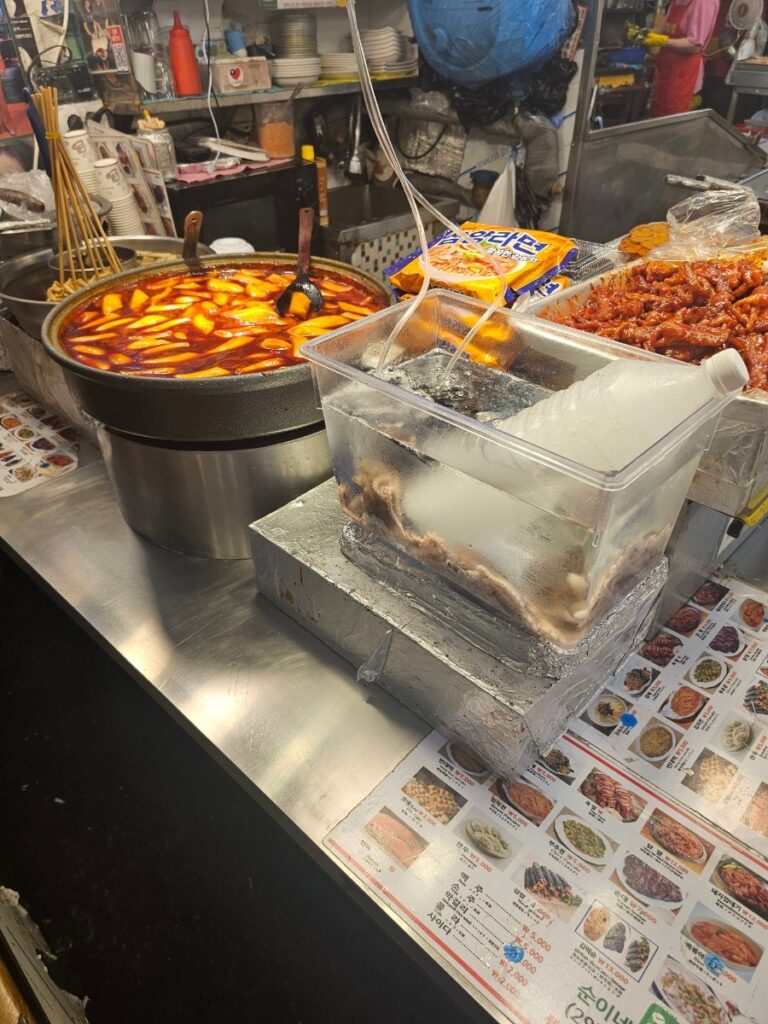
First-time tip: If you are worried about spice, share a small portion first instead of ordering a full plate for yourself.
7. Hotteok or Dessert Snack
After savory foods, look for a sweet snack such as hotteok, a Korean sweet pancake often filled with brown sugar, cinnamon, seeds, or nuts. Availability can vary by stall and season, but sweet market snacks are a nice way to finish your visit.
Hotteok is usually served hot, so be careful with the filling. The outside can be crisp or chewy depending on the stall, while the inside is sweet and syrupy.
Taste: Sweet, warm, cinnamon-like, sometimes nutty
Spice level: Mild
Good for solo travelers: Yes
Good for sharing: Possible, but best eaten fresh
Approximate price: 3,000 krw
First-time tip: Eat slowly. The syrup inside can be very hot.
Recommended Food Route for Your First Visit
If you are first time visiting Gwangjang Market, do not try to eat everything randomly. The market is busy, and it is easy to get full too quickly. Use a simple route instead.
Route A: Classic First-Time Route
- Start with mayak gimbap as a light opening snack.
- Try bindaetteok while it is hot and crispy.
- Sit down for kalguksu or mandu if you want a proper meal.
- Add tteokbokki only if you can handle spice.
- Finish with hotteok or another sweet snack.
This route works well for lunch or early dinner. It gives you a balance of rice, fried food, noodles, and dessert without making the meal too heavy.
Route B: Adventurous Food Route
- Start with bindaetteok.
- Try yukhoe at a dedicated yukhoe restaurant.
- Add mayak gimbap or mandu as a smaller second dish.
- Finish with a sweet snack.
This route is better for travelers who are interested in traditional Korean flavors and are comfortable with raw beef.
Route C: Non-Spicy Comfort Route
- Mayak gimbap
- Bindaetteok
- Kalguksu
- Mandu
- Hotteok or sweet snack
This is the safest route for travelers who cannot eat spicy food.
T-Money Card Guide for First-Time Visitors to Korea
Best Time to Visit Gwangjang Market: Lunch, Dinner, or Snack?
Lunch
Lunch is one of the best times to visit Gwangjang Market if you want the full food experience. Many food stalls are active, the atmosphere is lively, and you can build a full meal around noodles, pancakes, dumplings, and gimbap.
The downside is that lunch can be crowded. If you dislike waiting or sharing seats, try arriving before the main lunch rush.
Afternoon Snack
Afternoon can be a good option for first-time visitors who want a slightly less intense experience. You may not need a full meal, and it is easier to focus on two or three foods like mayak gimbap, bindaetteok, and hotteok.
This is also a good time if you plan to visit nearby places before dinner.
Dinner
Dinner can be fun if you enjoy busy food markets. The atmosphere feels more energetic, and fried foods or noodles can be satisfying after sightseeing.
However, individual stall hours may vary, and some places may close earlier than expected depending on the day, ingredients, or vendor schedule. Check the latest hours before visiting, especially if you plan to arrive late.
Times to Avoid
Avoid peak lunch hours, weekend afternoons, and major Korean holiday periods if you strongly dislike crowds. Gwangjang Market is popular with both locals and international visitors, so narrow walkways can feel very packed during busy times.
How Much Should You Budget?
Gwangjang Market can be affordable compared with many sit-down restaurants, but your total budget depends on how many dishes you try and whether you order shared plates like yukhoe.
For a light snack visit, plan for two or three small dishes. For a proper meal, combine one main dish such as kalguksu with one snack such as bindaetteok or mayak gimbap. If you add yukhoe, your total cost will be higher.
Suggested budget format after checking prices:
- Light snack route: 10,000 krw
- Filling solo meal: 15,000 krw
- Shared food crawl for two people: 25,000 krw
- Yukhoe meal: 30,000 krw
Cash, Cards, Seating, and Ordering Tips
Should You Bring Cash?
Bring some Korean won in cash even if you plan to use a card. Card acceptance may vary by vendor, machine condition, minimum order, and current payment setup. Some stalls may accept cards smoothly, while smaller vendors may prefer cash for quick transactions.
How Seating Works
Many food stalls have counter seats or shared benches. Do not expect private tables. During busy times, you may sit close to strangers, and staff may guide you to any available seat.
This is normal in traditional markets. If you are traveling with a group, you may need to split seats or wait longer.
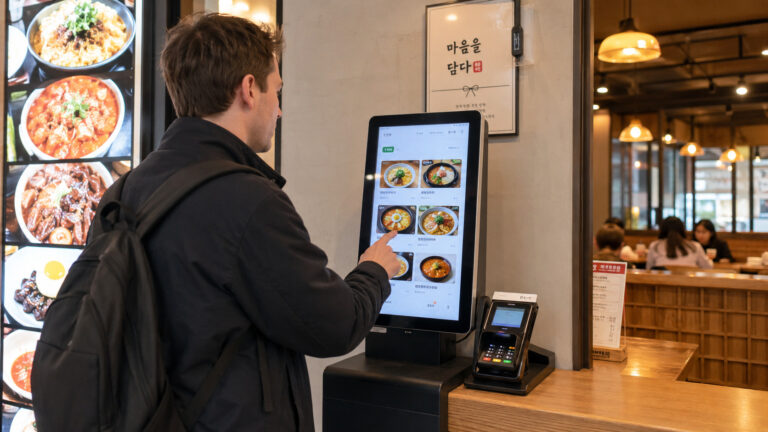
How to Order
At many stalls, you can point to the food, use simple English, or show a translation app. A few useful phrases are:
- “One, please.”
- “Not spicy, please.”
- “How much?”
- “Can I pay by card?”
- “Takeaway, please.”
If there is a posted menu with prices, check it before sitting down. If you are unsure about the price, ask before ordering.
Hygiene Expectations
Gwangjang Market is a traditional market, not a luxury dining space. Food is often cooked in front of you, and turnover can be fast. Still, the environment may feel crowded and busy. Choose stalls where food is moving quickly, surfaces look reasonably clean, and ingredients are not sitting out too long.
For raw foods like yukhoe, be more selective and choose a dedicated restaurant with strong current reviews.
Best Choices for Non-Spicy Eaters
If you cannot eat spicy food, Gwangjang Market is still worth visiting. Choose mild dishes first and avoid red sauces until you know your spice tolerance.
Best non-spicy choices include:
- Bindaetteok
- Mayak gimbap
- Kalguksu
- Plain mandu
- Hotteok or sweet snacks
- Some yukhoe dishes, if you are comfortable with raw beef
Be careful with:
- Tteokbokki
- Kimchi mandu
- Spicy sauces served on the side
- Red-looking stews or mixed dishes
A good non-spicy order would be mayak gimbap, bindaetteok, and kalguksu. This gives you a full Korean market food experience without relying on chili-heavy dishes.
Tips for Solo Travelers
Gwangjang Market is one of the better food markets in Seoul for solo travelers because many dishes can be ordered in small portions. Counter seating also makes eating alone feel normal.
The main challenge is portion control. Some foods are more filling than they look, especially bindaetteok and kalguksu. If you are alone, choose one main dish and one small snack instead of ordering everything at once.
A good solo route is:
- Mayak gimbap
- Bindaetteok or kalguksu
- Hotteok or another small dessert
If you want to try yukhoe alone, check the portion size first. It may be better to save it for a meal with another person.
Tips for Families and Older Parents
If you are visiting Gwangjang Market with family or older parents, focus on comfort and seating. The market can be noisy and crowded, so it is better to visit earlier in the day and avoid peak weekend hours.
Good menu choices for families include:
- Kalguksu
- Mandu
- Bindaetteok
- Mayak gimbap
- Mild soups or noodle dishes
Be more careful with:
- Very spicy tteokbokki
- Crowded standing-only stalls
- Raw beef dishes if anyone has health concerns
- Oily fried foods if someone prefers lighter meals
For older parents, kalguksu and mandu are usually easier than walking around while snacking. Find a seated stall first, eat slowly, and then explore the market afterward.
Places to Visit Before or After Gwangjang Market
Gwangjang Market is in a convenient part of central Seoul, so it works well with a half-day Jongno itinerary.
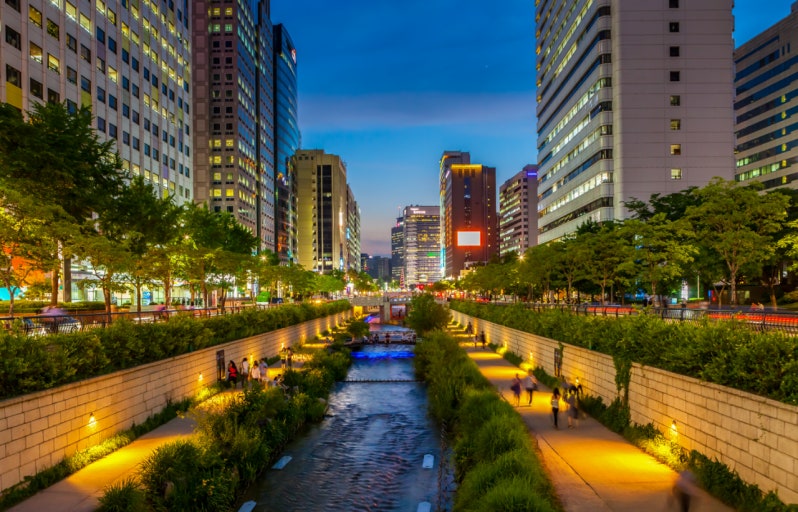
Cheonggyecheon Stream
Cheonggyecheon Stream is a good place to walk after eating. It gives you a calmer break from the crowded market and is easy to combine with central Seoul sightseeing.
Jongmyo Shrine
Jongmyo Shrine is close enough to pair with Gwangjang Market if you want a cultural stop before or after lunch. It is a quieter, more historical contrast to the energy of the market.
Ikseon-dong
Ikseon-dong is known for narrow alleys, cafes, restaurants, and renovated hanok-style spaces. It can be a good next stop if you want coffee or dessert after the market.
Dongdaemun
If you are interested in shopping or night views, Dongdaemun is another easy connection from the Gwangjang Market area.
Gwangjang Market vs Myeongdong Street Food
Both Gwangjang Market and Myeongdong are popular for food, but they feel very different.
Gwangjang Market is better if you want traditional Korean market food such as bindaetteok, kalguksu, mayak gimbap, mandu, and yukhoe. It feels more like a classic Seoul food market, with shared seating, older vendors, and a busy local-market atmosphere.
Myeongdong street food is better if you want easy snacking while shopping. The food is often more visual, trendy, and tourist-friendly. You may find skewers, lobster tails, cheese-heavy snacks, fruit, desserts, and quick bites that are easy to eat while walking.
Choose Gwangjang Market if your goal is traditional Korean food. Choose Myeongdong if your goal is shopping plus casual snacks. If you have time, visit both, but do not expect the same experience.
Common Mistakes First-Time Visitors Make
Mistake 1: Trying to Eat Everything
Gwangjang Market has too many tempting foods. If you order too much too quickly, you will get full before reaching the dishes you actually wanted to try. Start small.
Mistake 2: Arriving Too Late Without Checking Hours
Food alley hours can be longer than general market hours, but individual stalls may vary. Check the latest information before going late in the evening.
Mistake 3: Assuming Every Stall Accepts Cards
Card acceptance may vary. Bring some cash as a backup.
Mistake 4: Sitting Down Before Checking the Menu
Before you sit, glance at the menu and prices. This helps avoid confusion when the market is crowded.
Mistake 5: Ordering Spicy Food Without Asking
Some red Korean street foods can be spicier than expected. If you are sensitive to spice, start with mild dishes.
Mistake 6: Choosing Raw Beef Without Considering Food Safety
Yukhoe can be delicious, but raw beef is not for everyone. Consider your own health, comfort level, and dietary restrictions before ordering.
FAQ
What is the most famous food at Gwangjang Market?
Bindaetteok, mayak gimbap, kalguksu, and yukhoe are among the most famous foods at Gwangjang Market. For first-time visitors, bindaetteok and mayak gimbap are the easiest starting points.
Is Gwangjang Market good for first-time visitors to Seoul?
Yes. Gwangjang Market is a good place for first-time visitors because you can try several classic Korean market foods in one area. However, it can be crowded, so visit with flexible expectations.
What should I eat first at Gwangjang Market?
Start with mayak gimbap or bindaetteok. They are easy to order, not too spicy, and give you a quick introduction to Korean market food.
Is Gwangjang Market food spicy?
Some dishes are spicy, especially tteokbokki and kimchi-based foods. But many popular dishes, such as bindaetteok, mayak gimbap, kalguksu, mandu, and hotteok, are usually mild.
Can I use a credit card at Gwangjang Market?
Some vendors may accept cards, but payment options can vary by stall. Bring cash as a backup and check before ordering.
Is Gwangjang Market better for lunch or dinner?
Lunch and early dinner are usually the easiest times for first-time visitors. Lunch gives you the widest meal options, while dinner has a lively atmosphere. If visiting late, check current stall hours before going.
Is Gwangjang Market better than Myeongdong for street food?
Gwangjang Market is better for traditional Korean market food. Myeongdong is better for tourist-friendly snacks while shopping. The best choice depends on whether you want a market meal or casual street snacks.
How This Guide Was Checked
This guide was researched and reviewed by H. Jung, the Korea-based editor of Seoul Plate. Food specialties, market layout, visitor tips, and practical information were cross-checked using current Seoul tourism information, Korean map listings, and recent information about Gwangjang Market. Individual stall hours, prices, payment options, and menu availability can change from day to day.
Final Thoughts
If you are wondering what to eat at Gwangjang Market, start with the classics: bindaetteok, mayak gimbap, kalguksu, mandu, and a sweet snack. Add tteokbokki if you like spicy food, and consider yukhoe if you are comfortable with raw beef.
The best way to enjoy Gwangjang Market is not to rush. Walk through the food alley once before ordering, look for dishes being made fresh, check prices, and choose two or three foods that match your appetite. For first-time visitors, this market is less about finding one perfect restaurant and more about experiencing Seoul’s traditional food culture one small plate at a time.