Best Samgyetang in Seoul: 7 Ginseng Chicken Soup Restaurants for First-Time Visitors
Samgyetang may look simple at first: one small chicken, a steaming broth, and a few traditional ingredients. However, the experience can be surprisingly different from one restaurant to another.
Some restaurants serve a light and clean chicken broth with a noticeable ginseng aroma. Others make thick, creamy soups with perilla seeds, pine nuts, mung beans, medicinal mushrooms, or additional grains. The atmosphere also varies, from traditional hanok dining rooms near Gyeongbokgung Palace to local restaurants in residential neighborhoods.
For first-time visitors, choosing where to eat samgyetang often depends on more than finding the most famous restaurant. Location, waiting time, broth style, herbal flavor, and nearby attractions can all affect the experience.
This guide introduces seven of the best samgyetang restaurants in Seoul, including well-known tourist favorites and distinctive local alternatives. You will also learn what to order, how to eat a whole chicken comfortably, what mistakes to avoid, and how to include each restaurant in a practical Seoul itinerary.
must-try Korean foods in Seoul
Table of Contents
What Is Samgyetang?
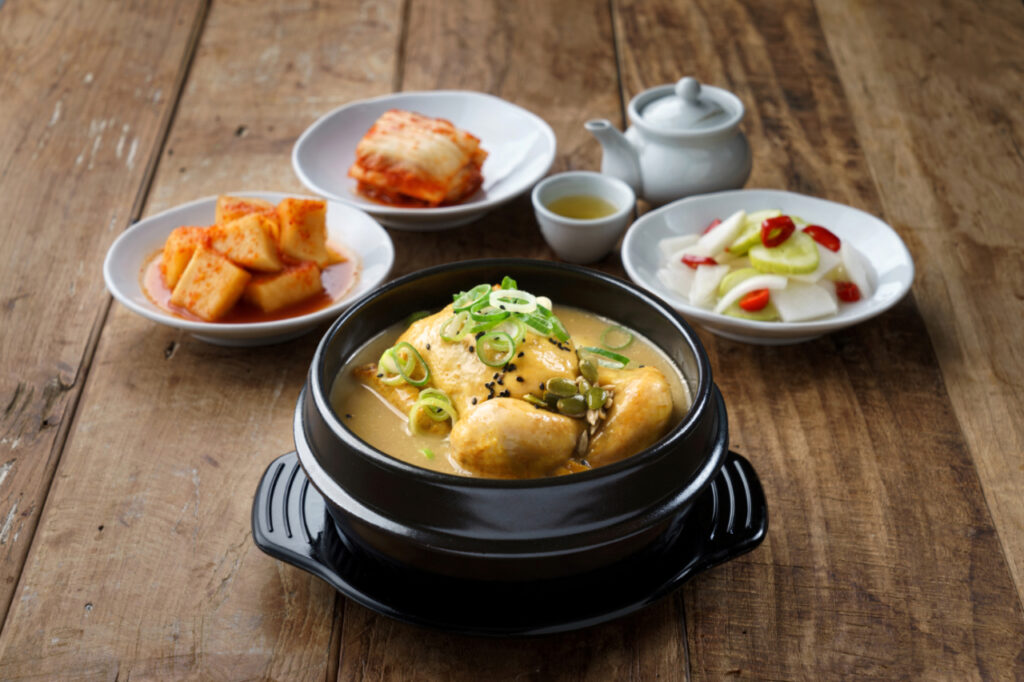
Samgyetang (삼계탕) is a traditional Korean chicken soup made with a small whole chicken. The chicken is usually stuffed with glutinous rice and simmered with ingredients such as Korean ginseng, garlic, and jujube.
The name can be understood through three Korean words:
- Sam (삼) refers to ginseng.
- Gye (계) refers to chicken.
- Tang (탕) means soup.
A bowl normally arrives very hot in a stone or earthenware pot. The chicken is tender enough to pull apart with chopsticks, while the rice inside absorbs the flavor of the broth.
Despite its reputation as a summer food, samgyetang is served throughout the year. It can be especially comforting during Seoul’s cold winter months or after a long day of walking.
Is Samgyetang Spicy?
Samgyetang itself is generally not spicy.
The broth is usually mild, savory, and lightly herbal. You can adjust the seasoning yourself with salt or a salt-and-pepper mixture provided at the table.
However, the kimchi and kkakdugi served as side dishes may be spicy. You do not need to add them to the soup.
Why Do Koreans Eat Samgyetang in Summer?
Many visitors are surprised to see Koreans eating boiling-hot chicken soup during the hottest weeks of the year.
The tradition is associated with the Korean idea of iyeol chiyeol (이열치열), which is often translated as “fighting heat with heat.” Samgyetang is particularly popular during sambok, the three traditionally hottest periods of summer: chobok, jungbok, and malbok.
Restaurants specializing in samgyetang can become extremely busy on these days. Long lines are common, even at restaurants that are normally easy to enter.
For travelers, the cultural experience can be interesting, but visiting on a major boknal date is not always the most convenient choice. An ordinary weekday outside peak lunch hours will usually provide a more relaxed first experience.
Quick Comparison: Best Samgyetang Restaurants in Seoul
| Restaurant | Area | Best For | Broth Style | Nearby Itinerary |
|---|---|---|---|---|
| Tosokchon Samgyetang | Gyeongbokgung and Seochon | The famous first-time experience | Rich, traditional, and substantial | Gyeongbokgung Palace and Seochon |
| Goryeo Samgyetang | City Hall | A classic central Seoul meal | Clean and balanced | Deoksugung Palace and Seoul Plaza |
| Baekje Samgyetang | Myeongdong | Convenient sightseeing and shopping | Classic with a stronger ginseng character | Myeongdong and Namsan |
| Gangwonjeong | Yongsan and Namyeong | A quieter local atmosphere | Clear, deep, and ingredient-rich | War Memorial of Korea and Yongsan |
| Wonjo Hosu Samgyetang | Yeongdeungpo | Thick perilla-seed broth | Creamy, nutty, and very thick | Southwestern Seoul itinerary |
| 3rd Samgyetang | Seocho and Gyodae | Distinctive modern variations | Pine nut, mung bean, or mugwort styles | Gangnam and Seoul Arts Center |
| Gobong Samgyetang | Yeouido | Rich herbal broth | Golden and full-bodied | National Assembly and Yeouido |
Estimated meal budget: Standard samgyetang generally falls around the upper ₩10,000s to mid-₩20,000s at many specialist restaurants, but premium versions with abalone, black chicken, wild ginseng, or additional ingredients may cost more. Menu prices can change, so check the latest menu before visiting.
How to Choose the Right Samgyetang Restaurant
There is no single restaurant that is best for every traveler.
Choose Tosokchon if you want the famous traditional experience near Gyeongbokgung Palace.
Choose Goryeo Samgyetang if you are staying around City Hall, Seoul Station, or central Jung-gu and want a classic bowl without traveling far.
Choose Baekje Samgyetang if convenience is the priority and Myeongdong is already part of your itinerary.
Choose Gangwonjeong if you prefer a quieter, more local atmosphere and do not mind leaving the busiest tourist streets.
Choose Wonjo Hosu Samgyetang if you want a thick, creamy perilla-seed broth rather than a standard clear chicken soup.
Choose 3rd Samgyetang if you are interested in pine nut, mung bean, or mugwort variations and are exploring southern Seoul.
Choose Gobong Samgyetang if you want a richer herbal-style soup during a Yeouido itinerary.
The restaurants below are not ranked from best to worst. The better choice is the restaurant that matches your preferred broth and travel route.
7 Best Samgyetang Restaurants in Seoul
1. Tosokchon Samgyetang: Best for a Classic First Visit
Korean name: 토속촌삼계탕
Area: Gyeongbokgung and Seochon
Nearest major station: Gyeongbokgung Station, Line 3
Best for: First-time visitors who want one of Seoul’s most famous samgyetang experiences
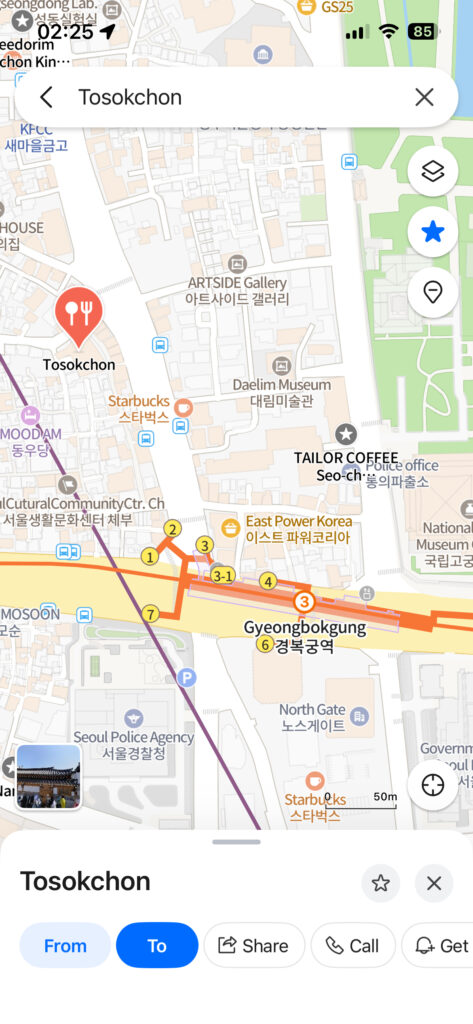
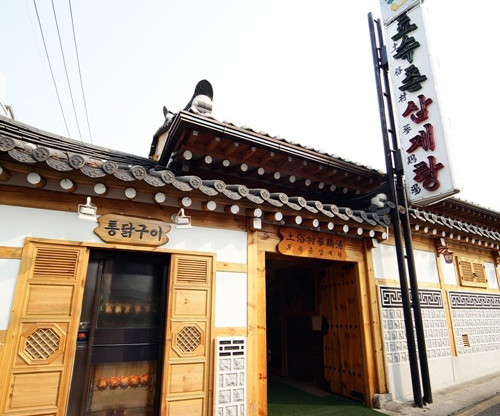
Tosokchon is probably the best-known samgyetang restaurant among international visitors. Its location near Gyeongbokgung Palace makes it easy to include in a traditional Seoul sightseeing day.
The restaurant occupies a group of renovated hanok buildings, creating a more memorable setting than a typical modern restaurant. The dining areas are large, but queues may still form during lunch, weekends, summer, and major holiday periods.
The soup is generally richer and more substantial than very light, clear-broth versions. The bowl contains a whole small chicken with rice and traditional ingredients inside.
What Should First-Time Visitors Order?
Start with the regular samgyetang.
Premium versions may include additional ginseng ingredients or black chicken, but the standard bowl is the most useful choice for understanding the classic dish.
Large side dishes such as seafood pajeon can be enjoyable for groups, but one bowl of samgyetang is already a filling meal.
Pair It With
A practical half-day itinerary is:
Gyeongbokgung Palace → Tosokchon Samgyetang → Seochon walk → cafe near Gyeongbokgung
If you want to compare Tosokchon with other types of Korean food in the same area, see our guide to the best Korean restaurants near Gyeongbokgung Palace.
Before You Go
- Expect possible queues during peak periods.
- Visiting slightly before noon or between standard meal periods may be easier.
- Search 토속촌삼계탕 in Naver Map to avoid similarly named locations.
- Confirm the current menu price and last-order time before visiting.
2. Goryeo Samgyetang: Best Classic Choice Near City Hall
Korean name: 고려삼계탕
Area: City Hall and Seosomun
Nearest major station: City Hall Station, Lines 1 and 2
Best for: Travelers visiting Deoksugung Palace, Seoul Plaza, or central Seoul
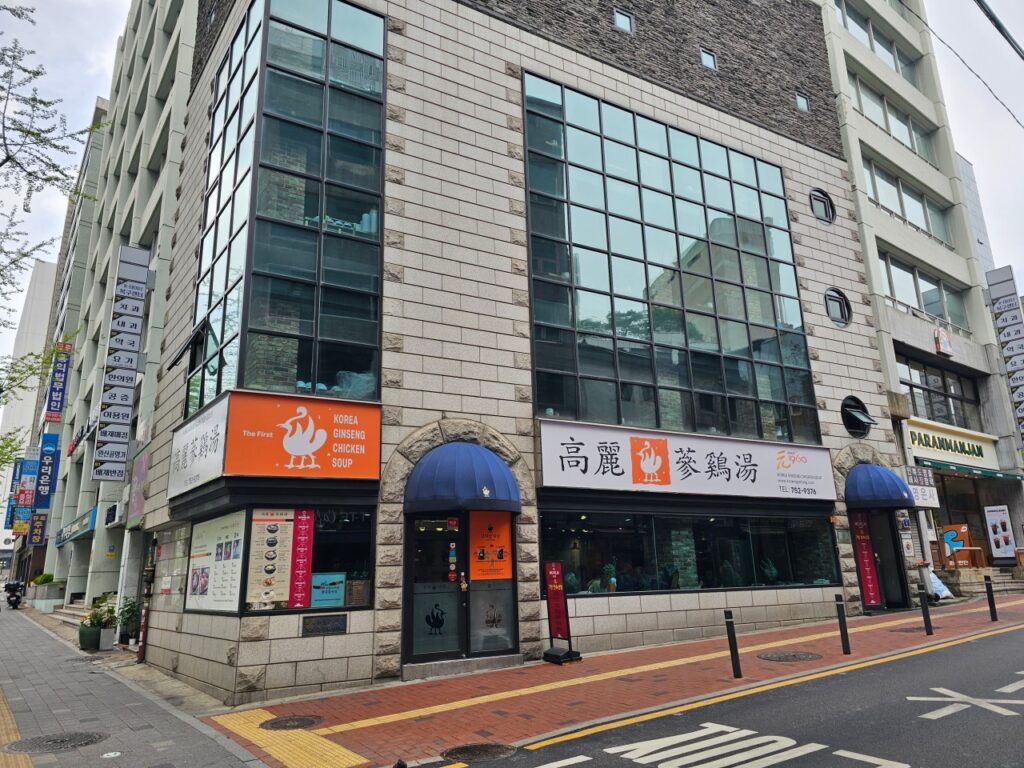
Goryeo Samgyetang, sometimes written as Korea Samgyetang in English, is a long-running specialist restaurant near City Hall.
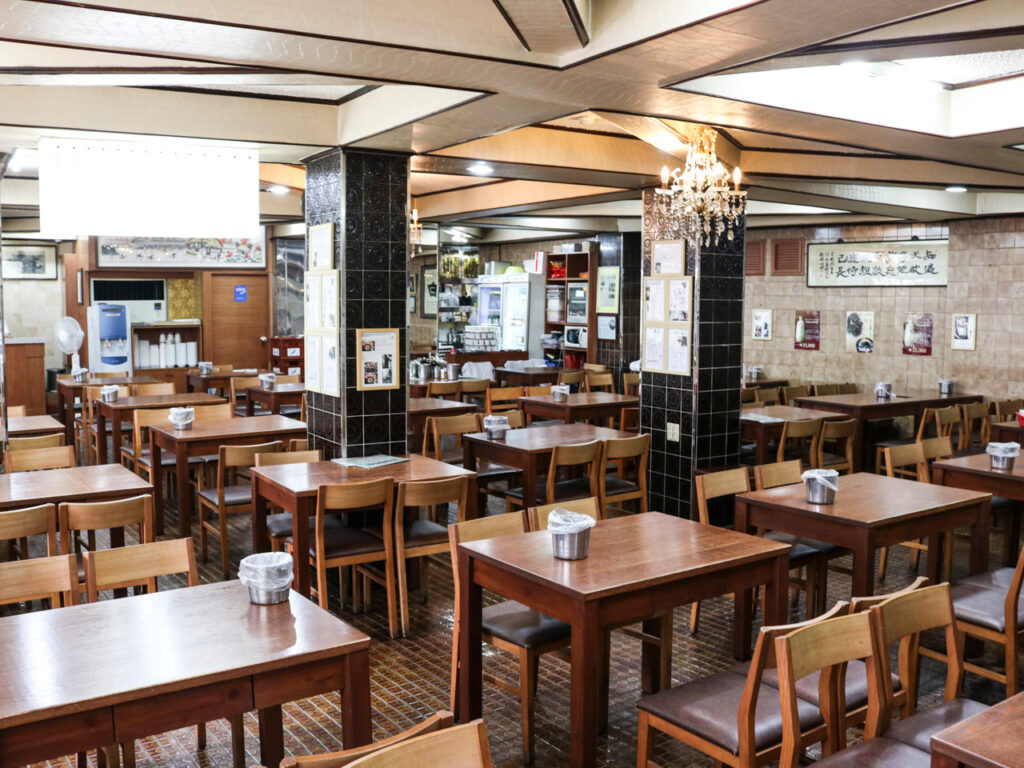
Compared with restaurants known for unusually thick or creamy soup, this is a good place to experience a more recognizable classic style. The chicken is served tender, with ginseng-flavored rice and broth providing the main character.
Additional menu choices may include premium samgyetang varieties, black chicken soup, or abalone options. Availability and prices can change.
What Should First-Time Visitors Order?
Choose the standard samgyetang unless you specifically want seafood or black chicken.
The standard version makes comparison easier if this is your first time eating Korean ginseng chicken soup.
Pair It With
Try this route:
Deoksugung Palace → Jeongdong-gil → Goryeo Samgyetang → Seoul Plaza
You can also continue toward Namdaemun Market or Seoul Station after the meal.
Before You Go
- The area can become busy with office workers at lunchtime.
- Weekday lunch may be more crowded than mid-afternoon.
- Search for the specific branch because the restaurant has operated more than one location.
- Confirm the branch, current operating hours, and menu before leaving.
3. Baekje Samgyetang: Best for a Convenient Myeongdong Meal
Korean name: 백제삼계탕
Area: Myeongdong
Nearest major station: Myeongdong Station, Line 4
Best for: Travelers who want an easy samgyetang stop during shopping
Baekje Samgyetang is one of the most convenient choices for visitors staying in or around Myeongdong.
The restaurant has served samgyetang in the area for decades and is accustomed to international travelers. Its central location allows you to eat without adding a long trip to an already busy sightseeing day.
The broth follows a recognizable traditional style, while the ginseng flavor may feel more noticeable than in very mild versions. Travelers who want an introduction to the traditional herbal character may enjoy this.
What Should First-Time Visitors Order?
Order the regular samgyetang.
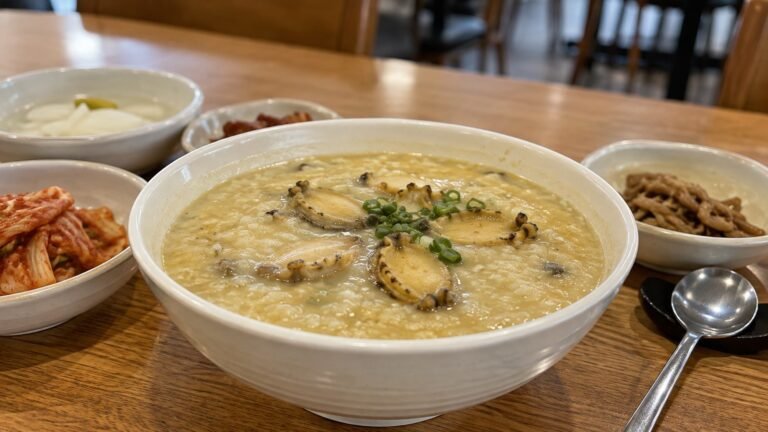
Premium options may sound interesting, but the basic bowl is usually the safest starting point. Abalone porridge can be useful for a companion who does not want a whole chicken, but availability and current ordering rules should be checked.
Pair It With
A simple itinerary is:
Myeongdong shopping → Baekje Samgyetang → Myeongdong Cathedral → Namsan or N Seoul Tower
Before You Go
- Central Myeongdong restaurants may be busiest during lunch and dinner.
- Check whether each diner is expected to order an individual main dish.
- Do not assume that every staff member speaks English, even in a tourist district.
- Keep the Korean restaurant name saved on your phone.
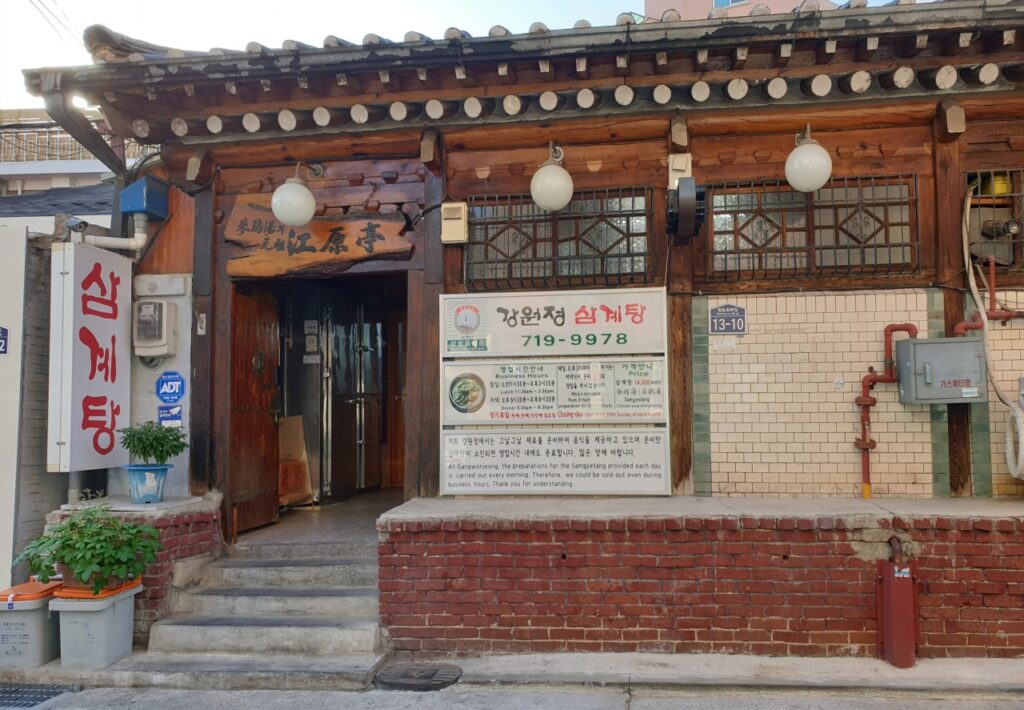
4. Gangwonjeong: Best for a Quieter Local Atmosphere
Korean name: 강원정
Area: Namyeong and Yongsan
Nearest major stations: Namyeong Station or Sookmyung Women’s University Station area
Best for: Travelers who prefer an old-school neighborhood restaurant
Gangwonjeong offers a different experience from the large tourist-oriented restaurants around Gyeongbokgung and Myeongdong.
The restaurant is located in a quieter neighborhood setting and is known for a traditional, home-style atmosphere. Its samgyetang is often described as clean yet deeply savory, with additional grains, nuts, seeds, or traditional ingredients contributing texture and flavor.
The atmosphere can feel more local, but that also means travelers should prepare the Korean restaurant name in advance and check the route carefully.
What Should First-Time Visitors Order?
Choose the standard samgyetang.
This restaurant is better suited to travelers who want to focus on the chicken, broth, rice, and traditional ingredients rather than premium toppings.
Pair It With
Consider this route:
War Memorial of Korea → Yongsan or Namyeong area → Gangwonjeong
The restaurant can also fit into a Seoul Station itinerary, although additional subway travel or walking may be necessary.
Before You Go
- A break time may apply between lunch and dinner.
- Current closed days should be checked before visiting.
- The restaurant can be less convenient for travelers with a very tight schedule.
- Some ingredients may include nuts, seeds, or ginkgo nuts. Ask the restaurant directly if you have food allergies.
5. Wonjo Hosu Samgyetang: Best Thick Perilla-Seed Broth
Korean name: 원조호수삼계탕
Area: Yeongdeungpo and Sinpung
Nearest major station: Sinpung Station, Line 7
Best for: Travelers who want a creamy and very different style of samgyetang
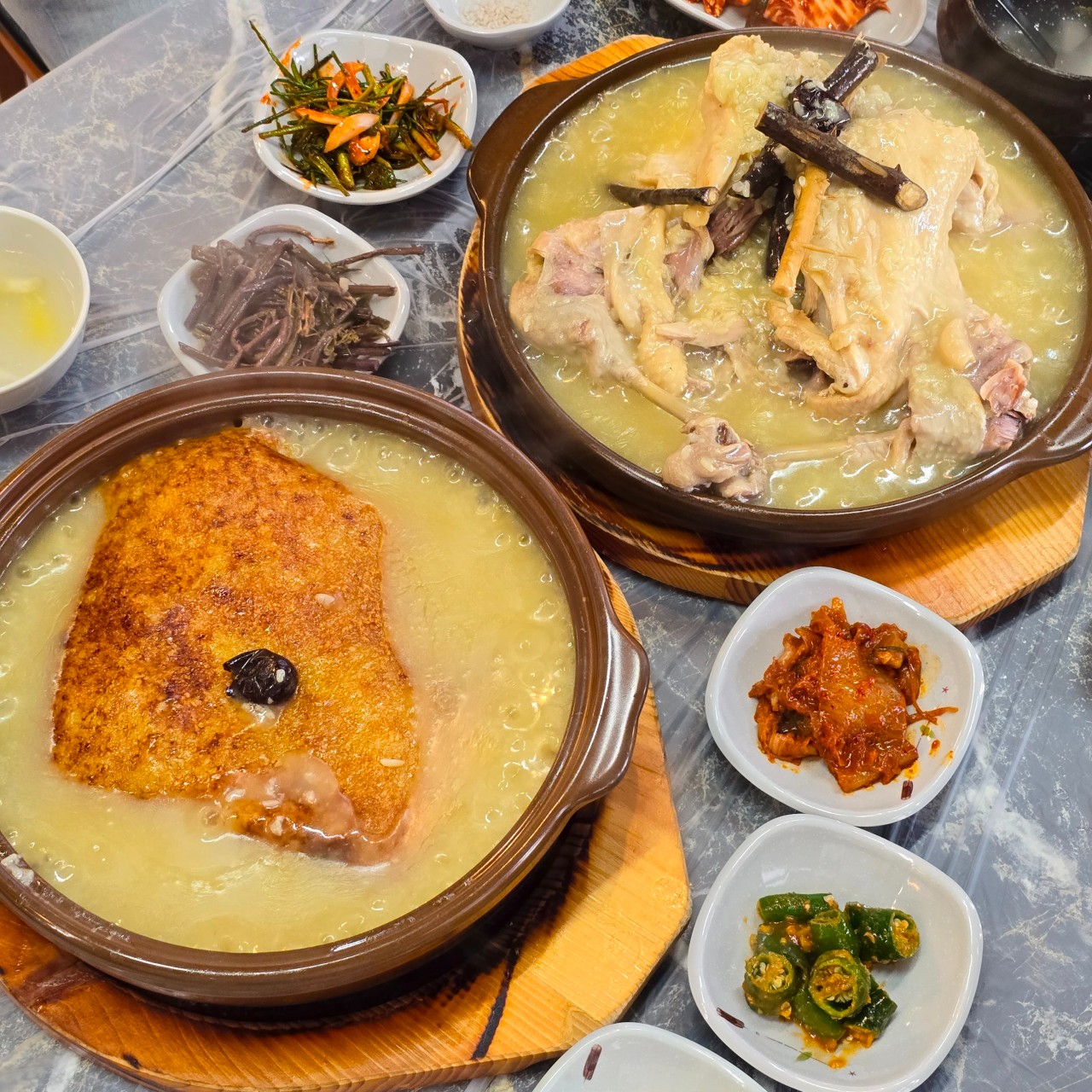
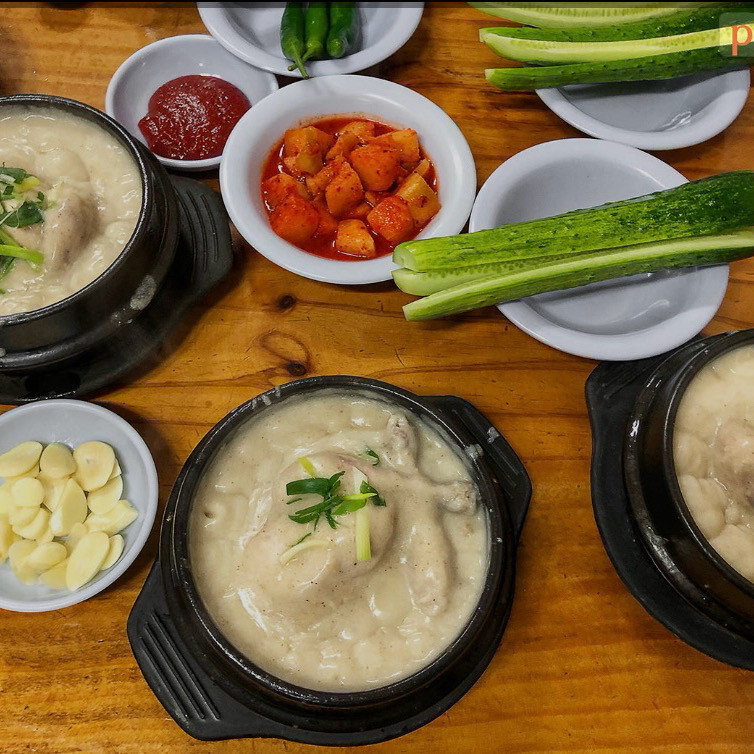
Wonjo Hosu Samgyetang is the most distinctive restaurant in this guide.
Instead of a light, clear chicken broth, the restaurant is known for a thick soup flavored with perilla seeds. The texture can resemble a creamy porridge or a smooth soup, even though it does not rely on dairy cream.
The nutty flavor is comforting and rich without necessarily being spicy. The restaurant traditionally focuses heavily on its signature samgyetang rather than offering a large menu.
This location is farther from Seoul’s most common tourist routes, so it is better treated as a destination meal.
What Should First-Time Visitors Order?
The ordering decision is simple: choose the restaurant’s signature samgyetang.
The unusual broth is the main reason to visit.
Pair It With
This restaurant fits best if you are already visiting southwestern Seoul.
Possible nearby or same-day areas include:
- Yeongdeungpo
- Times Square
- Yeouido
- Southwestern Seoul neighborhoods
Do not travel here only because it is famous unless the thick perilla flavor genuinely interests you.
Before You Go
- The broth is much thicker than classic samgyetang.
- Travelers expecting clear chicken soup may be surprised.
- Perilla seeds and sesame-related ingredients may be important for allergy-sensitive diners.
- Long waits may occur during summer and peak meal periods.
6. 3rd Samgyetang: Best for Pine Nut, Mung Bean, and Mugwort Variations
Korean name: 3대삼계장인
Area: Seocho and Gyodae
Nearest major station: Gyodae Station area
Best for: Travelers exploring Gangnam who want a distinctive broth
3rd Samgyetang, known in Korean as 3대삼계장인, is operated by the third generation of a family specializing in samgyetang.
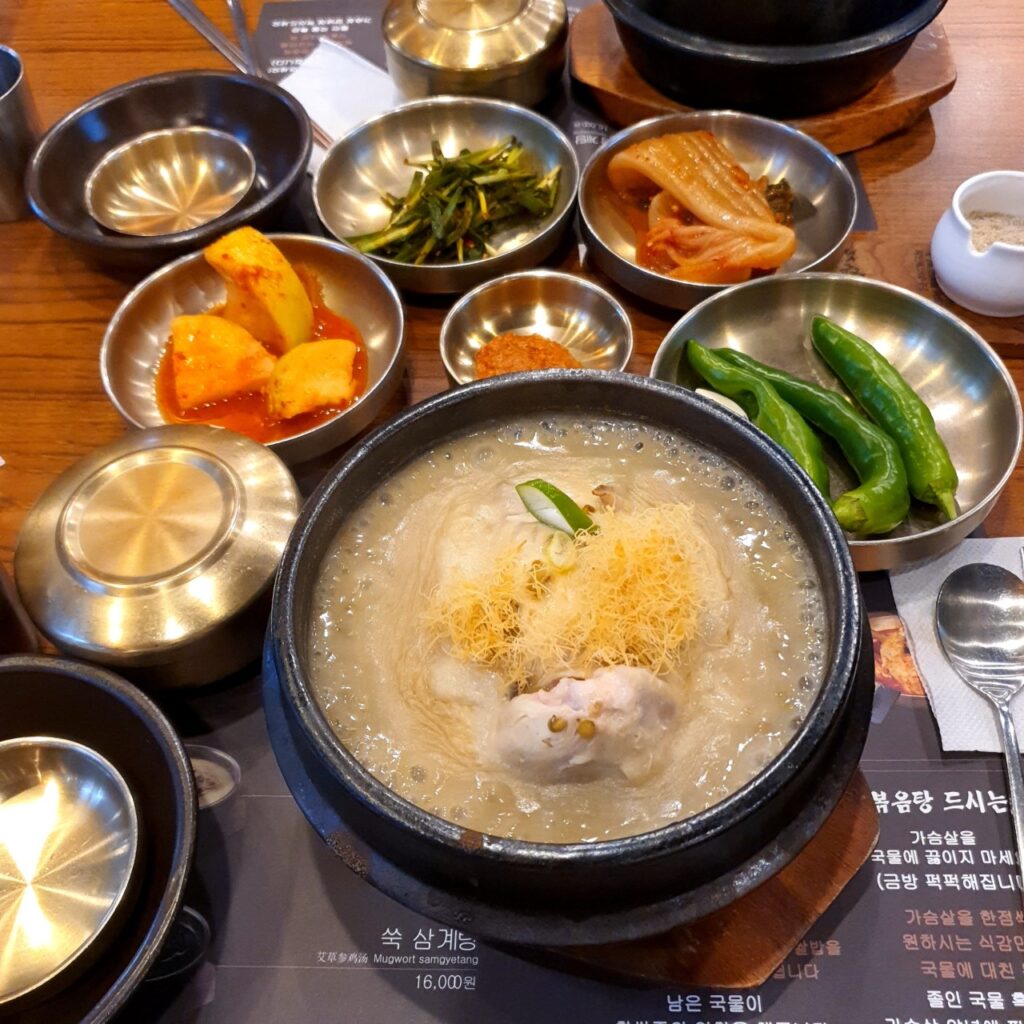
Unlike restaurants centered on one traditional broth, this restaurant is known for variations using ingredients such as pine nuts, mung beans, and mugwort. These ingredients create different levels of creaminess, nuttiness, earthiness, and herbal flavor.
The restaurant was included in the 2026 Michelin Guide’s Bib Gourmand selection, which highlights restaurants recognized for quality and value.
What Should First-Time Visitors Order?
For the easiest introduction, choose a pine nut or mung bean samgyetang.
Pine nut broth is a good choice for travelers who enjoy rich and smooth flavors.
Mung bean provides a mild, earthy character.
Choose mugwort if you already enjoy herbal flavors and do not mind a slightly bitter or grassy note.
Pair It With
Possible itineraries include:
Gangnam Station → Gyodae area → 3rd Samgyetang
or
Seoul Arts Center → 3rd Samgyetang
Before You Go
- The broth is not necessarily a standard clear samgyetang style.
- Confirm current menu names because English translations may differ.
- Pine nuts and other ingredients may be unsuitable for some allergies.
- Summer queues may be longer after Michelin recognition.
7. Gobong Samgyetang: Best Herbal-Style Choice in Yeouido
Korean name: 고봉삼계탕
Recommended area for this guide: Yeouido and National Assembly
Nearest major station: National Assembly Station, Line 9
Best for: A rich herbal-style soup during a Yeouido itinerary
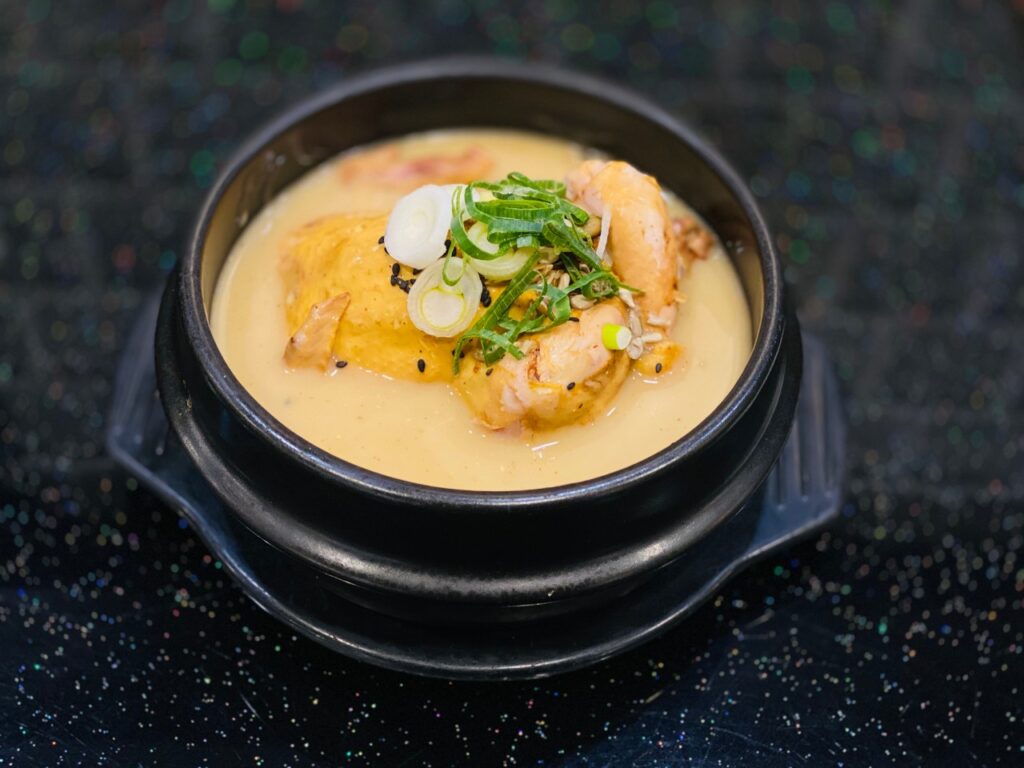
Gobong Samgyetang is known for richer soup variations that may use traditional herbal ingredients or sanghwang mushroom.
Compared with very clear chicken broth, the soup can appear more golden and full-bodied. It is a useful choice for travelers who want noticeable flavor but do not want to travel to the southwestern location of Wonjo Hosu Samgyetang.
The Yeouido area is primarily a business district, so weekday lunch can be especially busy with local office workers.
What Should First-Time Visitors Order?
Choose the signature sanghwang mushroom samgyetang if available.
Travelers who enjoy stronger medicinal-herbal flavors may prefer the herbal version.
Menu names and English translations may vary by branch, so confirm that you are looking at the correct location.
Pair It With
A practical itinerary is:
National Assembly area → Gobong Samgyetang → Yeouido Hangang Park
You can also combine the meal with The Hyundai Seoul, IFC Mall, or a walk along the Han River.
Before You Go
- Gobong Samgyetang has multiple locations.
- Check the exact branch before following map directions.
- Menu selection, prices, and operating hours may differ by branch.
- Weekday office lunch hours can be crowded.
How to Order Samgyetang in Seoul
Ordering is usually simple because many specialist restaurants focus on only a few chicken dishes.
A standard order is one bowl per person.
You can say:
“Samgyetang hana juseyo.”
삼계탕 하나 주세요.
“One samgyetang, please.”
For a regular version:
“Ilban samgyetang hana juseyo.”
일반 삼계탕 하나 주세요.
“One regular samgyetang, please.”
At restaurants with multiple styles, point to the menu while saying the item name.
Premium words you may see include:
- Jeonbok (전복): Abalone
- Ogolgye (오골계): Silkie or black chicken
- Nokdu (녹두): Mung bean
- Jat (잣): Pine nut
- Ssuk (쑥): Mugwort
- Hanbang (한방): Traditional herbal or medicinal-style ingredients
- Sansam (산삼): Wild or cultivated wild-ginseng-related ingredient
For a first meal, do not automatically choose the most expensive version. Premium ingredients can change the flavor and make it harder to understand what classic samgyetang tastes like.
What About the Small Glass of Ginseng Liquor?
Some restaurants may serve a small amount of ginseng liquor or offer it separately.
You do not have to drink it.
If you do not drink alcohol, simply leave it untouched or say:
“Sureun an masyeoyo.”
술은 안 마셔요.
“I do not drink alcohol.”
Do not assume that ginseng liquor is included at every restaurant. Service practices may vary.
How to Eat Samgyetang
A whole chicken may look difficult to eat, but the meat is usually very tender.
Follow these steps:
1. Let the Soup Cool Slightly
The pot may still be bubbling when it reaches your table.
Wait before taking a large spoonful. The broth and the rice inside the chicken can remain extremely hot.
2. Taste the Broth Before Adding Salt
Samgyetang is often intentionally lightly seasoned.
Taste the original soup first. Add a small amount of salt only if necessary.
3. Pull the Chicken Apart
Use chopsticks to separate the legs, breast meat, and wings.
The meat should come away from the bone easily. Place larger pieces in the small side bowl if you want them to cool.
4. Dip the Chicken in Salt
Many restaurants provide salt or a salt-and-pepper mixture.
Instead of heavily salting the entire broth, try dipping individual pieces of chicken.
5. Eat the Rice Inside the Chicken
The glutinous rice is an important part of the dish.
Break open the center of the chicken and mix some of the rice into the broth. This creates a porridge-like texture near the end of the meal.
6. Handle Small Bones Carefully
Samgyetang uses a whole small chicken, so there will be many bones.
Do not rush. Place finished bones in the empty bowl or plate provided.
7. Try the Ginseng, but Do Not Force Yourself
The ginseng root is edible but can taste earthy or bitter.
It is completely acceptable to leave it if you do not enjoy the flavor.
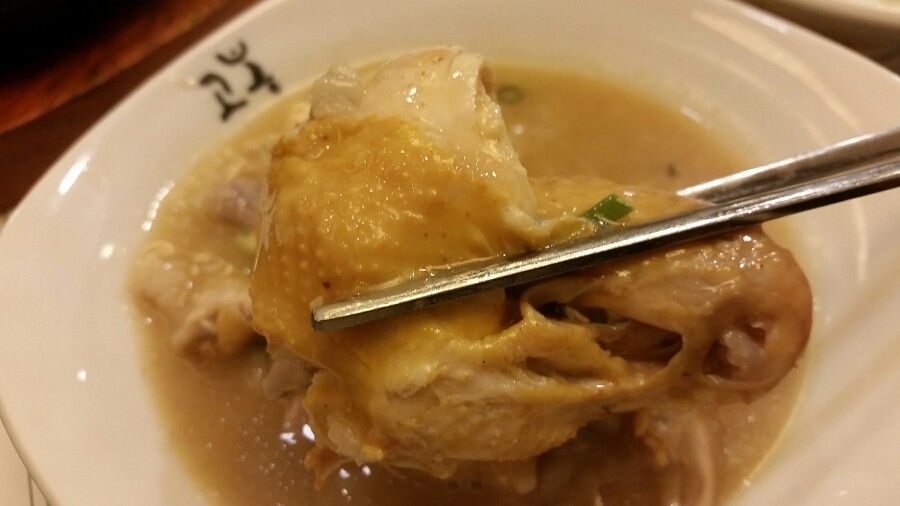
Pull the chicken apart carefully and enjoy the glutinous rice inside.
Common Mistakes First-Time Visitors Make
Adding Too Much Salt Immediately
The soup may taste mild at first, but the flavor becomes more noticeable as you eat the chicken and rice.
Add salt gradually.
Expecting Boneless Chicken
Traditional samgyetang contains a whole bone-in chicken.
Travelers who strongly dislike eating around bones may find the dish inconvenient.
Ordering an Expensive Premium Version First
Abalone, wild ginseng, or black chicken can be interesting, but they are not necessary for a first experience.
Start with the regular version unless a restaurant is specifically famous for a different broth.
Assuming Every Samgyetang Tastes the Same
A clear ginseng broth and a thick perilla-seed broth can feel like completely different dishes.
Check the restaurant’s specialty before choosing.
Visiting During Peak Boknal Hours Without a Plan
Famous samgyetang restaurants can have very long lines during the hottest traditional summer days.
Visit outside standard lunch hours or choose a less famous neighborhood restaurant.
Confusing Different Branches
Restaurants such as Gobong Samgyetang may have several branches.
Check the Korean name, neighborhood, and address before starting navigation.
Trying to Share One Bowl Without Asking
Samgyetang is generally treated as an individual main dish.
Some restaurants may expect each adult diner to order a main item. Ask before assuming that one bowl can be shared.
When Samgyetang May Not Be the Best Choice
Samgyetang is a comforting meal, but it is not ideal for every situation.
Consider choosing another dish when:
- You have less than 30 to 45 minutes for the meal.
- You strongly dislike bone-in chicken.
- You want a light snack rather than a full meal.
- You are vegetarian or vegan.
- You require halal-certified food.
- You have allergies to nuts, sesame, perilla seeds, grains, or herbal ingredients and cannot confirm the recipe.
- You are traveling on a major boknal date but do not want to wait in a long line.
- You are carrying large luggage and the restaurant has limited space.
Ingredient combinations vary by restaurant. Do not assume that every broth contains only chicken, rice, garlic, jujube, and ginseng.
Frequently Asked Questions
Is samgyetang spicy?
No. Traditional samgyetang is generally mild and not spicy.
The broth is usually savory and lightly herbal. The kimchi served on the side may be spicy, but you do not need to add it to the soup.
What is samgyetang made of?
Samgyetang usually contains a small whole chicken stuffed with glutinous rice and simmered with ginseng, garlic, and jujube.
Restaurants may add chestnuts, ginkgo nuts, mung beans, pine nuts, perilla seeds, mushrooms, herbs, or other ingredients.
How much does samgyetang cost in Seoul?
Standard bowls commonly cost around the upper ₩10,000s to mid-₩20,000s, while premium versions may cost more.
Prices can change, so check the current restaurant menu before visiting.
Is Tosokchon worth visiting?
Tosokchon is a good choice for first-time visitors who want a famous samgyetang restaurant near Gyeongbokgung Palace and enjoy traditional hanok surroundings.
However, it may not be the best choice for travelers who dislike queues or prefer quieter local restaurants.
Which samgyetang restaurant is best for beginners?
Tosokchon is convenient for a classic tourist itinerary.
Goryeo Samgyetang is a balanced central Seoul option.
Baekje Samgyetang is convenient for travelers staying in Myeongdong.
The best choice depends on your location and preferred broth style.
Can one person eat a whole samgyetang chicken?
Yes. The chicken is smaller than a typical roasted chicken and is normally served as an individual meal.
The rice inside the chicken makes the dish filling, so additional rice is usually unnecessary.
Can solo travelers eat samgyetang?
Yes. Samgyetang is one of the easiest traditional Korean dishes for solo diners because each person normally orders an individual bowl.
Solo visitors may still need to wait during busy meal periods.
How This Guide Was Checked
This guide was researched and reviewed by H. Jung, the Korea-based editor of Seoul Plate. Restaurant specialties, samgyetang styles, locations, menu information, and ordering details were checked using current restaurant information, Korean map listings, and available local or tourism sources. Broth recipes, side dishes, prices, and seasonal operating details may vary, so confirm current information before visiting.
Final Tips for Eating Samgyetang in Seoul
For most first-time visitors, the easiest choices are:
- Tosokchon for a famous traditional experience near Gyeongbokgung.
- Goryeo Samgyetang for a classic central Seoul location.
- Baekje Samgyetang for convenience in Myeongdong.
- Wonjo Hosu Samgyetang for thick and creamy perilla broth.
- 3rd Samgyetang for distinctive pine nut, mung bean, or mugwort varieties.
Do not choose a restaurant only because it is the most famous. A restaurant close to your sightseeing route can provide a more relaxed meal and save valuable travel time.
Taste the broth before seasoning, take your time with the bones, and remember to eat the rice inside the chicken.
For navigation in Korea, Naver Map is usually more reliable than Google Maps. If you are new to Korea, check both links before visiting.
Restaurant hours, menu prices, break times, holidays, and branch information can change. Confirm the latest details on the day of your visit.