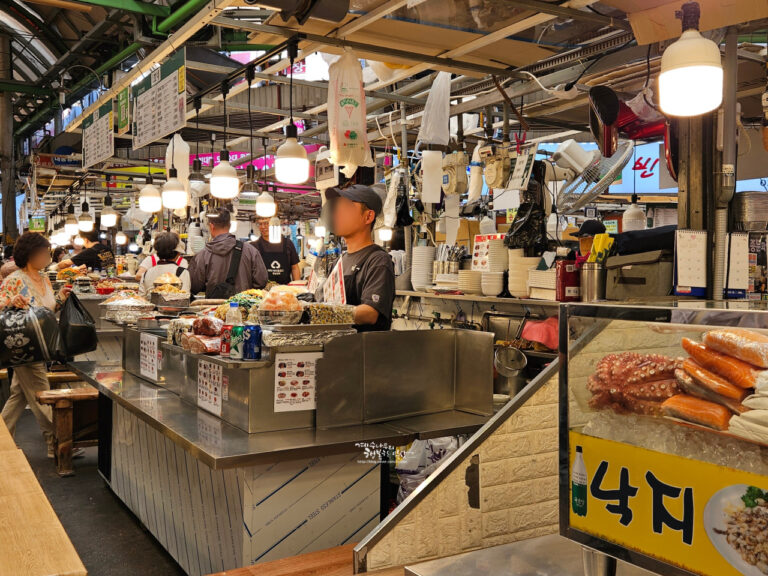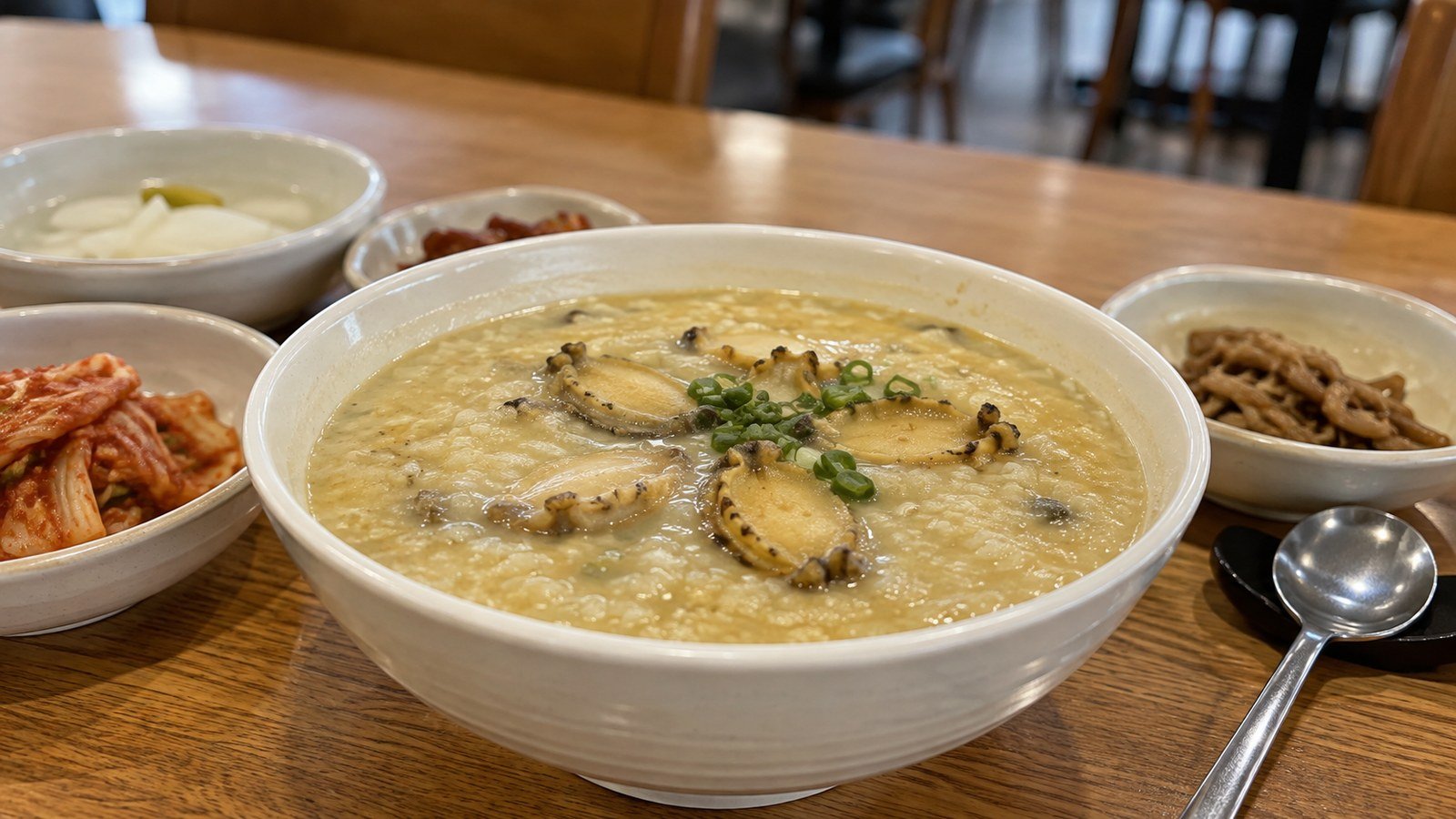
Best Korean Porridge in Seoul: 6 Juk Restaurants for First-Time Visitors
Korean food in Seoul does not always have to mean barbecue, spicy stew, or a table full of side dishes. If you want something warm, gentle, and easy to eat, Korean porridge, called juk (죽), is one of the most practical meals to try.
Juk is made by slowly cooking rice with water or broth until the grains become soft and creamy. Depending on the restaurant, it may be prepared with beef, vegetables, chicken, abalone, oysters, shrimp, mushrooms, black sesame, pumpkin, or other ingredients. Korean tourism sources describe rice porridge as a soft and easy-to-eat meal, and vegetable and beef varieties are also commonly eaten when someone wants something lighter than a regular rice meal.
For travelers, juk is especially useful for an early breakfast, a quiet solo meal, a cold or rainy morning, or a day when heavier Korean food feels like too much.
It is also one of the easier Korean meals to order alone.
If you are looking for the best Korean porridge in Seoul, the right choice depends on the type of juk you want and the neighborhood already on your itinerary.
This guide covers six Korean porridge restaurants in Seoul, from long-running independent shops to an easy-to-find national chain, plus beginner-friendly menu recommendations, ordering tips, common mistakes, and nearby attractions.
If you want more Korean morning meals, see our guide to the Best Korean Breakfast in Seoul.
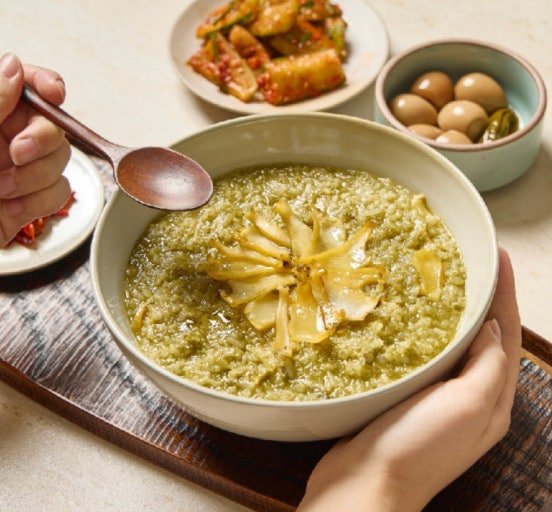
Table of Contents
What Is Korean Juk?
Juk is the Korean word for porridge. The basic idea is simple: rice is cooked with enough liquid to create a thick, soft texture rather than separate grains of steamed rice.
But Korean juk can vary significantly depending on the ingredients.
Some versions are mild and savory, while others have a richer seafood flavor. Traditional varieties can also use ingredients such as black sesame or red beans. Black sesame porridge, or heugimjajuk, has a long history in Korean cuisine and was traditionally regarded as a nourishing dish.
Common types travelers may see include:
- Jeonbokjuk (전복죽): abalone porridge
- Sogogiyachaejuk (소고기야채죽): beef and vegetable porridge
- Dakjuk (닭죽): chicken porridge
- Yachaejuk (야채죽): vegetable porridge
- Saeujuk (새우죽): shrimp porridge
- Heugimjajuk (흑임자죽): black sesame porridge
- Hobakjuk (호박죽): pumpkin porridge
- Patjuk (팥죽): red bean porridge
If this is your first time eating Korean porridge, abalone porridge or beef-and-vegetable porridge is usually the easiest place to start.
Abalone porridge is particularly common at restaurants serving international visitors, especially around Myeongdong.
Is Korean Juk Spicy?
Usually, no.
Most traditional porridge itself is mild. However, the side dishes may include kimchi or other spicy items.
If you are specifically looking for mild Korean food, juk is therefore one of the easier meals to manage.
If spicy food is a concern during your trip, our guide to non-spicy Korean restaurants in Seoul includes more mild dishes and restaurant options for first-time visitors.
Quick Comparison of the Best Korean Porridge in Seoul
| Restaurant | Area | Best For | Recommended First Order |
|---|---|---|---|
| Songjuk | Chungmuro | Traditional local-style juk | Oyster or mushroom porridge |
| Seowonjuk | Myeongdong | Abalone porridge and early breakfast | Special abalone porridge |
| Sogong Jukjip | City Hall | Sightseeing near Deoksugung | Classic rice porridge |
| Huijukuijuk | Myeongdong | Convenient central location | Abalone porridge |
| Jukmiin | Sinchon | Variety and casual atmosphere | Beef, vegetable, or abalone porridge |
| Bonjuk Myeongdong | Myeongdong | Easiest first experience | Beef vegetable or abalone porridge |
6 Best Korean Porridge Restaurants in Seoul
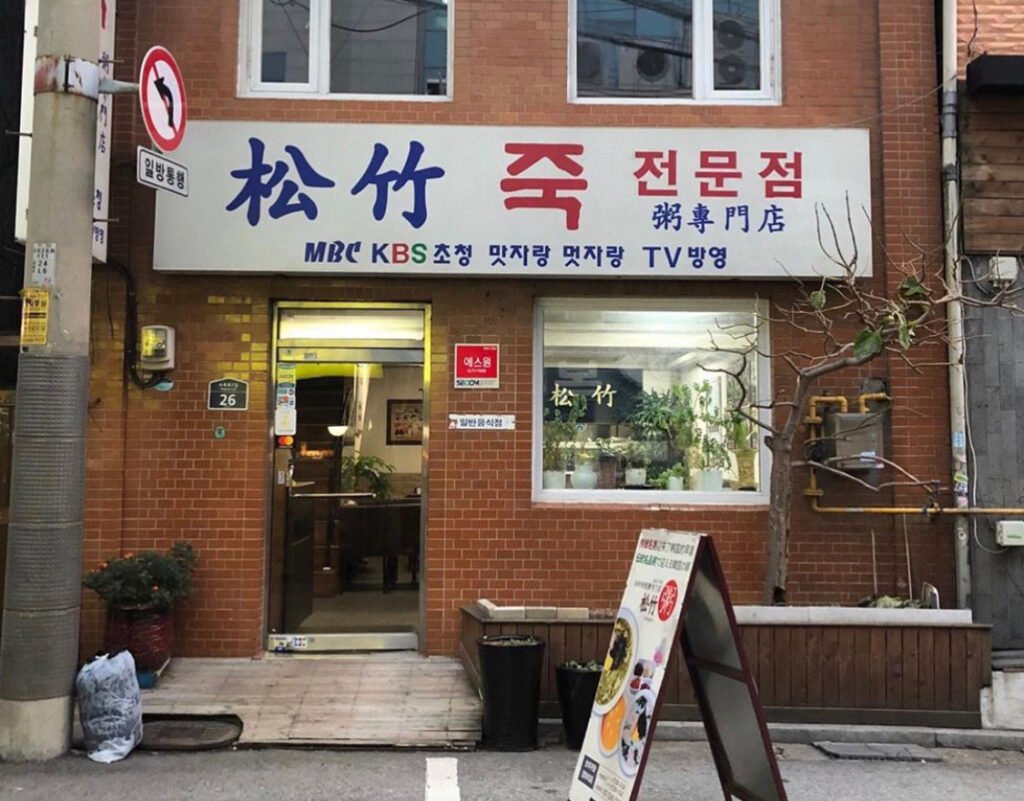
1. Songjuk — Best for Traditional Juk Near Chungmuro
Search on NAVER Map: 송죽
Best for: Travelers who want a more traditional porridge specialist rather than a large chain
What to order: Mushroom and oyster porridge or another seafood-based juk
Area: Chungmuro
Flavor: Savory, comforting, and richer than very plain rice porridge
Songjuk is one of the most interesting choices if you want to understand how Korean porridge can be more than just a light breakfast.
According to Seoul’s official tourism guide, Songjuk prepares its short-grain rice with sesame oil and beef-bone broth, and mushroom-oyster porridge is among the restaurant’s better-known options. The restaurant is located near Chungmuro Station and currently opens early in the morning, although weekend hours are shorter than weekday hours.
That makes Songjuk particularly useful for travelers who want breakfast before sightseeing.
The flavor may be slightly deeper and more savory than the simplest vegetable porridge, so this is a good choice if you already know that you enjoy mushrooms, oysters, or seafood.
Good Nearby Route
A practical itinerary is:
Songjuk → Namsangol Hanok Village → Myeongdong
You can have a warm breakfast around Chungmuro and then continue toward central Seoul without crossing the city just for one restaurant.
First-Time Tip
If you are unsure about oysters or seafood innards, do not automatically choose the most unusual-looking signature menu.
Ask for a simpler mushroom, abalone, beef, or vegetable option if available.
2. Seowonjuk — Best for Abalone Porridge in Myeongdong
Search on NAVER Map: 서원죽
Best for: First-time visitors staying around Myeongdong
What to order: Special abalone porridge
Area: Myeongdong Station
Flavor: Mild, savory, seafood-forward
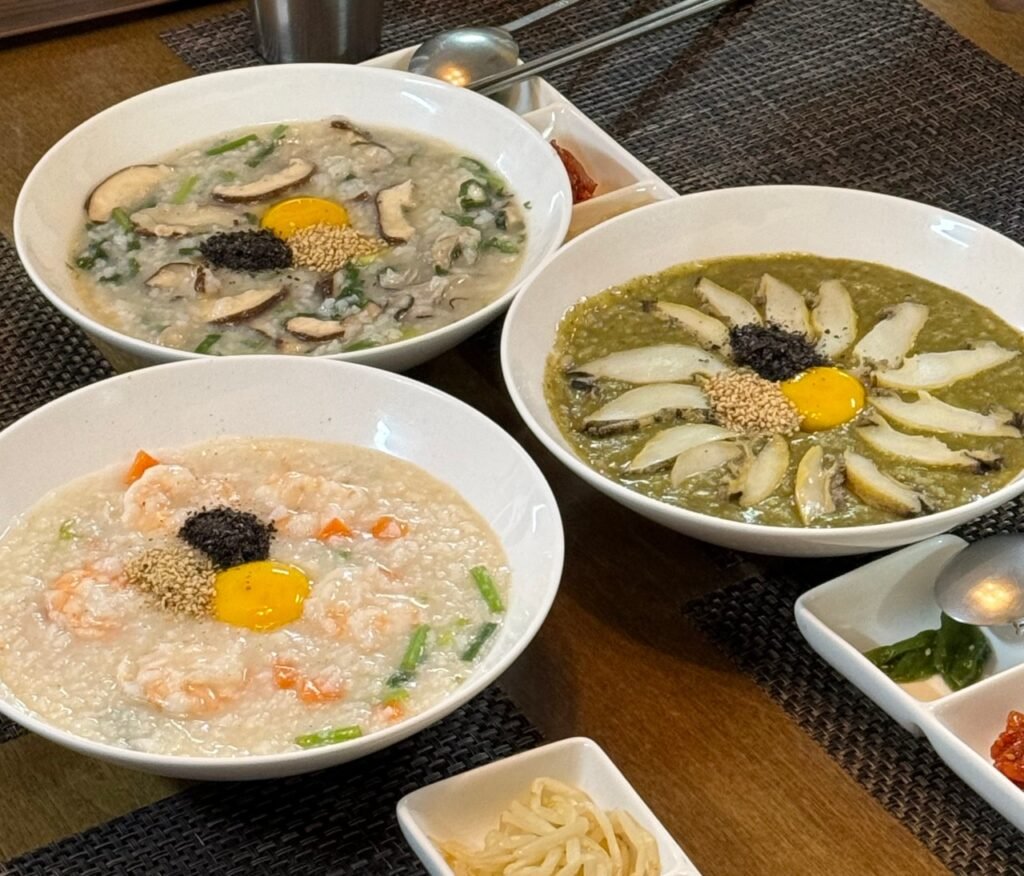
Seowonjuk is one of the strongest choices for this guide because it combines a long-running porridge-specialist identity with a very convenient tourist location.
The restaurant’s official site says it has specialized in Korean porridge since 1986 and is now operated by the second generation. Its signature dishes include special abalone porridge and shrimp porridge. Korea Tourism Organization information also lists chicken, mushroom, oyster, vegetable, and other varieties.
The restaurant is near Myeongdong Station and is currently listed as opening from around 7 a.m., making it particularly practical for breakfast.
Why First-Time Visitors May Like It
Abalone porridge sounds more adventurous than plain rice porridge, but the flavor is usually relatively gentle.
It is a good middle ground between trying something distinctly Korean and choosing a meal that is not aggressively spicy or heavy.
Good Nearby Route
Try:
Seowonjuk breakfast → Myeongdong shopping → Namsan or nearby central Seoul attractions
If your hotel is already in Myeongdong, you do not need to build an entire itinerary around the restaurant.
Looking for more morning options? See our guide to the best Korean breakfast in Seoul for early-opening restaurants and traditional Korean breakfast dishes.
3. Sogong Jukjip — Best Near Seoul City Hall and Deoksugung
Search on NAVER Map: 소공죽집
Best for: City Hall, Deoksugung Palace, and central sightseeing
What to order: One of the classic rice porridge varieties
Area: City Hall
Flavor: Traditional, mild, and filling
Sogong Jukjip is particularly convenient because it sits almost directly beside the City Hall area.
Seoul’s official tourism guide describes it as a well-known porridge restaurant in the Bukchang area with more than ten porridge varieties. The same listing places it at 139 Seosomun-ro, close to City Hall Station, and notes a nutritious rice dish with oysters and prawns as another option.
Current map information lists morning opening hours and longer weekday service than weekend service.
Good Nearby Route
This is probably the easiest porridge restaurant in the list to combine with Seoul’s downtown palace area:
Sogong Jukjip → Deoksugung Palace → Seoul Museum of Art → Jeongdong-gil
Rather than traveling across Seoul for one bowl of juk, use the restaurant as breakfast or lunch before exploring the neighborhood.
First-Time Tip
If you want your first porridge experience to be simple, do not feel that you have to choose the most expensive seafood option.
A basic savory porridge often shows the texture of Korean juk more clearly.
4. Huijukuijuk — Best for a Convenient Myeongdong Breakfast
Search on NAVER Map: 희죽희죽
Best for: Early meals and travelers who prioritize convenience
What to order: Abalone porridge
Area: Myeongdong
Huijukuijuk is a traditional porridge specialist in central Seoul, and Korea Tourism Organization lists abalone porridge as its representative dish.
Published opening hours vary between current sources, so check NAVER Map before planning a late visit specifically for this restaurant.
That is actually a useful lesson for Seoul travel in general: restaurant hours shown on tourism websites, Google, and Korean map services do not always update at exactly the same time.
Good Nearby Route
Because the restaurant is in Myeongdong, pair it with:
Breakfast → Myeongdong Cathedral → shopping → nearby café or Namsan
For most travelers, location should matter more than trying to visit every famous porridge restaurant on this list.
5. Jukmiin — Best for Variety in Sinchon
Search on NAVER Map: 죽미인
Best for: Sinchon, university areas, and travelers who want many menu choices
What to order: Abalone, vegetable, beef, or another simple savory juk
Area: Sinchon
Jukmiin gives this list a useful alternative to the cluster of porridge restaurants around Myeongdong.
Seoul’s tourism guide describes Jukmiin as a Sinchon porridge restaurant with more than 30 menu items, prepared after customers order rather than simply sitting pre-made. It also lists takeaway as an option.
The restaurant’s own current web listing gives the same phone number and Sinchon-area address and lists regular daytime and evening service.
Why Choose Jukmiin?
This is a good option if your itinerary is already around:
- Sinchon
- Yonsei University
- Ewha
- Hongdae or nearby western Seoul neighborhoods
Do not travel from eastern Seoul only because Jukmiin appears on a “best” list. Seoul is large, and there are good porridge options in several neighborhoods.
Beginner Tip
A large menu can actually make ordering harder.
If you are overwhelmed, start with one of these:
abalone → beef and vegetable → chicken → plain vegetable
in roughly that order depending on your preferences.
6. Bonjuk Myeongdong — Best for the Easiest First Experience
Search on NAVER Map: 본죽&비빔밥 명동점
Best for: Travelers who want a predictable and easy-to-find option
What to order: Beef and vegetable porridge or abalone porridge
Area: Myeongdong
Style: National Korean porridge chain
Not every restaurant in a Seoul food guide needs to be an independent hidden gem.
Bonjuk is one of Korea’s best-known porridge chains, which makes it useful for travelers who simply want an approachable first bowl of juk.
The Myeongdong branch is currently listed on Myeongdong 8ga-gil and operates through much of the day on weekdays, with shorter branch-specific weekend hours.
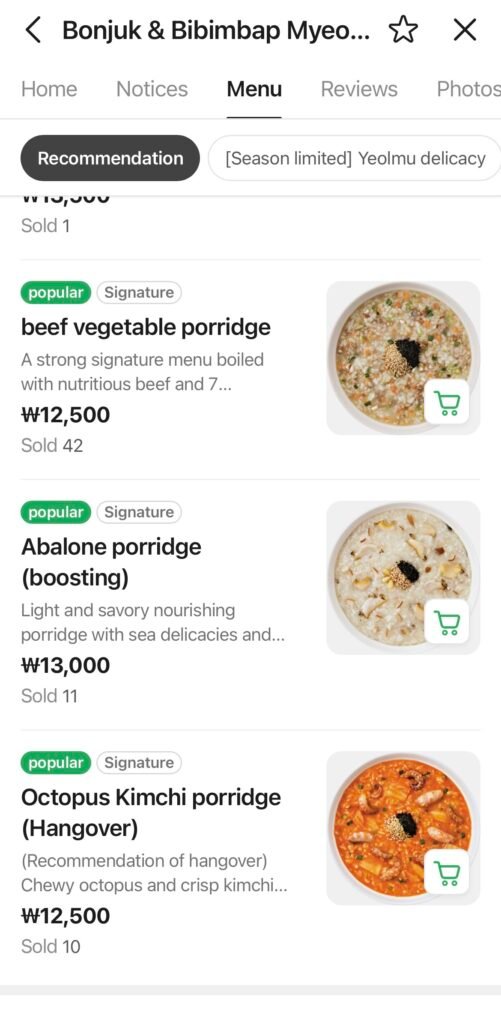
The official Bonjuk menu currently includes options such as beef and vegetable porridge, abalone varieties, chicken-and-abalone porridge, red bean porridge, pumpkin porridge, pine nut porridge, and black sesame porridge. Its official menu also publishes detailed allergen information, updated in 2026.
Why Include a Chain?
For first-time visitors, Bonjuk has several practical advantages:
- Large menu
- Multiple branches
- Familiar ordering format
- Both basic and premium porridge choices
- Easy backup if an independent shop is closed
It may not be the restaurant you cross Seoul to visit, but it can be one of the most useful options when you simply search for Korean porridge near your hotel.

Which Korean Juk Should First-Time Visitors Order?
Best Overall: Abalone Porridge
If you want one classic first experience, try jeonbokjuk, or abalone porridge.
It is widely available at porridge specialists in tourist areas and has a mild seafood flavor without the heat of many chili-based Korean dishes.
Choose this if you:
- Like seafood
- Want something distinctly Korean
- Prefer mild flavors
Avoid it if you have a shellfish or mollusk allergy.
Safest Familiar Choice: Beef and Vegetable Porridge
Beef and vegetable porridge is one of the easiest options for travelers who are uncertain about seafood.
It usually combines soft rice with finely chopped beef and vegetables and is filling enough to work as a full meal. Korea Tourism Organization describes the dish as rice slowly cooked into a creamy consistency with beef and vegetables, sometimes with broth for additional flavor.
For Travelers Avoiding Meat: Vegetable Porridge
Vegetable porridge looks like an obvious vegetarian choice, but there is an important warning.
Do not automatically assume vegetable juk is vegetarian or vegan.
Broth, seasoning, sauces, or side dishes may contain anchovy, meat, seafood, or other animal-derived ingredients.
If this matters to you, ask before ordering.
Something Different: Black Sesame Porridge
Black sesame porridge has a nutty, roasted flavor and a smoother appearance than many savory meat or seafood porridges.
It is a traditional Korean variety rather than simply a modern health-food menu item.
Try it if you enjoy sesame flavors and want something different from seafood juk.
How to Order Korean Porridge in Seoul
Ordering juk is usually simpler than ordering Korean barbecue or a shared hot pot.
At many restaurants, one person orders one bowl.
A basic flow is:
- Check the menu or menu photos.
- Choose the type of porridge.
- Confirm whether the order is dine-in or takeaway.
- Pay at the counter or table depending on the restaurant.
- Eat the porridge with the small side dishes provided.
If the menu is only in Korean, these words can help:
전복죽 — Jeonbokjuk — Abalone porridge
야채죽 — Yachaejuk — Vegetable porridge
소고기야채죽 — Sogogiyachaejuk — Beef and vegetable porridge
닭죽 — Dakjuk — Chicken porridge
새우죽 — Saeujuk — Shrimp porridge
If ordering systems in Korea are new to you, see Seoul Plate’s guide to How to Order Food in Korea, including counters, kiosks, tablets, and payment.
Ordering Tips for First-Time Visitors
Taste Before Adding Seasoning
Some juk is intentionally mild.
Taste several spoonfuls before adding soy sauce, salt, kimchi, or other condiments.
Check the Exact Ingredients
“Seafood porridge” may contain several types of seafood rather than only the ingredient shown most prominently in a photo.
This matters especially for allergies.
Check Premium Menu Prices Before Ordering
Abalone, pine mushroom, seafood, or premium combinations can cost more than simple vegetable or beef porridge.
Do not point at the largest menu photo without checking the price first.
Do Not Assume the Side Dishes Are Mild
Your porridge may be completely non-spicy while the kimchi beside it is not.
Try a small amount first.
Search the Korean Restaurant Name
Small Korean restaurants may be easier to find using the Korean name.
When Korean Porridge May Not Be the Best Choice
Juk is versatile, but it is not the perfect meal for every traveler.
If You Want Strong Flavors
If your goal is smoky Korean barbecue, spicy tteokbokki, fermented stews, or crispy fried chicken, porridge may feel too gentle.
It is intentionally soft and comforting.
If You Have a Serious Shellfish Allergy
Many of Seoul’s better-known porridge restaurants specialize in abalone, oyster, shrimp, and seafood dishes.
Choose carefully and confirm the broth and preparation method.
If You Need a Late Dinner
Several independent porridge specialists focus heavily on breakfast and lunch and may close earlier than typical Seoul dinner restaurants. Current listings for restaurants in this guide show notably shorter hours at some locations, especially on weekends.
Check same-day hours before making a special trip.
Common Mistakes First-Time Visitors Make
Mistake 1: Searching Only for “Porridge”
Search results may be more useful if you try:
juk
Korean porridge
죽
전복죽
The Korean name can be particularly useful on Korean map apps.
Not sure how to search Korean restaurant names or check current opening hours? Our NAVER Map guide for travelers explains how to find restaurants, save locations, and navigate Seoul more easily.
Mistake 2: Assuming Vegetable Juk Is Vegan
Always confirm the broth and seasoning.
Mistake 3: Choosing a Restaurant Far Away Just Because It Is Famous
Most first-time visitors do not need to spend an hour crossing Seoul for porridge.
Choose a restaurant that fits your sightseeing route.
Mistake 4: Arriving Without Checking Weekend Hours
Porridge restaurants often serve breakfast, and some close earlier on weekends.
Mistake 5: Expecting a Tiny Breakfast Portion
A full bowl of juk can be more filling than it looks.
If you plan to visit a market or café immediately afterward, keep that in mind.
Easy Seoul Itineraries with a Juk Meal
Myeongdong Morning
Seowonjuk → Myeongdong → Namsan
This is the easiest choice for travelers staying in central Seoul.
Start with porridge before the shopping streets become busy and continue sightseeing afterward.
City Hall and Palace Route
Sogong Jukjip → Deoksugung → Jeongdong-gil → central Seoul
This route works particularly well if you want a calm morning before visiting busier tourist districts.
Chungmuro and Traditional Seoul Route
Songjuk → Namsangol Hanok Village → Myeongdong
Songjuk works well as an early meal before moving into the center of the city.
Sinchon and Hongdae Route
Jukmiin → Sinchon → Hongdae or Yeonnam
This is the better option if your accommodation or sightseeing day is already in western Seoul.
Do not return to Myeongdong simply because several porridge restaurants on this list are located there.
Final Thoughts
The best Korean porridge in Seoul depends less on finding one universally famous restaurant and more on choosing the type of juk and neighborhood that fit your trip.
Choose Songjuk if you want a more traditional specialist near Chungmuro, Seowonjuk for a long-running abalone porridge shop in Myeongdong, or Sogong Jukjip if your itinerary includes City Hall and Deoksugung.
For seafood porridge in Myeongdong, Huijukuijuk is convenient option. Jukmiin works better for a Sinchon day, while Bonjuk is the easiest fallback when convenience matters more than finding an independent restaurant.
For a first bowl, abalone porridge or beef-and-vegetable porridge is usually a safe place to begin.
And if you discover that you enjoy a warm Korean breakfast, continue with Seoul Plate’s guide to the Best Korean Breakfast in Seoul for more early-opening restaurants and local morning dishes.
Want another warm and comforting Korean meal? Our guide to the best kalguksu in Seoul covers seven places for Korean knife-cut noodles, another great option on a cool or rainy day.
FAQ
Is Korean porridge a breakfast food?
Yes, juk is commonly eaten for breakfast, but it is not limited to mornings. Many Korean porridge restaurants also serve lunch and dinner.
For travelers, breakfast is particularly convenient because several specialist restaurants in Seoul open earlier than typical lunch-focused restaurants.
What Korean porridge should I try first?
Abalone porridge is one of the most popular choices for visitors who enjoy seafood.
If you prefer something more familiar, beef-and-vegetable porridge is another beginner-friendly option.
Is Korean juk spicy?
Most juk itself is mild.
However, kimchi and other side dishes served with it can be spicy, so try them separately before mixing anything into your porridge.
Is Korean vegetable porridge vegetarian?
Not necessarily.
Vegetable porridge may be prepared with broth or seasonings containing anchovy, meat, or other animal ingredients. Ask the restaurant if you follow a vegetarian or vegan diet.
How can I find Korean porridge near me in Seoul?
The easiest method is to search NAVER Map using terms such as 죽 (juk), 전복죽 (abalone porridge), or the Korean restaurant names listed in this guide. Check the distance from your hotel or sightseeing area, current opening hours, and recent photos before visiting.
If you are staying in Myeongdong, Seowonjuk, Huijukuijuk, and Bonjuk are among the options covered in this guide.
Can I eat Korean porridge alone in Seoul?
Yes. Juk is one of the easiest Korean foods for solo travelers because it is normally ordered as an individual bowl rather than a shared dish.
Is abalone porridge safe for people with shellfish allergies?
Not necessarily.
Abalone is a mollusk, and seafood-focused porridge restaurants may also handle shrimp, oysters, and other seafood. If you have a serious seafood or mollusk allergy, confirm ingredients and preparation methods directly with the restaurant before ordering.
How This Guide Was Checked
This guide was prepared and checked by H. Jung, the Korea-based editor of Seoul Plate. Restaurant names, locations, representative menu items, and current operating information were cross-checked using official Korea and Seoul tourism listings, restaurant or brand information where available, and current map listings in August 2026.
Restaurant hours, prices, menu items, holidays, and branch information can change. Check the latest information on NAVER Map or the restaurant’s official page before making a special trip.