Best Gimbap in Seoul: 8 Places for First-Time Visitors
The best gimbap in Seoul can look very different from one shop to another, but gimbap itself is one of the easiest Korean foods to fit into a Seoul trip.
A roll can work as breakfast before sightseeing, a quick solo lunch, a market snack, or an easy takeaway meal when you do not want to spend an hour in a restaurant. It is widely available across Seoul, but specialist shops can taste surprisingly different from one another.
You may also see the dish spelled kimbap in English. Both names refer to 김밥, the Korean rice roll.
Some shops focus on familiar rolls filled with egg and vegetables. Others specialize in mini gimbap, egg-heavy rolls, fried-squid gimbap, or regional styles such as Chungmu gimbap.
This guide covers eight Seoul gimbap shops that offer noticeably different styles and are useful choices for first-time visitors.
The restaurants are not ranked from best to worst. Each was selected for a different reason, so use the location, style, and recommended menu to find the option that fits your trip.
If gimbap is only one food on your Korea list, see our guide to 15 must-try Korean foods in Seoul for more first-trip ideas.
Before you go: Menus, prices, opening hours, weekly holidays, and sold-out times can change. Check the latest Korean listing shortly before visiting. If you are unfamiliar with Korean map apps, our guide to using NAVER Map in Korea explains how to search Korean restaurant names and check current locations.
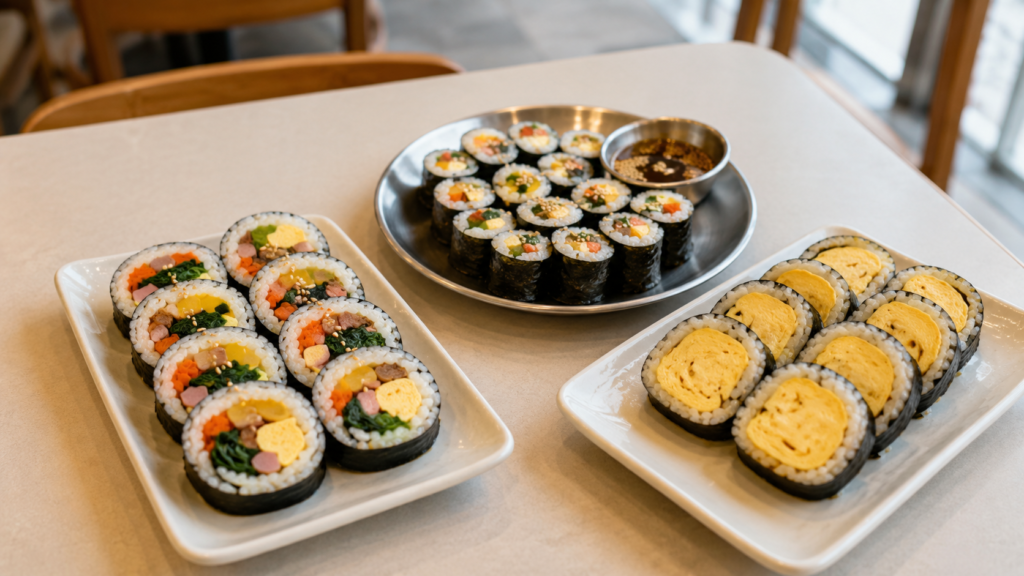
Table of Contents
Quick Comparison: Best Gimbap in Seoul
| Restaurant | Area | Gimbap Style | Best For |
|---|---|---|---|
| Joseon Gimbap | Anguk / Bukchon | Vegetable-forward gimbap | A Korean-style roll near major sights |
| Monyeo Gimbap | Gwangjang Market | Mini gimbap | A classic market snack |
| Myeongdong Chungmu Gimbap | Myeongdong | Chungmu gimbap | Trying a completely different regional style |
| Masinneunjip | Mangwon Market | Fried-squid gimbap | A distinctive market specialty |
| Sikmulwon Gimbap | Seocho | Modern ingredient-focused gimbap | Premium and generously filled rolls |
| Owol-ui Gimbap | Nakseongdae | Filling-heavy gimbap | A substantial takeaway meal |
| Jinsunja Egg-Rolled Gimbap | Bongcheon | Egg-wrapped gimbap | An old-school bunsik experience |
| Boseul Boseul | Yeoksam / Gangnam | Keto and egg-heavy gimbap | A modern low-carb style |
When choosing the best gimbap in Seoul for your trip, location matters as much as finding an absolute favorite.
If you are already visiting Gwangjang Market, Monyeo Gimbap makes sense. Joseon Gimbap fits naturally into an Anguk or Bukchon day, Myeongdong Chungmu Gimbap is convenient while exploring Myeongdong, and Masinneunjip can be added to a Mangwon Market visit.
Every shop has its own fillings and specialties, but gimbap is also an everyday Korean food. There is usually no need to cross Seoul for one particular roll. If another recommendation on this list fits your itinerary better, you are unlikely to feel that you missed out.
What Kind of Gimbap Should You Try?
Classic Filled Gimbap
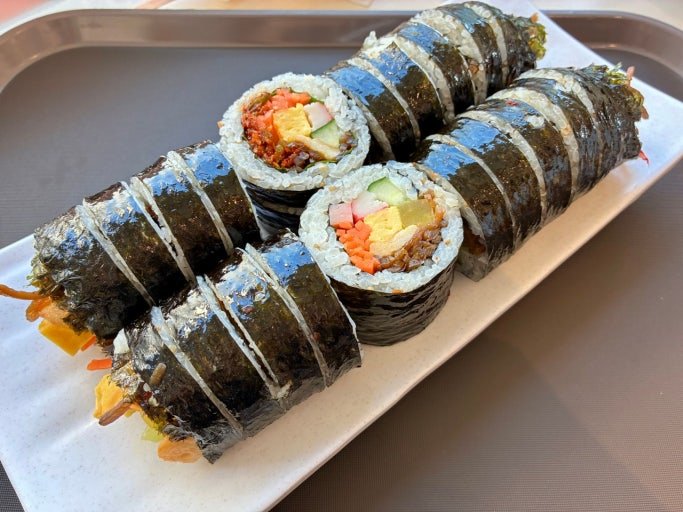
The version most visitors picture first has seasoned rice spread over dried seaweed with fillings arranged through the center.
Common ingredients include egg, pickled radish, carrot, spinach or other vegetables, fish cake, ham, crab stick, tuna, or beef.
The ingredients may sound simple, but shops use very different ratios of rice, egg, vegetables, and other fillings. That can make two seemingly similar rolls taste quite different.
Mini Gimbap
Mini gimbap is smaller, simpler, and particularly easy to eat as a snack.
Gwangjang Market is closely associated with mayak gimbap, small rolls commonly served with a mustard-based dipping sauce.
This style is useful during a market visit because you can try a portion without using your entire appetite on one meal.
Chungmu Gimbap
Chungmu gimbap looks almost empty compared with a normal roll.
Small pieces of rice wrapped in seaweed are served with spicy seasoned squid and radish kimchi rather than having the fillings rolled inside.
The style comes from Tongyeong in southern Korea, historically known as Chungmu. It is a good example of how different regional foods can still fall under the broad category of gimbap.
Egg-Wrapped and Egg-Heavy Gimbap
Some Seoul shops make egg much more important than it is in a standard roll.
Jinsunja wraps small pieces of gimbap in cooked egg, while modern restaurants such as Boseul Boseul use large amounts of shredded egg in keto-style rolls.
These can feel very different from the classic gimbap sold at ordinary neighborhood snack shops.
Modern and Specialty Gimbap
Modern gimbap shops increasingly use ingredients and combinations that go far beyond the familiar ham-and-vegetable roll.
Black rice, large amounts of egg, leafy greens, pollock roe, aged kimchi, spicy fish cake, salad, and even fried squid can become the main feature.
That variety is one reason it can be worth trying gimbap more than once during a Seoul trip.
Recommended Gimbap Places in Seoul
Joseon Gimbap
Area: Anguk / Bukchon
Best for: A vegetable-forward Korean-style gimbap
What to order: Joseon Gimbap or Oden Gimbap
Budget: Around ₩6,300 per roll
Search on NAVER Map: 조선김밥
Why It Stands Out
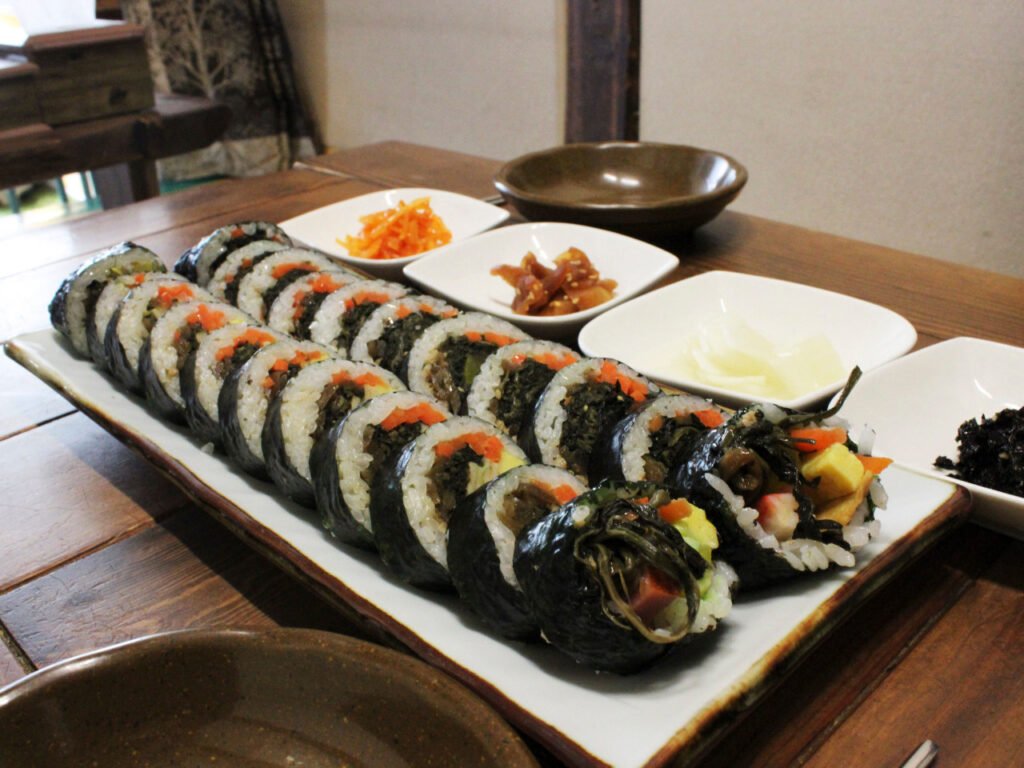
Joseon Gimbap is particularly useful for first-time visitors because its signature roll does not depend on the usual combination of ham, cheese, or tuna.
The Joseon Gimbap uses seasoned greens as an important part of the filling, creating a more vegetable-forward flavor than many everyday rolls.
The other signature option is Oden Gimbap (fish cake gimbap). It moves in a more savory direction, with fish cake as the main filling and a sharper flavor from wasabi.
The contrast makes this a particularly good stop for two people who want to share different styles.
Location is another advantage. Joseon Gimbap fits naturally into a day around Anguk, Bukchon Hanok Village, or the broader Gyeongbokgung area.
What to Order
Start with the Joseon Gimbap if you want the restaurant’s most distinctive vegetable-focused option.
Choose Oden Gimbap if you prefer a stronger savory flavor and are comfortable with a little wasabi.
If two people are visiting together, ordering one of each is an easy way to compare them.
Monyeo Gimbap — Gwangjang Market
Area: Gwangjang Market / Jongno 5-ga
Best for: Mini gimbap during a market visit
What to order: Mayak gimbap
Budget: Around ₩4,000–₩5,000 for a basic portion
Search on NAVER Map: 모녀김밥
Why It Stands Out
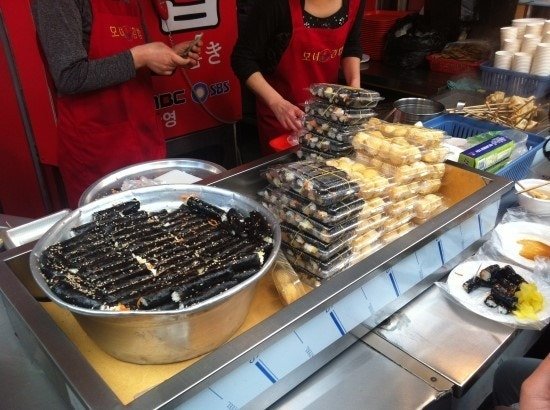
Monyeo Gimbap represents a completely different way to eat gimbap.
Instead of one large roll packed with several ingredients, the signature mayak gimbap comes as small rolls designed for easy snacking.
The mustard-based dipping sauce is an important part of the experience. The gimbap itself is relatively simple, so the combination of sesame oil, vegetables, rice, seaweed, and sharper sauce gives the dish much of its character.
More importantly, Monyeo Gimbap works because of where it is.
If you are already visiting Gwangjang Market, it is an easy way to add gimbap while leaving room for bindaetteok, yukhoe, tteokbokki, noodles, or other market foods.
For a wider eating plan, see our Gwangjang Market food guide for first-time visitors.
Which Location?
There are two Monyeo Gimbap locations around Gwangjang Market, which can be confusing when you search the name.
The second branch is the more convenient choice for most first-time visitors, especially if you are already exploring the central market area or arriving from Jongno 5-ga Station.
For the location recommended in this guide, use NAVER Map or Google Maps.
What to Order
Start with the mayak gimbap.
If you plan to eat several foods around Gwangjang Market, avoid ordering too much. Mini gimbap works best as one stop in a larger market-food crawl rather than necessarily being your entire meal.
Myeongdong Chungmu Gimbap
Area: Myeongdong
Best for: Trying Chungmu-style gimbap in central Seoul
What to order: Chungmu Gimbap
Budget: Around ₩12,000
Search on NAVER Map: 명동충무김밥
Why It Stands Out
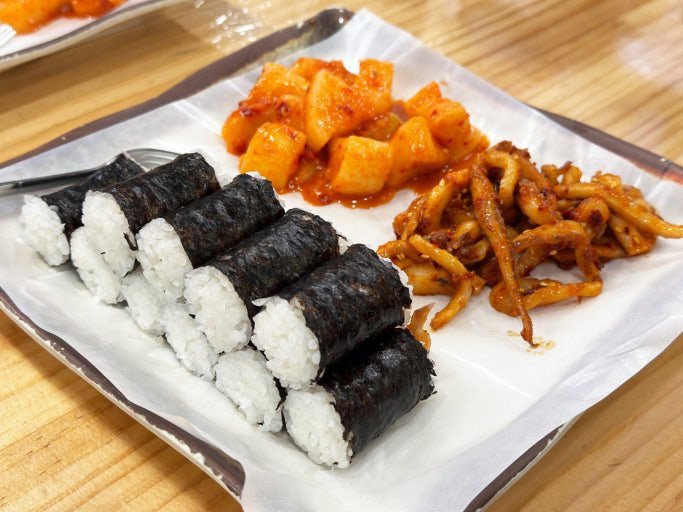
Myeongdong Chungmu Gimbap earns a place in this guide because it shows just how broad the word gimbap can be.
Do not expect a large roll filled with vegetables, egg, or meat.
Chungmu gimbap consists of small pieces of rice wrapped in seaweed, served with seasoned squid and radish kimchi on the side. You eat the spicy accompaniments together with the relatively plain rice rolls.
The style originates from Tongyeong, but this long-running Myeongdong restaurant makes it easy for Seoul visitors to try without changing their travel route.
It is particularly practical if you are staying in Myeongdong or already spending time shopping and sightseeing nearby.
Good to Know
The squid and radish served with Chungmu gimbap can be noticeably spicy.
If you are specifically looking for mild Korean food, one of the other gimbap shops in this guide will probably be easier.
What to Order
The main reason to visit is simple: order the Chungmu Gimbap.
Eat the rice rolls together with pieces of squid and radish rather than judging the plain rolls on their own.
The price is higher than a standard neighborhood gimbap roll, but the meal includes separate seasoned side dishes and represents a very different style.
Masinneunjip
Area: Mangwon Market
Best for: Fried-squid gimbap and a Mangwon Market snack stop
What to order: Otwi Gimbap
Budget: Around ₩6,000-₩6,500
Search on NAVER Map: 맛있는집
Why It Stands Out
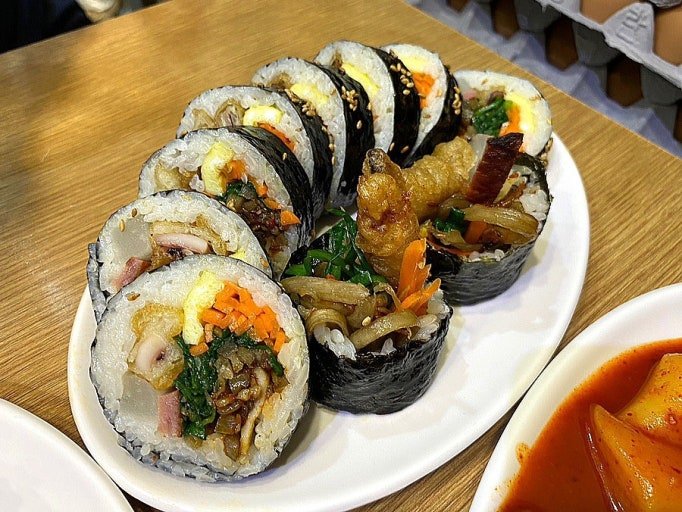
Masinneunjip is included for one particularly distinctive menu: Otwi Gimbap (오튀김밥).
The name combines ojingeo twigim, meaning fried squid, with gimbap.
A substantial piece of fried squid runs through the roll, giving it a chewy center and fried exterior that makes it noticeably different from an ordinary vegetable or tuna gimbap.
That clear identity is exactly what makes it worth including in a list where each shop offers something different.
The restaurant also fits naturally into a visit to Mangwon Market. Think of it as a food to try while exploring the market rather than a restaurant you necessarily need to cross Seoul to visit on its own.
Finding It
The Korean name 맛있는집 is extremely generic, so searching only the restaurant name may show unrelated restaurants or general Mangwon Market food results.
To make sure you reach the right shop inside the market, use NAVER Map or Google Maps.
Address: 서울 마포구 망원로8길 30
What to Order
Try the Otwi Gimbap first.
It is especially convenient for two people to share while exploring Mangwon Market, leaving room to sample other foods afterward.
Sikmulwon Gimbap Seocho Main Branch
Area: Seocho
Best for: Modern, ingredient-focused gimbap
What to order: Sikmulwon Gimbap or one of the specialty rolls
Budget: Around ₩6,500–₩13,000 per roll
Search on NAVER Map: 식물원김밥 서초본점
Why It Stands Out
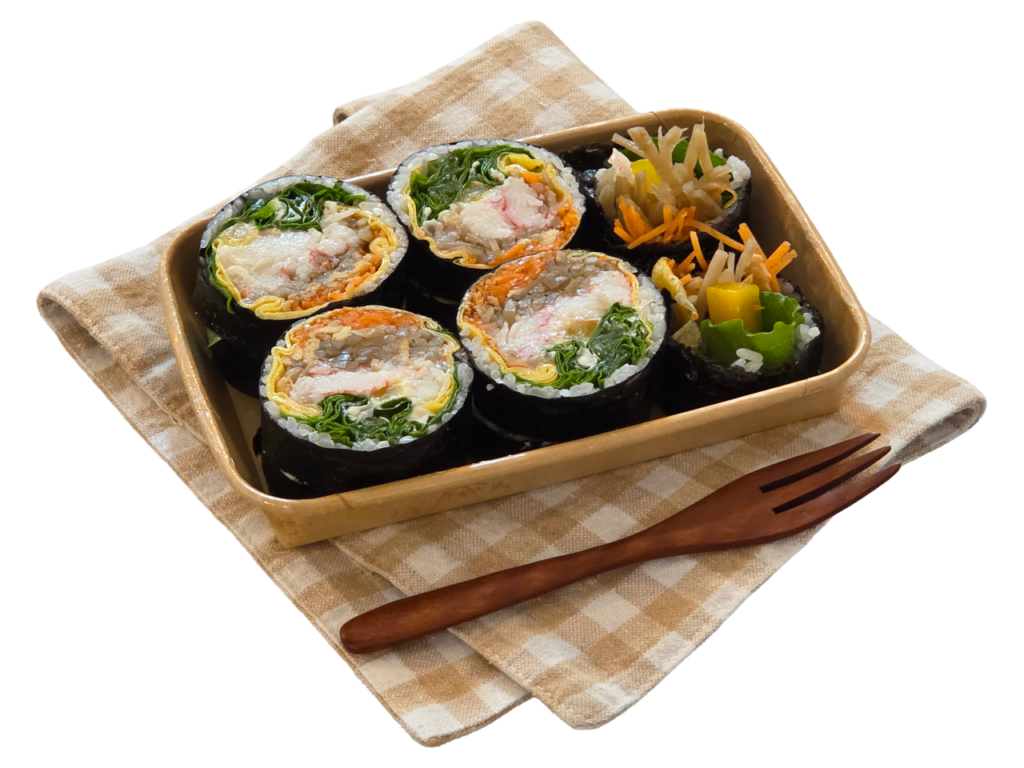
Sikmulwon Gimbap represents the more modern and ingredient-focused side of Seoul gimbap.
Its rolls place greater emphasis on vegetables, egg, black rice, and featured ingredients than the basic rolls found at many neighborhood snack shops.
Depending on the current menu, you may see combinations involving large amounts of egg, leafy vegetables, aged kimchi, tuna, pollock roe, avocado, or black rice.
That makes Sikmulwon useful in this guide even though some rolls cost considerably more than traditional everyday gimbap.
You are not coming here to find the cheapest possible roll. The appeal is seeing how a familiar Korean food can become a more substantial and ingredient-driven meal.
Sikmulwon Gimbap also works particularly well for solo dining or takeaway. It already appears in our guide to solo dining in Seoul for that reason.
What to Order
The Sikmulwon Gimbap is the easiest starting point for a first visit.
If a specialty roll is what attracts you, look at the current menu and choose according to the main ingredient you prefer.
One roll can be surprisingly filling because several options use generous amounts of egg and vegetables.
Owol-ui Gimbap
Area: Nakseongdae
Best for: A generously filled takeaway roll
What to order: Bapdoduk Gimbap or Salad Gimbap
Budget: Around ₩6,000 per roll
Search on NAVER Map: 오월의김밥
Why It Stands Out
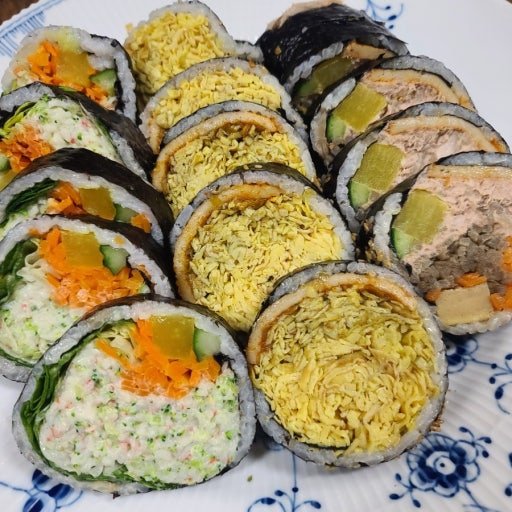
Owol-ui Gimbap is a good example of how changing the ratio of rice to filling can transform a familiar food.
The Bapdoduk Gimbap uses a relatively thin layer of rice around a generous amount of egg and seasoned fish cake.
The Salad Gimbap takes a different direction, adding a large amount of salad for a fresher texture.
Both feel more substantial than the basic rolls sold at many neighborhood snack shops.
The restaurant is primarily useful as a takeaway stop, and its operating window can be relatively short. Popular items may also sell out.
That means this is one place where it is especially important to check the current listing before making a special trip.
What to Order
Choose Bapdoduk Gimbap if you want the restaurant’s best-known savory combination.
Choose Salad Gimbap if you prefer a fresher, vegetable-heavy roll.
Owol-ui Gimbap becomes much more practical if you are already staying or sightseeing in southern Seoul.
Jinsunja Egg-Rolled Gimbap Bongcheon Main Branch
Area: Bongcheon / Gwanak
Best for: A distinctive egg-wrapped gimbap
What to order: Egg-Rolled Gimbap
Budget: Around ₩6,500 for the gimbap; roughly ₩11,000–₩12,000 for simple sets
Search on NAVER Map: 진순자계란말이김밥 봉천본점
Why It Stands Out
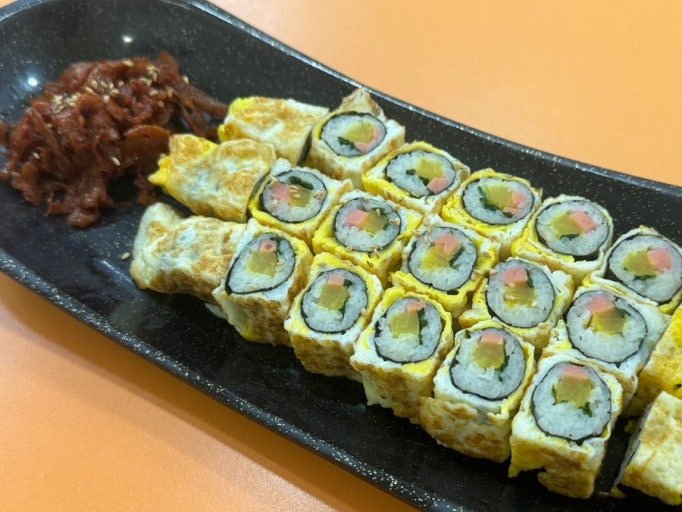
The visual difference is immediate.
Instead of simply putting egg inside a normal roll, Jinsunja wraps small pieces of gimbap in a layer of cooked egg.
The result is softer and milder in texture than a standard gimbap roll.
The pickled radish served alongside it also matters. Its sharper flavor and crunch help balance the soft egg and rice.
This is an old-school bunsik, or Korean snack-shop, experience rather than a polished premium gimbap restaurant. That gives it a useful contrast with modern shops such as Sikmulwon and Boseul Boseul.
Is It Worth the Trip?
This is one of the less convenient restaurants in the guide for visitors staying around central Seoul.
Unless you already have plans around Gwanak or southern Seoul, I would recommend making the trip mainly if egg-rolled gimbap specifically interests you.
If you simply need good gimbap during a busy sightseeing day, choosing a closer restaurant from this list is usually more practical.
What to Order
Start with the Egg-Rolled Gimbap.
For a fuller bunsik meal, combine it with tteokbokki, fish cake, or noodles rather than ordering several portions of gimbap.
Gimbap and tteokbokki are one of Korea’s most familiar snack-shop combinations. See our guide to the best tteokbokki in Seoul if you want to explore that style of food further.
Boseul Boseul Yeoksam Main Branch
Area: Yeoksam / Gangnam
Best for: Keto-style and egg-heavy modern gimbap
What to order: Boseul Keto or Mukcham Keto Mayo
Budget: Around ₩7,500–₩10,000 for many rolls, with some premium options costing more
Search on NAVER Map: 보슬보슬 역삼본점
Why It Stands Out
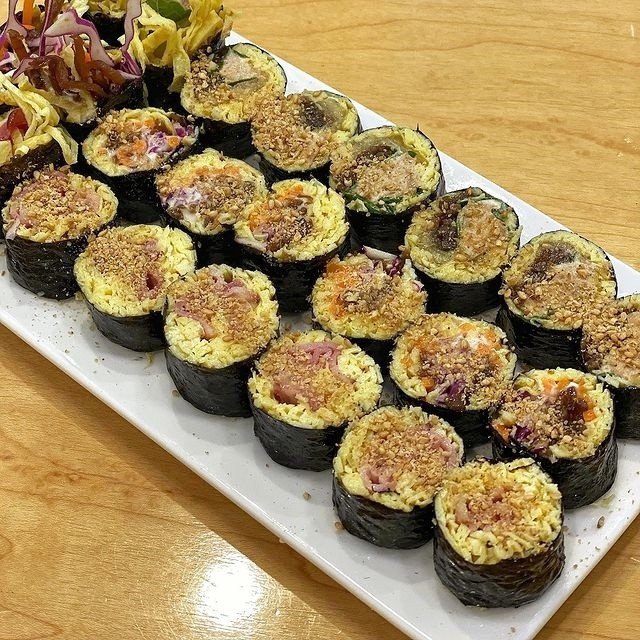
Boseul Boseul shows one of the clearest modern changes in Korean gimbap: reducing or replacing the rice with egg.
Keto-style gimbap became popular among diners looking for lower-carbohydrate meals, and Boseul Boseul is one of the better-known Seoul names associated with that style.
A roll can contain a surprisingly large amount of finely shredded egg, with ingredients such as carrot, minari, tuna, aged kimchi, bacon, or mayo-based sauces providing much of the flavor.
This is not where I would send someone who wants to understand the most traditional form of gimbap.
That is also exactly why it belongs here.
If you have already eaten ordinary gimbap during your trip, Boseul Boseul shows how the same basic format can become a very different modern meal.
The Yeoksam location also fits naturally into a Gangnam itinerary.
What to Order
Try Boseul Keto for a straightforward introduction to the restaurant’s egg-heavy style.
If you like tuna and aged kimchi, Mukcham Keto Mayo is another useful option.
Check the current price before ordering several rolls, as some specialty options cost considerably more than basic neighborhood gimbap.
How Much Does Gimbap Cost in Seoul?
Gimbap can still be one of the more affordable meals in Seoul, but there is now a very wide price range.
A simple market or neighborhood roll may cost only a few thousand won. Specialty shops can charge more because they use larger amounts of egg, vegetables, meat, seafood, premium ingredients, or larger portions.
As a general planning guide:
- Market mini gimbap: around ₩4,000–₩5,000
- Standard specialty rolls: around ₩5,000–₩7,000
- Premium or ingredient-heavy rolls: around ₩7,000–₩13,000
- Chungmu gimbap and larger specialty sets: around ₩10,000–₩12,000+
- Some premium keto or specialty combinations: potentially higher
Do not compare restaurants only by the number of rolls.
A ₩10,000 egg-heavy roll can contain considerably more filling than a basic neighborhood gimbap, while Chungmu gimbap includes seasoned squid and radish as part of the meal.
Treat these prices as planning ranges rather than fixed menu prices.
How to Order Gimbap in Korea
Gimbap shops are generally easier for first-time visitors than Korean barbecue restaurants or shared hot-pot restaurants.
At traditional shops, you may order directly at the counter. Newer restaurants may use kiosks, tablets, or self-service systems.
One useful Korean word is 줄 (jul), which means a roll or line.
To order one regular roll:
김밥 한 줄 주세요.
Gimbap han jul juseyo.
One roll of gimbap, please.
For takeaway:
포장해 주세요.
Pojanghae juseyo.
Please pack it to go.
If you are worried about spice:
매워요?
Maewoyo?
Is it spicy?
Not every restaurant in this guide uses a standard one-roll format. Mini gimbap and Chungmu gimbap are usually sold as portions or sets instead.
If kiosks, menus, payment, or restaurant ordering still feels unfamiliar, our full guide to ordering food in Korea explains the process in more detail.
Is Gimbap Good for Breakfast, Solo Dining, or Takeaway?
Breakfast
Yes, especially when you want something quick instead of a heavy sit-down meal.
Some neighborhood gimbap shops open early, and takeaway gimbap can be convenient before a palace visit, market trip, museum, or day tour.
However, specialty shops do not necessarily follow typical breakfast hours. Check the current opening time before relying on a specific restaurant.
For more early options, see our guide to the best Korean breakfast in Seoul.
Solo Dining
Gimbap is one of the easiest Korean foods to eat alone.
There is normally no two-person minimum, no shared grill, and no need to order several dishes.
A single roll can work as a light meal, while adding tteokbokki, noodles, or fish cake makes it more substantial.
Takeaway
Takeaway is one of gimbap’s biggest advantages.
You can buy a roll before a train journey, take it back to your hotel, or fit it into a sightseeing-heavy day without planning a long restaurant stop.
This is another reason location matters: a good gimbap shop near your existing route can be more useful than a famous one on the opposite side of Seoul.
What About Convenience Store Gimbap?
Convenience stores sell both regular gimbap and samgak gimbap, the triangular version commonly filled with tuna mayo, kimchi, meat, or other simple fillings.
They are useful when restaurants are closed or you need something immediately, but they are a different experience from freshly prepared gimbap at a specialist shop.
See our Korean convenience store food guide for more easy CU, GS25, and 7-Eleven meal ideas.
Gimbap vs. Sushi: Are They the Same?
No.
They can look similar because both use rice and seaweed, but gimbap is a distinct Korean food with different seasoning, fillings, and eating traditions.
Sushi rice is generally seasoned with vinegar.
Gimbap rice is more commonly seasoned with ingredients such as sesame oil and salt, and the rolls frequently contain cooked or seasoned ingredients such as egg, vegetables, fish cake, ham, beef, or pickled radish.
Raw fish is not a defining feature of gimbap.
For a first-time visitor, it is more useful to think of gimbap as its own Korean rice-roll tradition rather than simply calling it “Korean sushi.”
How This Guide Was Checked
This guide was reviewed using current Korean restaurant listings, tourism information, menu references, and local dining sources available in August 2026.
Restaurants were selected based on several factors:
- A distinctive gimbap style or signature menu
- Current operating information that could be reasonably verified
- Practical value for Seoul visitors
- Enough difference from the other restaurants to justify a separate recommendation
- Location and whether the restaurant can fit naturally into a typical Seoul itinerary
The restaurants are not ranked by popularity or presented as places every traveler must visit.
Special attention was also given to locations that can be difficult to find. Monyeo Gimbap has more than one location around Gwangjang Market, while Masinneunjip has a generic Korean name that can make normal map searches confusing.
Opening hours, weekly holidays, menu items, prices, sold-out times, and branch information can change after publication.
Before making a special trip, search the Korean restaurant name on NAVER Map and check the latest listing.
FAQ
Can I order just one roll of gimbap?
Usually, yes.
At a typical gimbap shop, ordering one roll is completely normal and can be enough for a light meal.
Some specialty restaurants work differently. Mini gimbap may be sold by portion, while Chungmu gimbap is usually served as a set with squid and radish.
Can vegetarians eat gimbap in Korea?
Sometimes, but do not assume a vegetable-looking roll is vegetarian.
Gimbap often contains ingredients such as egg, ham, crab stick, fish cake, tuna, or meat even when vegetables make up most of the visible filling.
If you follow a strict vegetarian or vegan diet, confirm the ingredients before ordering.
What should I eat with gimbap?
Gimbap is commonly paired with inexpensive Korean snack-shop foods such as tteokbokki, fish cake, ramyeon, or noodles.
The mild flavor of a standard gimbap roll works especially well with spicy tteokbokki.
You do not need a side dish, though. One generously filled roll can easily work as a simple meal by itself.
Do I need to visit a specialist shop to try gimbap?
No.
You can find perfectly enjoyable gimbap at ordinary neighborhood bunsik restaurants and even convenience stores across Seoul.
The restaurants in this guide are useful because they offer specific styles or signature rolls that make them easier to recommend individually.
If none fits your route, choosing a busy local gimbap shop near your hotel or sightseeing area can still be a good experience.
Final Thoughts
Choosing the best gimbap in Seoul often depends less on finding a single “number one” restaurant and more on where you are and what style you want to try.
Around Anguk and Bukchon, Joseon Gimbap offers a vegetable-forward style that fits naturally into a sightseeing day. At Gwangjang Market, Monyeo Gimbap works well as one snack among several market foods. In Myeongdong, Chungmu gimbap gives you the chance to try a completely different regional version without leaving central Seoul.
If you visit Mangwon Market, Masinneunjip’s fried-squid gimbap is one of the more unusual choices in this guide.
Sikmulwon and Boseul Boseul represent the modern, ingredient-heavy side of gimbap, while Owol-ui Gimbap and Jinsunja are better choices when their particular specialties interest you enough to fit them into your route.
Every restaurant here does something a little differently, but you do not need to treat gimbap like a destination meal where choosing the “wrong” shop will ruin the experience.
Pick a style that interests you, choose a recommended place that fits your itinerary, and enjoy gimbap for what it is for many people in Korea: an easy, familiar, and flexible meal that can fit almost anywhere into the day.