Best Kalguksu in Seoul: 7 Korean Knife-Noodle Restaurants Worth Visiting
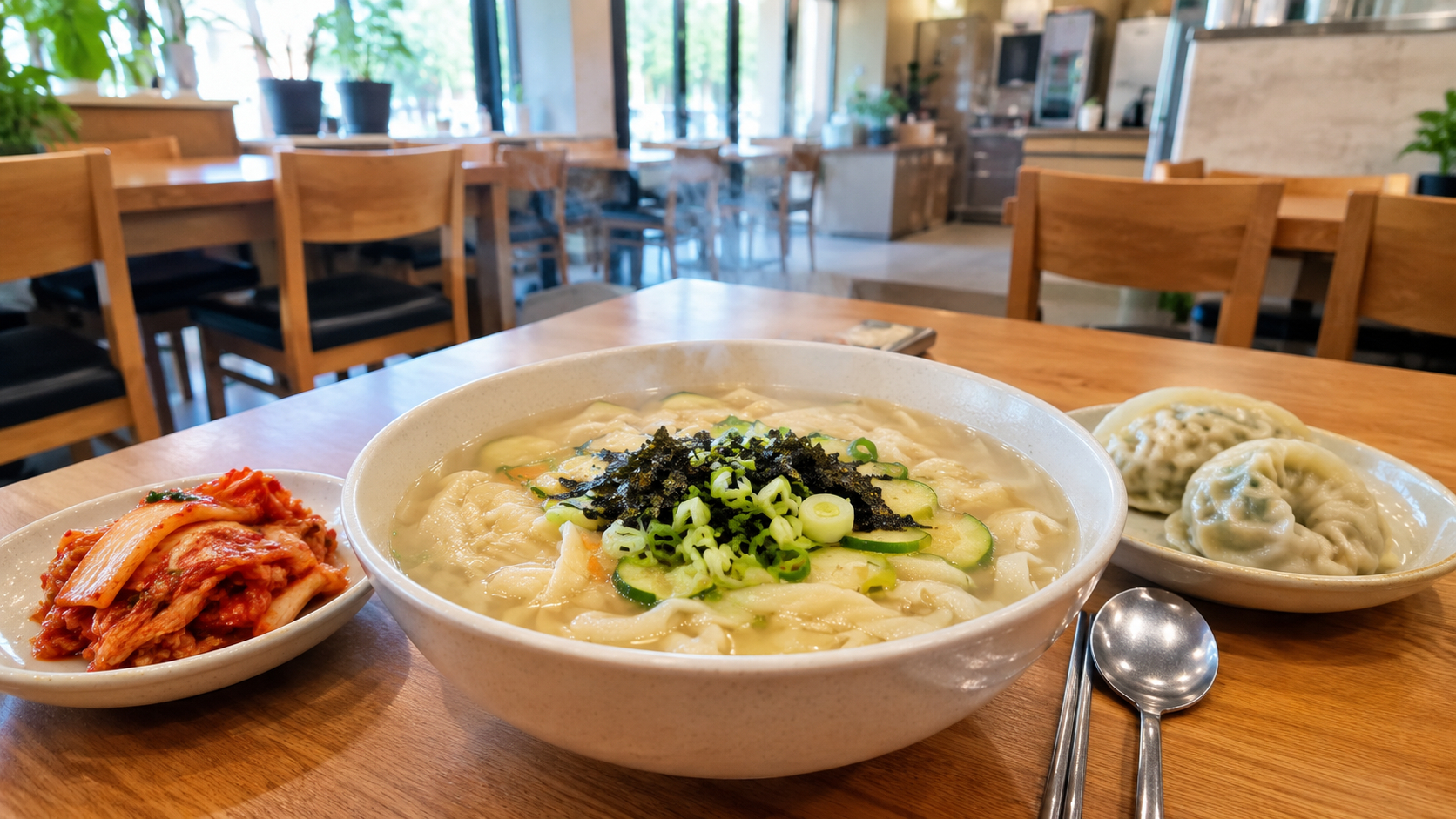
A steaming bowl of kalguksu may not be as internationally famous as Korean barbecue, fried chicken, or bibimbap, but it is one of the most comforting local meals you can eat in Seoul.
Kalguksu is made with soft wheat noodles traditionally cut from rolled dough with a knife. Depending on the restaurant, the noodles may be served in a rich beef-bone broth, a clean anchovy stock, a savory clam broth, or a hearty meat-based soup. The word itself combines kal, meaning “knife,” and guksu, meaning “noodles.”
For travelers, kalguksu is also relatively easy to approach. Most versions are not spicy, many restaurants have short menus, and a single bowl is usually filling enough for lunch or dinner. The main challenge is choosing the right restaurant because the flavor can be completely different from one place to another.
This guide to the best kalguksu in Seoul includes famous restaurants in Myeongdong and Bukchon, local noodle shops near City Hall and Yeonhui-dong, a traditional market restaurant, and options in southern Seoul. You will also find ordering tips, beginner-friendly recommendations, nearby attractions, and common mistakes to avoid.
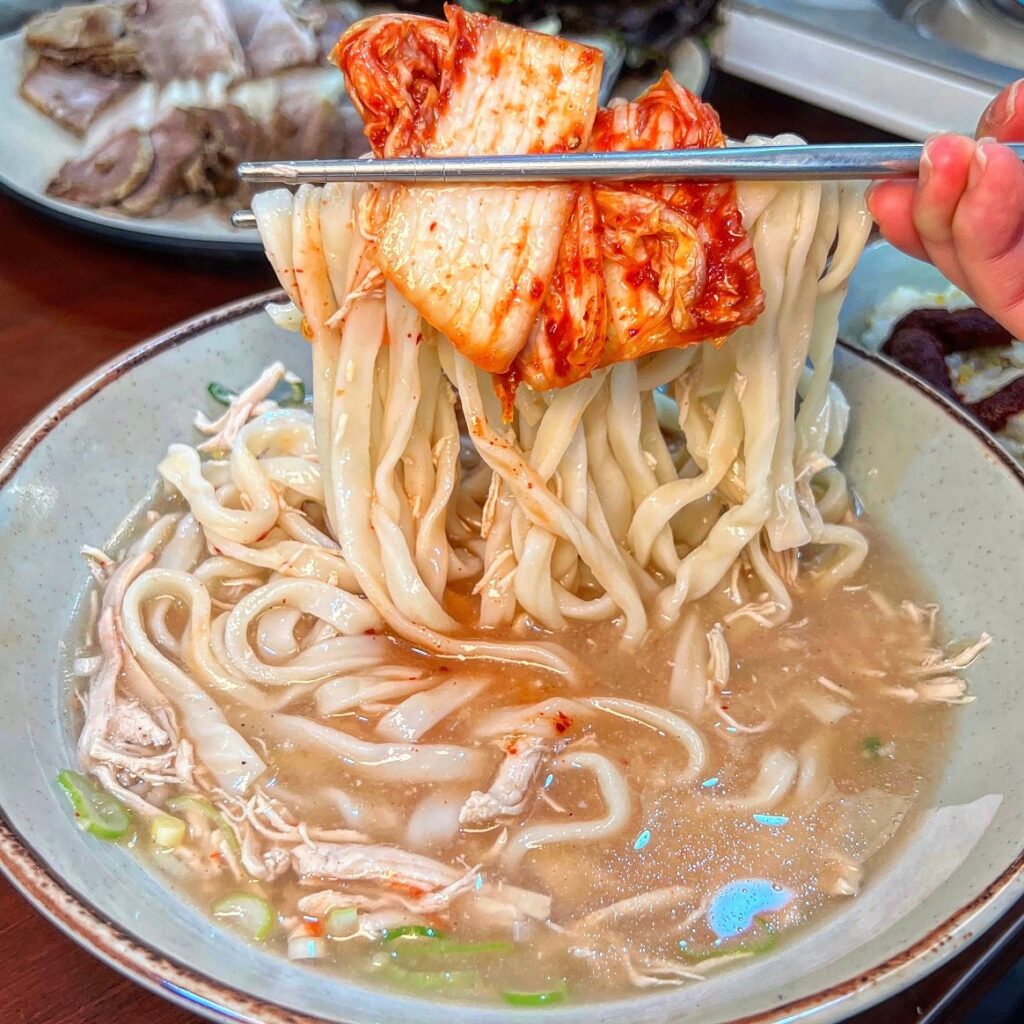
Table of Contents
What Is Kalguksu?
Kalguksu is often translated as “Korean knife-cut noodle soup,” but the name describes the noodles rather than one specific broth.
Traditional kalguksu noodles are made by kneading wheat-flour dough, rolling it into a thin sheet, and slicing it with a knife. Common broths may be made with anchovies, chicken, clams, seafood, beef bones, or a combination of ingredients. Zucchini, green onion, seaweed, potatoes, dumplings, and minced meat may also be added depending on the regional or restaurant style.
This means two restaurants can both specialize in kalguksu while serving bowls that look and taste very different.
A creamy beef-bone kalguksu can feel rich and warming, while a clam-based version may taste cleaner and more refreshing. Some noodles are thin and soft, while others are thick, irregular, and chewy.
For first-time visitors, it is better to choose according to the broth and atmosphere rather than looking for a single restaurant that is considered “the best.”
must-try Korean foods in Seoul.
Quick Comparison: Which Kalguksu Restaurant Should You Choose?
| Restaurant | Area | Main Style | Best For |
|---|---|---|---|
| Myeongdong Kyoja | Myeongdong | Rich Myeongdong-style noodle soup | First-time visitors |
| Hwangsaengga Kalguksu | Bukchon | Beef-bone broth | Palace and Bukchon sightseeing |
| Limbyungjoo Sandong Kalguksu | Yangjae | Clam-based broth | Chewy handmade noodles |
| Hyundai Kalguksu | City Hall | Anchovy and dried-seafood broth | Early lunch and central Seoul |
| Yeonhuidong Kalguksu | Yeonhui-dong | Deep beef-bone broth | Quiet local neighborhoods |
| Andongjip Sonkalguksu | Gyeongdong Market | Traditional hand-cut noodles | Market atmosphere |
| Nonhyeon Son Kalguksu | Gangnam | Thick broth with kalguksu and sujebi | Generous local meal |
Restaurant schedules, menu prices, seasonal dishes, and closing days can change. Check the latest information on Naver Map shortly before visiting.
1. Myeongdong Kyoja: The Easiest First Kalguksu Experience
Best for: First-time visitors, Myeongdong shopping, and travelers who want a famous Seoul classic
What to order: Kalguksu and mandu
Flavor: Rich, savory, filling, and strongly seasoned
Nearby attractions: Myeongdong Cathedral, Myeongdong shopping streets, Namsan, and N Seoul Tower
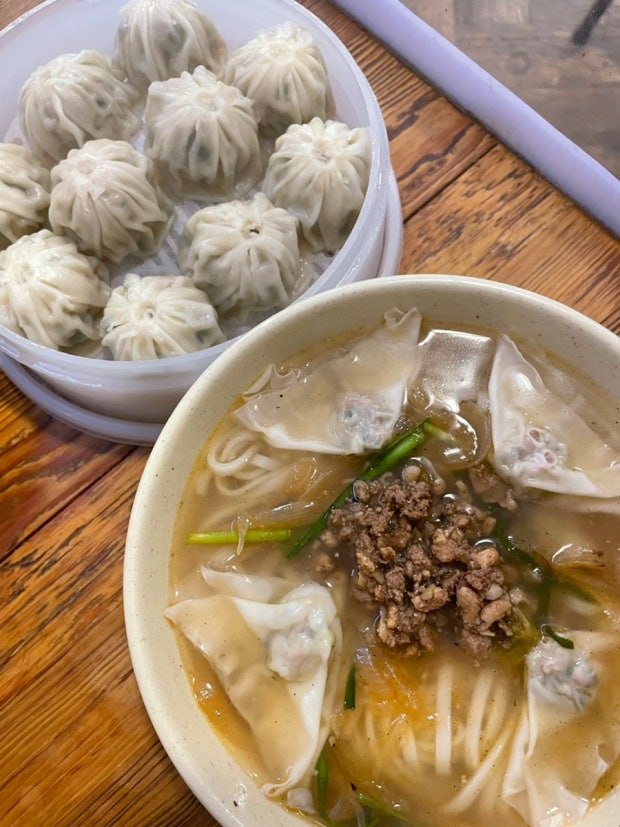
Myeongdong Kyoja is probably the most recognizable kalguksu restaurant among international visitors. Its central location, compact menu, fast service, and distinctive noodle soup make it one of the easiest places to try kalguksu during a first trip to Seoul.
The signature bowl comes with soft noodles in a rich house broth and is noticeably fuller and heavier than many clear anchovy or clam-based versions. The menu also includes mandu and spicy bibim guksu. The restaurant is especially known for its powerful garlic-flavored kimchi, which can taste much spicier and more intense than the noodle soup itself.
For two people, ordering one bowl of kalguksu each and sharing one plate of mandu is a simple beginner-friendly combination. However, the portions are filling, so travelers with smaller appetites may want to see the serving size before adding several side dishes.
Myeongdong Kyoja is a practical lunch stop between shopping sessions. You can explore Myeongdong in the morning, eat before the busiest lunch period, and continue toward Myeongdong Cathedral or Namsan in the afternoon.
If you plan to stay in the neighborhood until dinner, compare nearby grilled-meat options in our Myeongdong Korean BBQ guide before choosing a restaurant.
Before you visit: Expect a fast-moving restaurant rather than a quiet, leisurely dining experience. Lines are common at popular times, although table turnover can be quick. The restaurant is currently listed at 29 Myeongdong 10-gil with operating hours of 10:30 a.m. to 9:00 p.m., but check the latest branch information before visiting.
Myeongdong Kyoja is one of the easiest places for first-time visitors to try kalguksu.2. Hwangsaengga Kalguksu: Rich Beef-Bone Broth Near Bukchon
Best for: Gyeongbokgung Palace, Bukchon Hanok Village, and travelers who prefer a mild but rich broth
What to order: Sagol kalguksu and wang mandu
Flavor: Creamy, savory, gentle, and beef-forward
Nearby attractions: Gyeongbokgung Palace, Bukchon Hanok Village, the National Museum of Modern and Contemporary Art, and Samcheong-dong
Hwangsaengga Kalguksu is one of the strongest choices for travelers spending a day around Seoul’s royal-palace district.
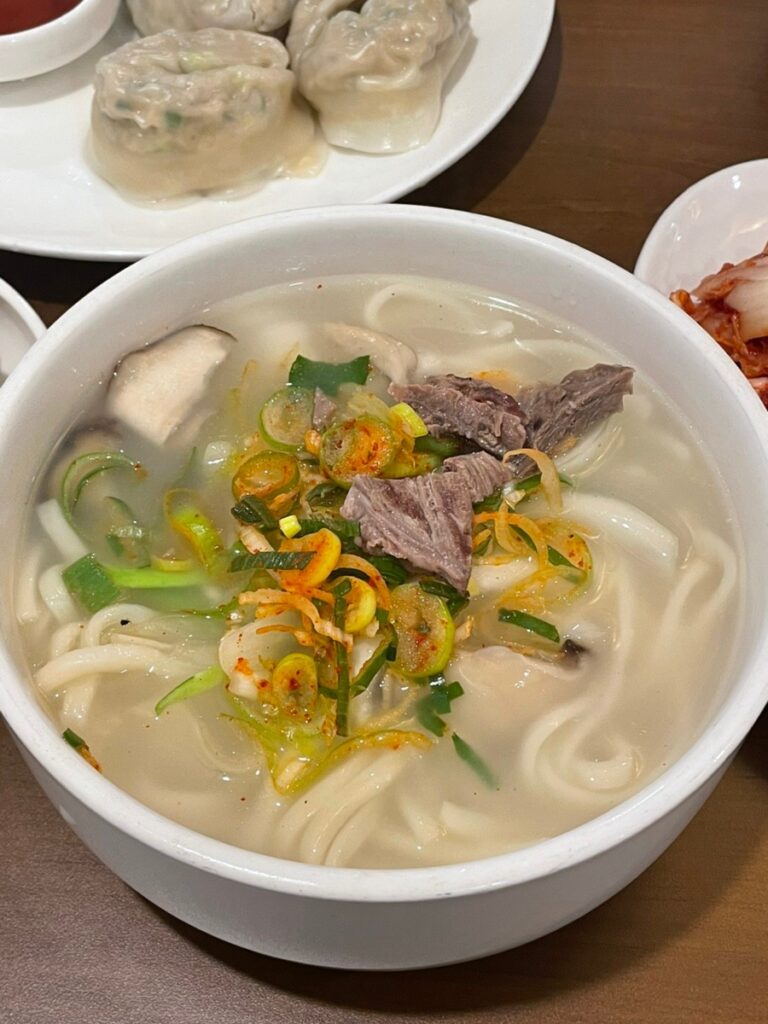
Unlike restaurants that use anchovy or clam stock, Hwangsaengga is known for sagol kalguksu, made with a beef-bone-based broth. The soup is smooth, rich, and comforting without depending on chili heat. Large handmade dumplings are another popular menu item.
This is a particularly good choice for travelers who want a traditional Korean meal but are worried that Korean food may be too spicy. The broth itself is generally approachable, although the kimchi served on the side may still be spicy.
A convenient route is to visit Gyeongbokgung Palace in the morning, walk toward the eastern side of the palace, eat lunch at Hwangsaengga, and continue into Bukchon or Samcheong-dong. Bukchon is located between Gyeongbokgung and Changdeokgung and remains a residential neighborhood, so visitors should keep noise low and respect restricted visiting areas.
Before you visit: The restaurant is currently listed at 78 Bukchon-ro 5-gil and is listed as operating from 11:00 a.m. to 9:30 p.m. Hours, last-order times, and holiday schedules should still be checked before visiting.
3. Limbyungjoo Sandong Kalguksu: Chewy Noodles and Refreshing Clam Broth
Best for: Travelers staying near Gangnam or Yangjae and anyone who prefers seafood-based broth
What to order: Sandong kalguksu and Pyeongyang-style jumbo mandu
Flavor: Clean, savory, slightly briny, and refreshing
Nearby attractions: Yangjae Stream, Gangnam Station area, and southern Seoul neighborhoods
Limbyungjoo Sandong Kalguksu is a long-running noodle restaurant in Seocho-gu and a good example of how different kalguksu can be from the richer bowls found in Myeongdong or Bukchon.
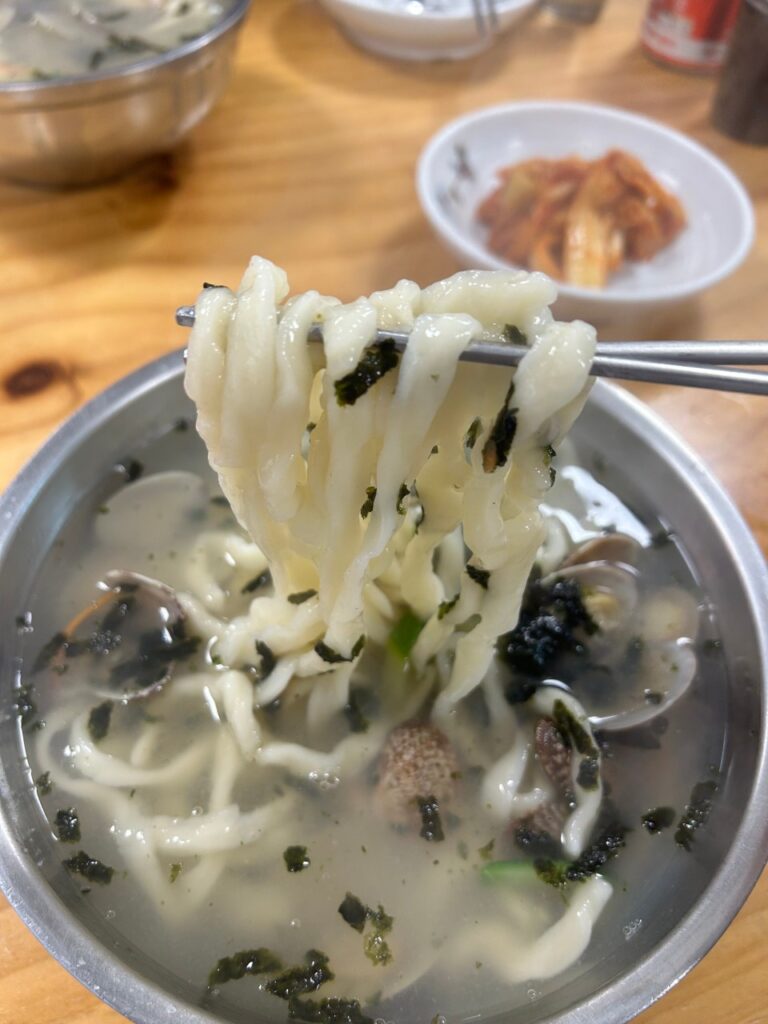
The restaurant is known for noodles made fresh by hand and a flavorful broth containing generous clams. The noodles have a pleasantly chewy texture, while the shellfish gives the soup a clean and refreshing finish.
The menu also includes Pyeongyang-style jumbo mandu, and may include dishes such as bossam, jokbal, cold noodles, or seasonal soybean noodles. Current availability should be confirmed because side dishes and seasonal menus may change.
This restaurant is farther from Seoul’s main historic attractions, so it makes more sense for travelers already staying in Gangnam, visiting Yangjae, or exploring southern Seoul. It is not necessary to cross the entire city only to complete a food checklist, but it is a worthwhile choice when it fits naturally into your route.
Important for travelers with allergies: This is not the right choice for anyone with a clam or shellfish allergy. Do not assume that removing visible clams will make the broth safe.
Before you visit: The restaurant is listed at 63 Gangnam-daero 37-gil. Published schedules are not fully consistent across current sources, particularly regarding weekly closing days, so confirm the latest opening hours on Naver Map before making a special trip.
4. Hyundai Kalguksu: A Local Favorite Near Seoul City Hall
Best for: Deoksugung Palace, Seoul City Hall, office-district atmosphere, and an earlier meal
What to order: Kalguksu or seokkeo kalguksu
Flavor: Deep but refreshing, with anchovy and dried-seafood flavors
Nearby attractions: Deoksugung Palace, Seoul City Hall, Jeong-dong, and Seoullo 7017
Hyundai Kalguksu is a useful option for travelers who want a traditional noodle restaurant in central Seoul without going into the busiest parts of Myeongdong.
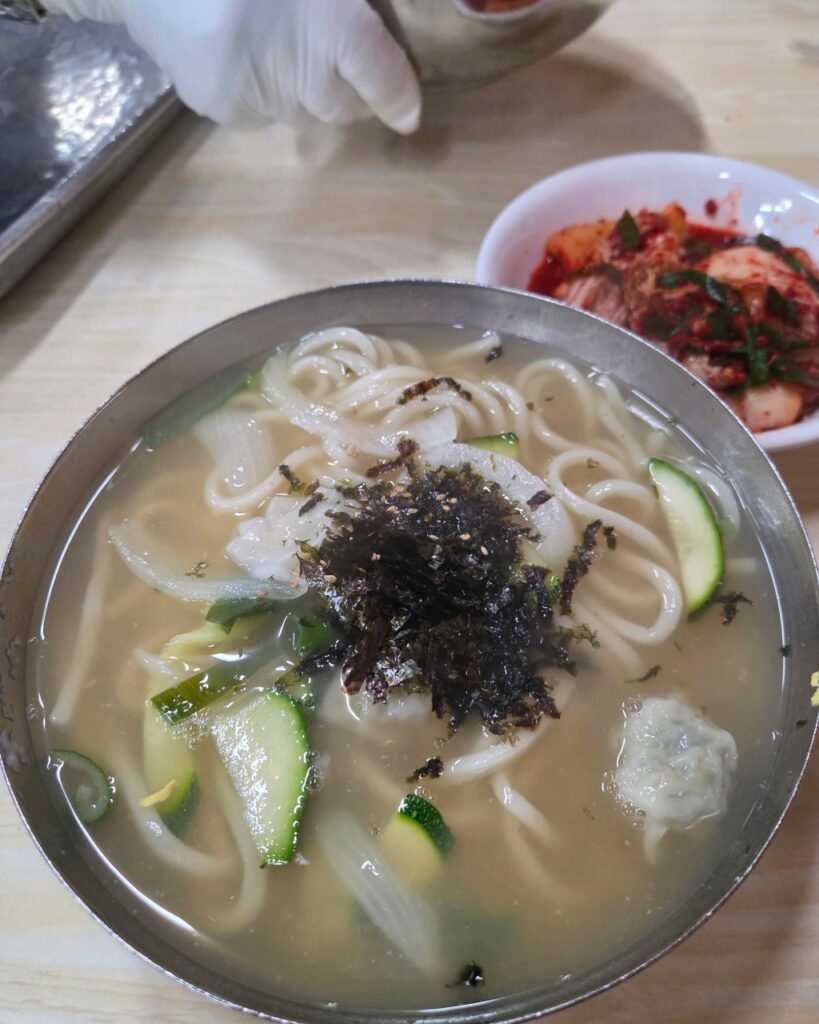
Its broth is made with ingredients including anchovies, dried pollack, kelp, and other dried seafood. The noodles are soft, the servings are generous, and the soup has more depth than a very light anchovy broth while remaining cleaner than a heavy beef-bone soup.
The restaurant is popular with nearby office workers, making weekday lunch especially busy. For a more comfortable visit, arrive before the main office lunch rush or eat later in the afternoon after confirming the break time.
The location works well with a central Seoul route. Visit Deoksugung Palace, walk along the stone-wall road, stop for kalguksu, and continue toward Seoul Station or Seoullo 7017. Deoksugung is especially distinctive because traditional palace buildings coexist with Western-style architecture and gardens.
Before you visit: Hyundai Kalguksu is listed at 76 Sejong-daero. Current tourism information lists weekday hours of 9:00 a.m. to 9:00 p.m., shorter Saturday hours, and closure on Sundays and national holidays. A separate break time may apply, so verify the schedule on the day of your visit.
Hyundai Kalguksu is a convenient local noodle restaurant near City Hall and Deoksugung Palace.5. Yeonhuidong Kalguksu: Deep Broth in a Quiet Local Neighborhood
Best for: Travelers who enjoy neighborhood cafés, quieter streets, and a less tourist-focused atmosphere
What to order: Kalguksu and suyuk if available
Flavor: Deep, milky, beefy, and comforting
Nearby attractions: Yeonhui-dong cafés, Yeonnam-dong, Hongdae, and Ansan walking trails
Yeonhuidong Kalguksu is a good choice for travelers who have already visited Seoul’s major tourist districts and want to spend time in a quieter residential neighborhood.
The restaurant is known for kalguksu served in a rich beef-bone broth. Compared with the clam broth at Limbyungjoo Sandong Kalguksu, the soup is heavier, rounder, and more substantial.
The menu is relatively focused, which makes ordering simple. Start with the standard kalguksu. If you are visiting with another person and want a larger meal, check whether suyuk, or boiled sliced meat, is currently available.
Yeonhui-dong does not sit directly on a subway line, so the trip may require a bus, taxi, or a longer walk from Hongik University Station. That slightly less convenient location is also part of its appeal. The neighborhood is known for small shops, independent cafés, low-rise streets, and a calmer atmosphere than central Hongdae.
A practical route is to eat lunch at Yeonhuidong Kalguksu, explore cafés and small shops nearby, and continue toward Yeonnam-dong or Hongdae later in the day.
Before you visit: The restaurant is listed at 37 Yeonhuimat-ro. Current tourism information lists operating hours around 11:00 a.m. to 8:30 p.m. and closure on Mondays, but published closing times differ slightly between sources. Confirm the latest schedule before visiting.
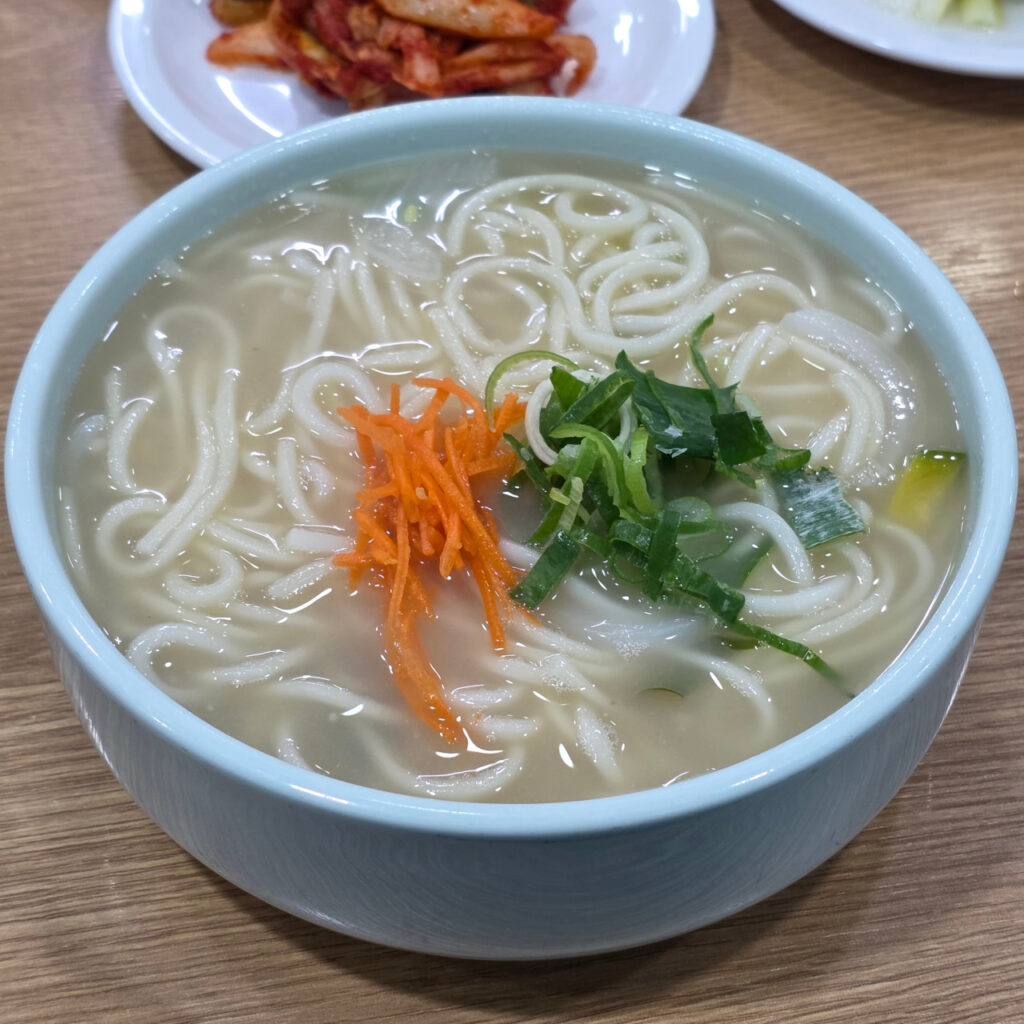
Yeonhuidong Kalguksu offers a rich bowl of noodles in a quieter local neighborhood.6. Andongjip Sonkalguksu: Traditional Noodles Inside Gyeongdong Market
Best for: Traditional-market atmosphere, local food experiences, and adventurous first-time visitors
What to order: Son-guksi, baechujeon, and suyuk if available
Flavor: Rustic, savory, home-style, and traditional
Nearby attractions: Gyeongdong Market, Seoul Yangnyeongsi herbal-medicine district, and Cheongnyangni
Andongjip Sonkalguksu offers a completely different experience from the polished restaurants in Myeongdong or Bukchon.
Located inside Gyeongdong Market, the restaurant is known for handmade noodle soup and traditional side dishes. Popular additions include baechujeon, a simple cabbage pancake, and suyuk, or boiled sliced pork.
The atmosphere is casual and market-like. Seating may be compact, the surroundings can feel busy, and finding the restaurant inside the market may take more effort than locating a street-facing restaurant. For many travelers, however, that is exactly why it is memorable.
Order the standard noodle soup first. If two or more people are dining together, add one pancake to share. Baechujeon may look simple, but its combination of soft cabbage and lightly crisp batter is very different from the heavier seafood pancakes commonly found in Korean restaurants.
This restaurant is best combined with a longer exploration of Gyeongdong Market rather than treated as a quick stop between distant attractions. Visit during the daytime, walk through the traditional market, and explore the surrounding herbal-medicine district.
Avoid bringing large luggage if possible. Traditional-market passages and compact dining areas can be inconvenient with oversized suitcases.
Before you visit: Current tourism information lists weekday daytime hours, shorter Saturday hours, and closures on selected Sundays. Market schedules and restaurant holidays can change, so check the current listing before traveling across Seoul.
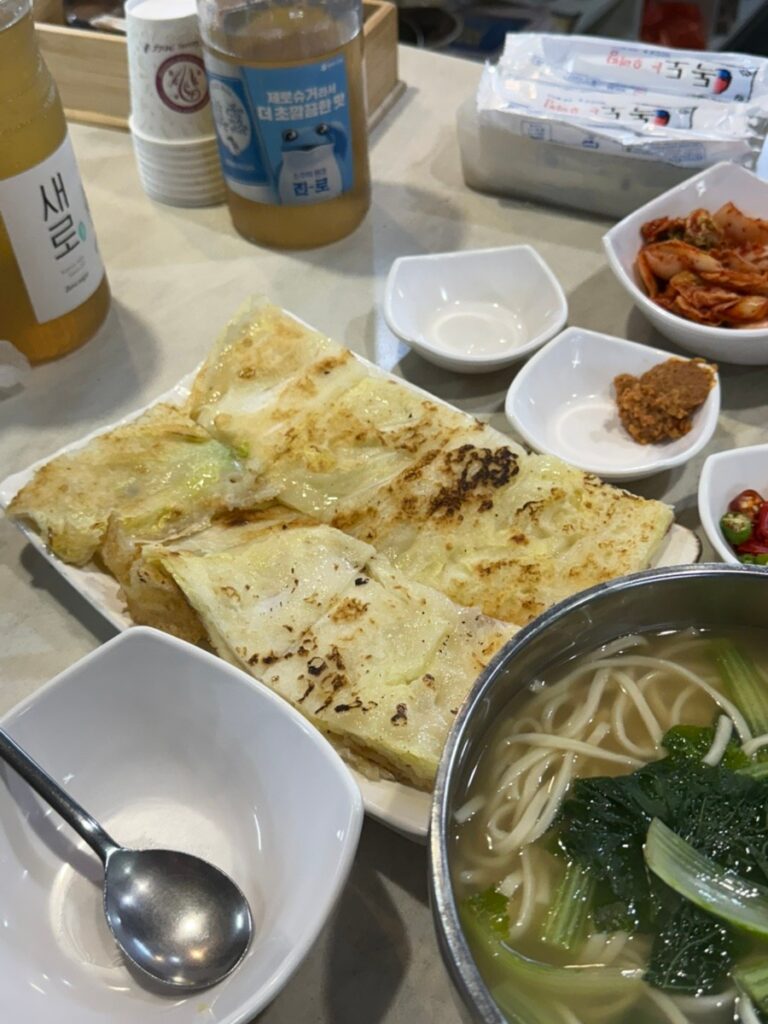
7. Nonhyeon Son Kalguksu: A Generous Local Meal in Gangnam
Best for: Travelers staying in Gangnam, fans of thick noodle soup, and anyone who wants to try both noodles and sujebi
What to order: Kaljebi for a combination of kalguksu and sujebi
Flavor: Thick, hearty, savory, and customizable
Nearby attractions: Gangnam neighborhoods, Sinsa, Apgujeong, and local design and shopping areas
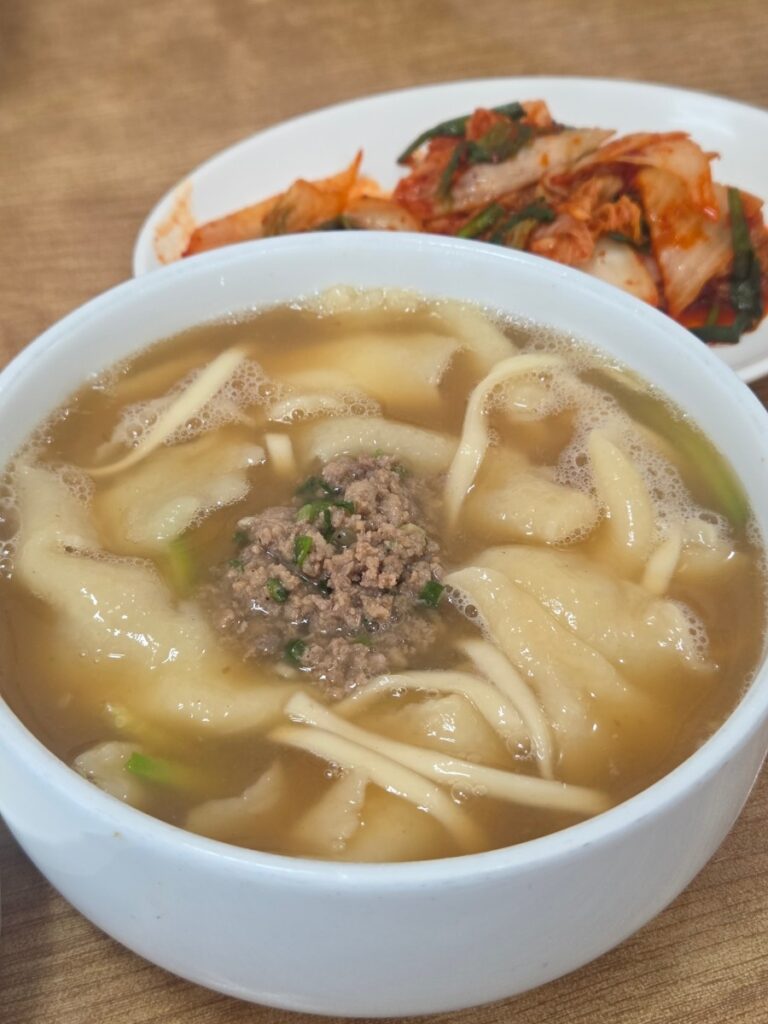
Nonhyeon Son Kalguksu is a neighborhood-style restaurant that specializes in handmade kalguksu and sujebi, pieces of hand-torn dough cooked in soup.
The most interesting choice for first-time visitors is kaljebi, which combines kalguksu noodles and sujebi in one bowl. This lets you compare the smooth, long noodles with the thicker and chewier pieces of dough.
The broth is thicker and more substantial than a light clam soup. Spicy Cheongyang chili seasoning may be available, but taste the original soup before adding it. Once the seasoning is mixed into the broth, you cannot return to the original flavor.
The restaurant is also known for generous portions and noodle or sujebi refills. However, refill policies can change, so ask the staff rather than assuming every order automatically includes unlimited extra noodles.
This restaurant is not next to one of Seoul’s major historic attractions. It is most practical for travelers already spending time in Gangnam, Sinsa, Apgujeong, or nearby neighborhoods.
Before you visit: The restaurant is listed at 16 Nonhyeon-ro 111-gil. As of the latest Gangnam tourism listing, it operates Monday through Friday from 9:30 a.m. to 8:00 p.m., has shorter Saturday hours, and closes on Sundays. Recheck the schedule before visiting.
How to Order Kalguksu in Seoul
Ordering kalguksu is usually simpler than ordering Korean barbecue because you generally choose one noodle dish per person and add shared side dishes only when needed.
Here is a simple ordering strategy for first-time visitors.
Step 1: Choose One Noodle Dish Per Person
At specialist restaurants, the standard dish may simply be listed as:
칼국수 — Kalguksu
Other common menu names include:
- 손칼국수 — Son kalguksu: Handmade or hand-cut noodle soup
- 사골칼국수 — Sagol kalguksu: Beef-bone-broth kalguksu
- 바지락칼국수 — Bajirak kalguksu: Clam kalguksu
- 닭칼국수 — Dak kalguksu: Chicken kalguksu
- 칼제비 — Kaljebi: Kalguksu noodles and sujebi together
- 콩국수 — Kongguksu: Cold noodles in soybean broth, usually seasonal
Step 2: Add Only One Shared Side Dish at First
For two travelers, one bowl per person plus one shared side dish is usually enough.
Good combinations include:
- Kalguksu + mandu
- Kalguksu + baechujeon
- Kalguksu + suyuk
- Kalguksu + bossam
Do not order several large side dishes before seeing the portion size. Dumplings, boiled meat, and pancakes can be more filling than expected.
Step 3: Taste the Broth Before Adding Seasoning
Some restaurants provide chopped chili, spicy sauce, pepper, or additional seasoning.
Try the original broth first.
The restaurant may have spent hours developing the flavor of the stock, and adding a large amount of spicy seasoning immediately can cover the differences between beef-bone, anchovy, chicken, and clam broth.
Step 4: Be Careful with the Kimchi
The kalguksu itself may be mild, but the kimchi can be extremely spicy, salty, garlicky, or freshly fermented.
Start with a small piece rather than placing a large amount directly into the soup.
Step 5: Check the Ingredients When Necessary
Kalguksu is not automatically vegetarian.
Even when the bowl contains mostly noodles and vegetables, the broth may include anchovies, dried seafood, clams, chicken, beef bones, or meat seasoning. Dumplings may also contain pork or other meat.
Travelers with allergies, religious dietary restrictions, or strict vegetarian diets should confirm the ingredients before ordering.
Best Kalguksu Choices for First-Time Visitors
Still unsure which restaurant to choose? Start with these recommendations.
Best Overall for a First Visit: Myeongdong Kyoja
Choose Myeongdong Kyoja if you want a famous restaurant in an easy sightseeing location and do not mind a busy atmosphere.
Best Mild and Rich Broth: Hwangsaengga Kalguksu
Choose Hwangsaengga if you prefer a creamy beef-bone broth and are visiting Gyeongbokgung or Bukchon.
Best Light Seafood Flavor: Limbyungjoo Sandong Kalguksu
Choose Limbyungjoo Sandong Kalguksu if you enjoy clams and prefer a cleaner, refreshing soup.
Best Central Seoul Local Option: Hyundai Kalguksu
Choose Hyundai Kalguksu if you are visiting Deoksugung or City Hall and want a restaurant popular with local office workers.
Best Traditional Market Experience: Andongjip Sonkalguksu
Choose Andongjip if the market atmosphere is as important to you as the food.
Best Quiet Neighborhood Experience: Yeonhuidong Kalguksu
Choose Yeonhuidong Kalguksu if you want to combine a local meal with independent cafés and quieter streets.
Best for Kalguksu and Sujebi Together: Nonhyeon Son Kalguksu
Choose Nonhyeon Son Kalguksu if you are staying in Gangnam and want to try different handmade dough textures.
Situations Where Kalguksu May Not Be the Best Choice
Kalguksu is approachable for many visitors, but it is not ideal for everyone.
You Need a Strictly Gluten-Free Meal
Traditional kalguksu noodles are made from wheat flour. This is generally not a suitable dish for travelers who must avoid gluten.
You Have a Shellfish or Seafood Allergy
Clam-based kalguksu is common, and some clear broths use anchovies, dried shrimp, pollack, or other seafood ingredients.
Always check the broth itself. Removing visible seafood is not enough for a serious allergy.
You Are Vegetarian or Vegan
Do not judge the ingredients only by what is visible in the bowl. Many apparently vegetable-based soups use meat or seafood stock.
You Want a Long, Quiet Dining Experience
Some famous kalguksu restaurants focus on fast service and high table turnover. They are excellent for an efficient meal but may not be ideal for a long conversation.
You Are Carrying Large Luggage
Traditional markets and smaller local restaurants may have narrow entrances, compact seating, stairs, or limited storage space.
Leave large luggage at your hotel or a luggage-storage facility when possible.
non-spicy Korean restaurants in Seoul.
Common Mistakes First-Time Visitors Make
Mistake 1: Assuming All Kalguksu Tastes the Same
A beef-bone bowl and a clam-based bowl can taste like completely different dishes.
Check the broth style before choosing a restaurant.
Mistake 2: Assuming the Kimchi Will Be Mild
The noodle soup may be gentle, but the kimchi can be the spiciest item on the table.
Try a small amount first.
Mistake 3: Adding Chili Before Tasting the Soup
Season gradually. You can always add more, but you cannot remove seasoning after mixing it into the broth.
Mistake 4: Ordering Too Many Side Dishes
Large dumplings, pancakes, bossam, and suyuk can turn a simple noodle lunch into a very large meal.
Mistake 5: Assuming Every Restaurant Offers Free Refills
Some restaurants are generous with extra noodles or rice, but this is not a universal rule.
Ask before ordering more.
Mistake 6: Trusting Old Business Hours
Restaurant schedules, break times, last orders, and holiday closures change frequently.
Check the current listing shortly before leaving.
Mistake 7: Searching Only in English
Some local restaurants are easier to find with their Korean names.
Copy the Korean restaurant name into Naver Map when English search results are incomplete.
Bonus: Namdaemun Kalguksu Alley
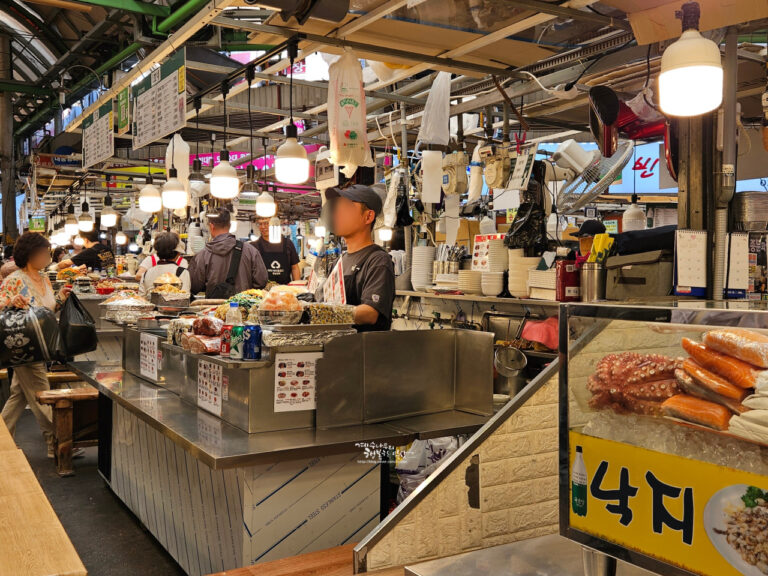
Namdaemun Kalguksu Alley is not one restaurant, so it is not included in the main list of seven. However, it deserves a mention for travelers who want a more informal market experience.
The alley contains compact food stalls serving inexpensive noodle meals in a busy traditional-market setting. Some meals may include small portions of additional dishes such as barley rice or cold noodles, although the exact set differs by stall.
The entrance can be easy to miss. It is located inside Namdaemun Market near Hoehyeon Station, and the narrow, steam-filled passage feels very different from a standard restaurant.
Choose the alley if you enjoy crowded markets, counter seating, quick service, and local atmosphere.
Skip it if you need spacious seating, have large luggage, or prefer a quiet restaurant with a clearly translated menu.
what to eat at Namdaemun Market.
How to Find Kalguksu Restaurants in Seoul
For restaurant navigation in Korea, Naver Map is often more useful than relying only on Google Maps.
Search the Korean restaurant name whenever possible. This can make it easier to find the correct branch, current visitor reviews, menu photos, updated opening hours, and temporary closure notices.
Useful Korean search terms include:
- 명동교자
- 황생가칼국수
- 임병주산동칼국수
- 현대칼국수
- 연희동칼국수
- 안동집 손칼국시
- 논현손칼국수
Save the restaurant before leaving your hotel and check the route again shortly before traveling.
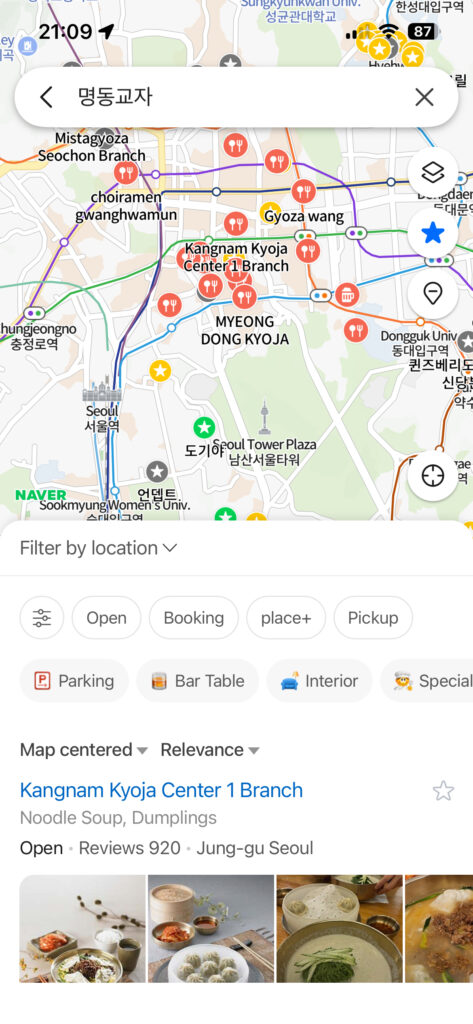
how to use Naver Map in Korea.
For navigation in Korea, Naver Map is usually more reliable than Google Maps. If you are new to Korea, check both links before visiting.
Frequently Asked Questions
Is kalguksu spicy?
Most traditional kalguksu broth is not spicy. However, kimchi and optional chili seasoning may be very spicy. Some restaurants also serve spicy variations, so check the menu before ordering.
What does kalguksu taste like?
The flavor depends on the broth. Beef-bone kalguksu is rich and creamy, clam kalguksu is clean and savory, and anchovy-based kalguksu is usually lighter with a noticeable seafood flavor.
Which kalguksu restaurant is best for first-time visitors?
Myeongdong Kyoja is one of the easiest choices because it is centrally located and has a compact menu. Hwangsaengga Kalguksu is another beginner-friendly option, especially for travelers visiting Gyeongbokgung Palace or Bukchon.
Can solo travelers eat kalguksu in Seoul?
Yes. Kalguksu is one of the easier Korean foods to eat alone because most restaurants serve individual bowls. Large side dishes are optional.
Is kalguksu vegetarian?
Usually not. Even when the bowl contains noodles and vegetables, the broth may be made with anchovies, clams, chicken, beef bones, or other animal ingredients. Ask the restaurant before ordering.
What is the difference between kalguksu and ramyeon?
Kalguksu traditionally uses wheat dough that is rolled and cut into noodles, while Korean ramyeon usually uses factory-produced, curly instant noodles. Kalguksu restaurants also focus heavily on the flavor of the house-made broth.
How much does kalguksu cost in Seoul?
Prices differ by restaurant and may change over time. Kalguksu specialty restaurants are generally casual and more affordable than Korean barbecue restaurants, but check a recent menu photo on Naver Map for the current price.
Final Thoughts
Finding the best kalguksu in Seoul is less about choosing one universally famous restaurant and more about finding the broth, neighborhood, and atmosphere that fit your trip.
Choose Myeongdong Kyoja for an easy first experience, Hwangsaengga for a rich bowl near Seoul’s palaces, Limbyungjoo Sandong Kalguksu for chewy noodles and clam broth, or Andongjip for a traditional market meal.
Travelers exploring central Seoul may prefer Hyundai Kalguksu, while Yeonhuidong Kalguksu and Nonhyeon Son Kalguksu offer a more local neighborhood experience.
Whichever restaurant you choose, taste the broth before adding seasoning, order side dishes gradually, and check current business hours before traveling.
A warm bowl of handmade noodles may end up being one of the simplest—and most comforting—meals of your Seoul trip.
How This Guide Was Checked
This guide was prepared by H. Jung, the Korea-based editor of Seoul Plate. Restaurants were reviewed for their noodle and broth styles, signature side dishes, location, ordering accessibility, and usefulness within a Seoul itinerary. Current restaurant information, Korean map listings, and relevant local sources were used where available. Menus, refill policies, prices, break times, and opening hours can change.