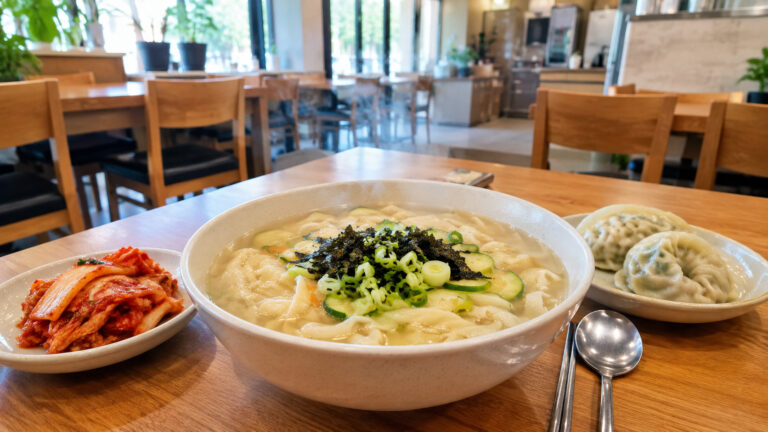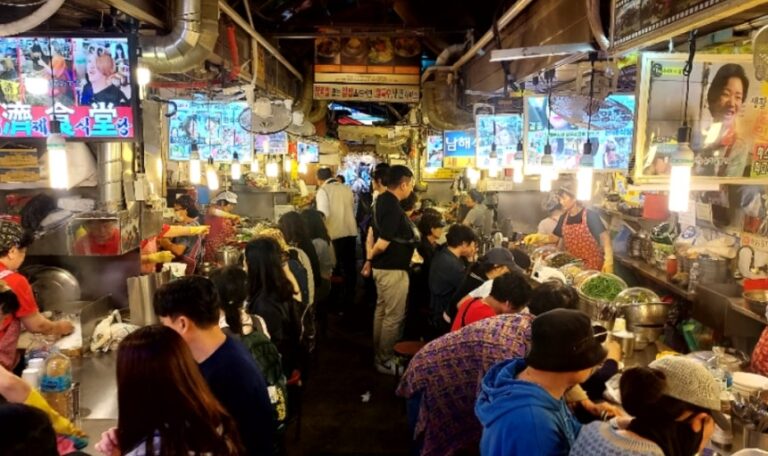
Best Bibimbap in Seoul for Tourists: 7 Restaurants, Ordering Tips, and What to Choose
Bibimbap is one of the easiest Korean dishes to recommend to a first-time visitor. It is colorful, filling, easy to order as a single meal, and flexible enough for travelers with very different tastes.
If you are still deciding what else to eat during your first trip, our guide to 15 must-try Korean foods in Seoul is a good place to build a simple food checklist.
However, searching for the best bibimbap in Seoul can be more confusing than expected. Some restaurants serve a traditional Jeonju-style bowl with carefully seasoned vegetables, while others specialize in sizzling stone-pot bibimbap, raw beef bibimbap, vegan versions, or local variations mixed with soybean paste.
This guide focuses on restaurants that make sense for travelers—not only because of the food, but also because they can be combined with popular areas such as Myeongdong, Namsan, Insadong, Ikseondong, Gwangjang Market, and Jamsil.
You will also find practical ordering tips, beginner-friendly recommendations, common mistakes, and advice on choosing the right type of bibimbap for your trip.
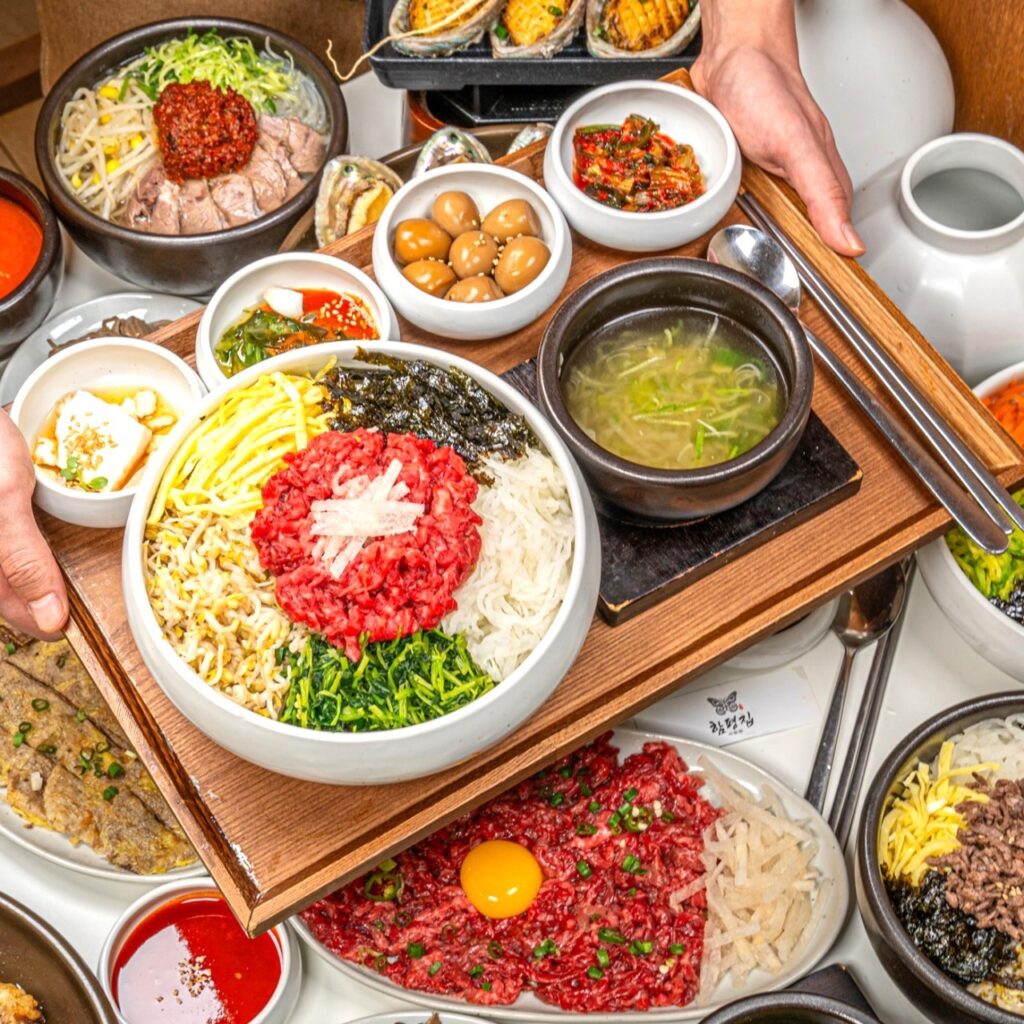
Table of Contents
Best Bibimbap in Seoul at a Glance
| Restaurant | Area | Best For | What to Order | Reference Price |
|---|---|---|---|---|
| Mokmyeoksanbang | Myeongdong / Namsan | Namsan sightseeing and a traditional bibimbap experience | Sanbang Bibimbap | Around ₩10,000 |
| Jeonju Hoegwan | City Hall / Bukchang-dong | Hot-stone bibimbap near City Hall | Gopdol Bibimbap | Around ₩12,000 |
| Hanguk Jip Lotte World Mall | Jamsil | Families, rainy days, and Lotte World itineraries | Jeonju Bibimbap | Around ₩15,000 |
| Toenmarujip Doenjang Yesul | Insadong / Jongno | Fermented flavors and a local-style bibimbap variation | Doenjang Bibimbap | Around ₩10,000 |
| Vegan Insa | Ikseondong / Insadong | Travelers looking for a fully vegan Korean meal | Vegan Bibimbap | Around ₩11,000 |
| Myeongdong Busanjib | Myeongdong | Muslim travelers looking for halal Korean food | Bibimbap | Around ₩18,000 |
| Buchon Yukhoe | Gwangjang Market | Raw beef fans and Gwangjang Market visitors | Yukhoe Bibimbap | Around ₩11,000 |
Important: Prices, menus, breaks, and operating hours can change. Check the restaurant on Naver Map shortly before visiting.
New to Naver Map? See our step-by-step guide to using Naver Map in Korea for searching restaurant names, checking opening hours, and getting directions in Seoul.
What Is Bibimbap?
The word bibimbap literally refers to mixed rice. A typical bowl includes rice, seasoned vegetables, gochujang, sesame oil, and toppings such as egg or beef.
The ingredients are usually arranged separately when the bowl arrives. Unlike a rice bowl designed to be eaten one topping at a time, bibimbap is meant to be mixed thoroughly before eating.
Different regions and restaurants use different vegetables, sauces, proteins, and serving bowls. Jeonju-style bibimbap is one of the best-known regional versions and is often recognized for its wide variety of carefully prepared toppings.
Bibimbap is often described as a balanced and approachable Korean meal, but it is not automatically mild, vegetarian, or vegan. The final flavor depends heavily on the sauce and toppings.
Is Bibimbap Spicy?
Bibimbap does not have to be very spicy.
Much of the heat usually comes from gochujang, the red chili paste served with the meal. At many restaurants, the sauce is served separately or can be adjusted while mixing.
For your first bowl, add only a small amount of sauce. Mix everything, taste it, and add more only if needed.
Beginner Tip: Start with about one-third of the gochujang provided. You can always make the bowl spicier, but you cannot easily remove sauce after mixing.
If low-spice meals are a major priority during your trip, see our guide to non-spicy Korean food in Seoul for more beginner-friendly restaurant options.
Regular Bibimbap, Dolsot Bibimbap, or Yukhoe Bibimbap?
Choosing the right style can make a bigger difference than choosing the most famous restaurant.
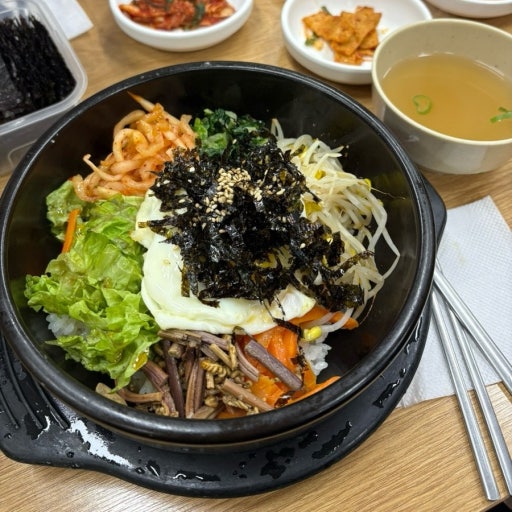
Regular Bibimbap
Regular bibimbap is usually served in a metal or ceramic bowl.
The rice stays soft, and the vegetables remain relatively fresh and distinct. This is often the best option for travelers who want to understand the flavor of the individual ingredients.
Best for:
- First-time visitors
- Travelers who prefer softer rice
- Anyone who wants a traditional Jeonju-style bowl
- People who do not want an extremely hot serving bowl
Dolsot Bibimbap
Dolsot means stone pot.
The bowl is heated before serving, keeping the food hot and creating a crispy layer of rice at the bottom. Many international visitors enjoy dolsot bibimbap because of the contrast between soft mixed rice and crunchy toasted rice.
Do not touch the stone bowl directly. It remains extremely hot during the meal.
Best for:
- Travelers who enjoy crispy rice
- Cold or rainy days
- Anyone who prefers food to stay hot
- Diners who enjoy stronger toasted flavors
Jeonju Bibimbap
Jeonju is the Korean city most closely associated with bibimbap.
Jeonju-style versions commonly use a colorful variety of seasoned vegetables and garnishes. The exact ingredients vary by restaurant, but the emphasis is usually on balance and the preparation of each topping rather than simply adding a large amount of meat.
Best for:
- A first traditional bibimbap experience
- Travelers interested in regional Korean food
- Diners who enjoy a variety of vegetables and textures
Yukhoe Bibimbap
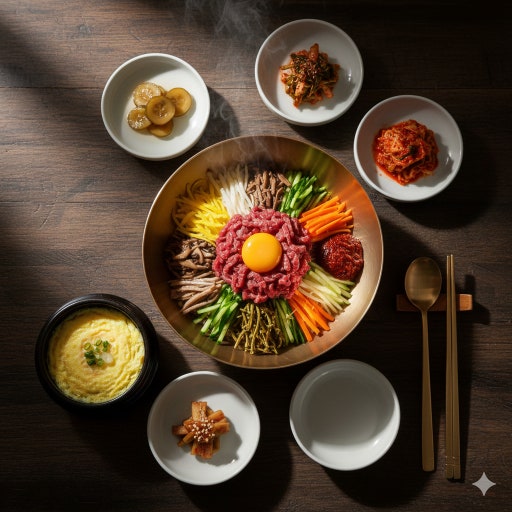
Yukhoe bibimbap is topped with seasoned raw beef.
It is usually richer and more meat-focused than classic vegetable bibimbap. The raw beef often adds a soft texture and a nutty flavor from sesame oil.
Choose it only when you are comfortable eating raw beef. It is not the safest default recommendation for every first-time visitor.
Best for:
- Travelers who already enjoy beef tartare
- Adventurous food travelers
- Visitors exploring Gwangjang Market
7 Best Bibimbap Restaurants in Seoul
1. Mokmyeoksanbang — Best for Bibimbap Near Namsan
Best for: Namsan sightseeing and a traditional Korean setting
Area: Myeongdong / Namsan
What to order: Sanbang Bibimbap
Search on Naver Map: 목멱산방
Mokmyeoksanbang is one of the easiest bibimbap restaurants to fit into a Namsan sightseeing day. It specializes in bibimbap and sits on the Namsan side of Myeongdong, so it makes the most sense if you are already planning to visit Namsan Park, the cable car, or N Seoul Tower rather than crossing Seoul only for this meal.
The restaurant also has a strong connection to its location: Mokmyeok is an old name for Namsan. Its signature Sanbang Bibimbap is the simplest place to start, while other options include gondeure soy-sauce bibimbap, tofu-doenjang bibimbap, and bulgogi bibimbap.
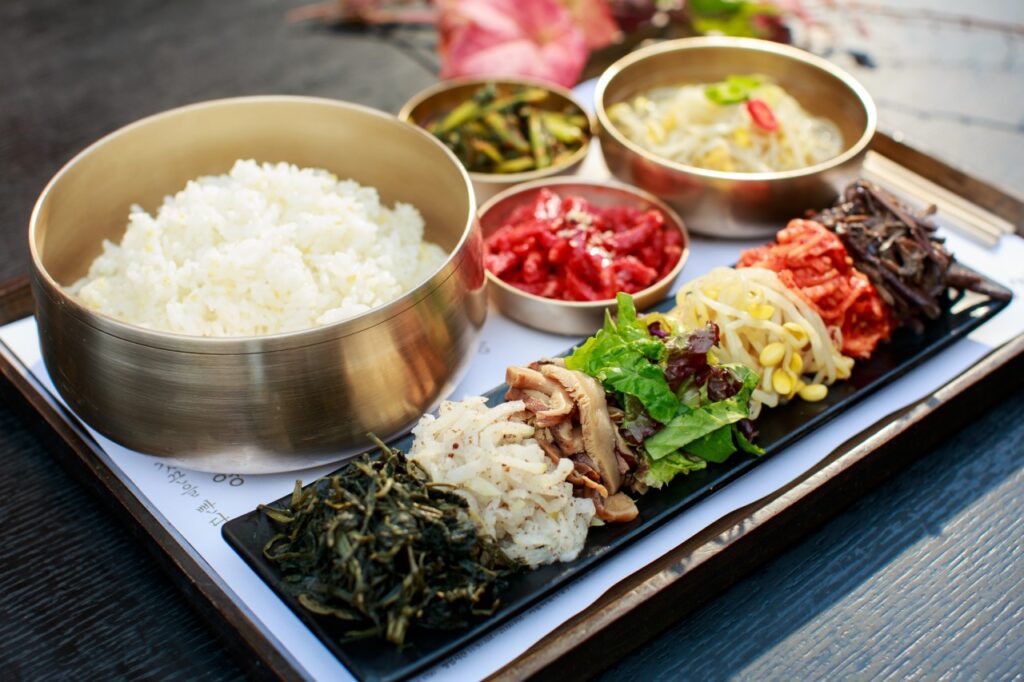
What to Order
For a first visit, start with the Sanbang Bibimbap, the restaurant’s signature version. If you want cooked beef, bulgogi bibimbap is another approachable choice. Gondeure soy-sauce bibimbap is worth considering if you want a soy-sauce-based alternative to the more familiar gochujang-centered style.
The menu is useful for first-time visitors because you do not have to choose between only one standard bowl and one premium version. You can pick a style based on whether you prefer vegetables, cooked beef, soy sauce, or the deeper fermented flavor of doenjang.
Why It Works for Travelers
Mokmyeoksanbang is especially useful when Namsan is already part of your itinerary. A simple route is:
Myeongdong → Mokmyeoksanbang → Namsan Park → N Seoul Tower
This is a better use of your time than traveling across Seoul solely to compare one bibimbap restaurant with another.
Seoul Plate Tip
The restaurant is relatively close to Myeongdong Station, but the route climbs toward Namsan. The distance can feel longer on a hot or humid summer day, so allow a little extra time rather than treating it like a flat walk through Myeongdong.
Opening days and restaurant details can change. Check the latest hours on Naver Map before heading uphill.
2. Jeonju Hoegwan — Best for Hot-Stone Bibimbap Near City Hall
Best for: Hot-stone bibimbap and a convenient City Hall lunch
Area: City Hall / Bukchang-dong
What to order: Gopdol Bibimbap
Search on Naver Map: 북창동 전주회관
Jeonju Hoegwan is a strong choice if the bibimbap you have in mind is the sizzling hot-stone version rather than a regular bowl. This long-running Korean restaurant in Bukchang-dong is best known for Gopdol Bibimbap, served in a heated stone bowl that keeps the rice warm throughout the meal.
What makes it worth including in this list is not simply its history. It gives travelers a noticeably different bibimbap experience from places that focus on traditional brass bowls or lighter vegetable-heavy versions. As the rice sits against the hot bowl, the bottom can develop a lightly crisp texture, adding another layer to an otherwise familiar dish.
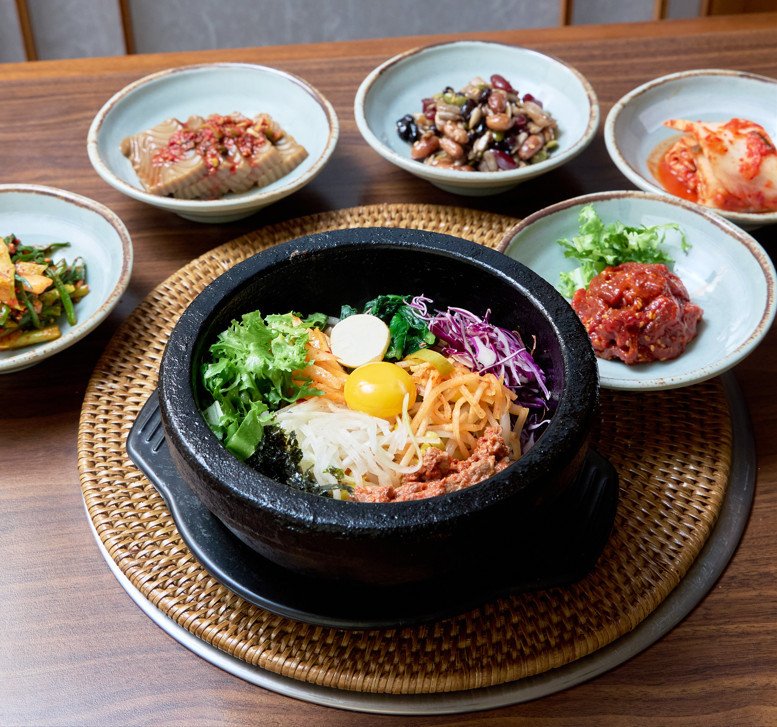
What to Order
For a first visit, order the Gopdol Bibimbap. It is the restaurant’s signature choice and the clearest reason to come here.
If you are comfortable eating Korean-style raw beef, you can also consider the Gopdol Yukhoe Bibimbap, which adds yukhoe to the same hot-stone format.
When the bowl arrives, mix the vegetables, rice, sauce, and toppings thoroughly, but do not worry about scraping every bit of rice from the bottom immediately. Letting some rice stay against the hot stone for a little longer can give you the crispy texture that makes this style different from standard bibimbap.
If you are sensitive to spice, start with only part of the gochujang and add more after tasting.
Why It Works for Travelers
Location is another major reason to choose Jeonju Hoegwan.
The restaurant is in Bukchang-dong near City Hall, making it easy to combine with some of the most common stops in central Seoul. It works especially well for lunch before or after visiting Deoksugung Palace, Seoul Plaza, or Namdaemun Market.
A practical route could be:
Deoksugung Palace → Seoul Plaza → Jeonju Hoegwan → Namdaemun Market
That makes this a better choice than traveling across Seoul solely for one bowl of bibimbap, especially if City Hall and Namdaemun are already part of your itinerary.
Seoul Plate Tip
Search “북창동 전주회관” on Naver Map rather than only “Jeonju Hoegwan.” Seoul has several Korean restaurants with similar names, and using the Korean name with Bukchang-dong makes it easier to identify the correct restaurant.
Also check the latest opening hours on Naver Map before leaving. Restaurant hours and holiday schedules in Seoul can change even when older travel listings still show regular hours.
3. Hanguk Jip at Lotte World Mall — Best Bibimbap for a Jamsil and Lotte World Day
Best for: Families, rainy days, and travelers already visiting Lotte World or Jamsil
Area: Jamsil
What to order: Jeonju Bibimbap
Search on Naver Map: 한국집 롯데월드몰점
Hanguk Jip is a useful choice for travelers who want a traditional Jeonju-style bibimbap without leaving a Jamsil sightseeing itinerary. The original Hanguk Jip in Jeonju dates back to 1952, while this Seoul branch brings the restaurant’s bibimbap-focused menu to the fifth floor of Lotte World Mall.
That background makes it more meaningful than simply choosing a random Korean restaurant inside a shopping mall. At the same time, the biggest advantage of this branch is convenience. If Lotte World, Lotte World Tower, or Seokchon Lake is already on your schedule, you can try a well-established Jeonju bibimbap style without making a separate trip across Seoul.
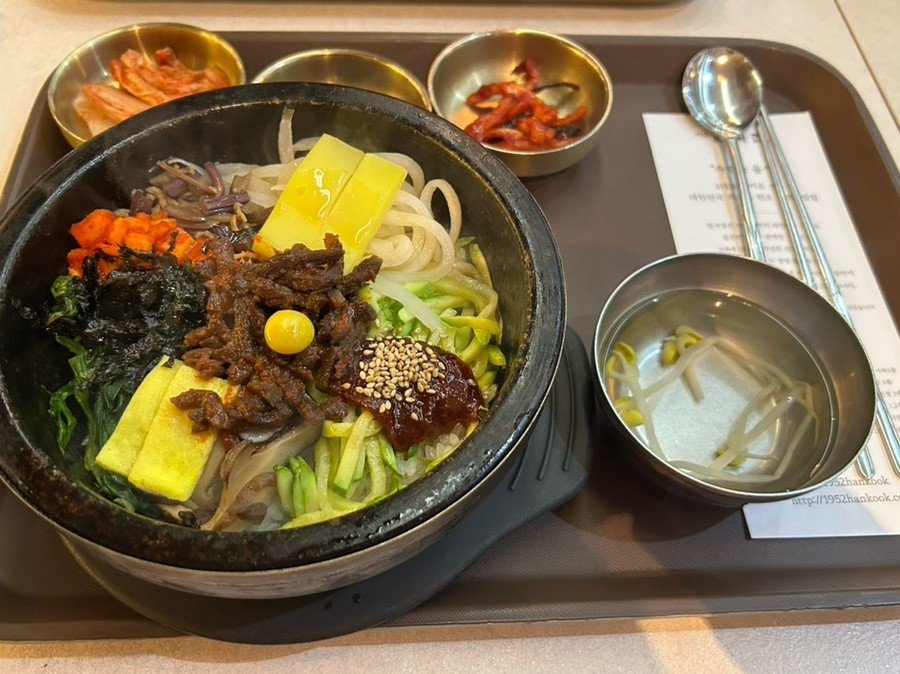
What to Order
For most first-time visitors, choose the Jeonju Bibimbap.
The current official Seoul tourism listing gives it a reference price of ₩15,000 and describes the dish as being served pre-mixed. That presentation may look different from the carefully separated vegetables and toppings often seen in bibimbap photos, so do not assume you have received the wrong dish if it arrives partially or fully mixed.
If you already enjoy Korean-style raw beef, the Yukhoe Bibimbap is the more meat-focused option. Its current reference price is ₩17,000.
For a first bibimbap in Korea, however, I would still choose the regular Jeonju Bibimbap. It makes it easier to focus on the seasoned vegetables, rice, sesame flavor, and sauce before moving on to a richer raw-beef version.
Why It Works for Travelers
Hanguk Jip is not necessarily a restaurant worth crossing the entire city for if the rest of your day is in Myeongdong, Jongno, or Hongdae.
Its value becomes much clearer when you are already in Jamsil.
The restaurant is inside Lotte World Mall, so it works especially well for families with children, travelers carrying shopping bags, or anyone who wants an indoor meal break during bad weather.
A simple Jamsil itinerary could be:
Lotte World → Hanguk Jip → Seoul Sky → Seokchon Lake
Instead of adding another subway journey just to eat bibimbap, you can keep the entire afternoon or evening concentrated around one of Seoul’s busiest sightseeing areas.
Seoul Plate Tip
Search “한국집 롯데월드몰점” rather than simply “Hanguk Jip” or “Korea House.”
There is another Korean restaurant in Lotte World Mall called 한국의집, which has a very similar name but is a different restaurant with a different menu concept. Check that the Korean name on the listing is 한국집 before entering.
Hanguk Jip is currently listed on the 5th floor of Lotte World Mall. The official Seoul tourism listing shows operating hours of 10:30–22:00 with last order at 21:00, but mall restaurant hours can change, so check Naver Map again on the day of your visit.
4. Toenmarujip Doenjang Yesul — Best for Doenjang Bibimbap in Insadong
Best for: Travelers who enjoy fermented flavors and want something different from classic bibimbap
Area: Insadong / Jongno
What to order: Doenjang Bibimbap
Search on Naver Map: 툇마루집 된장예술
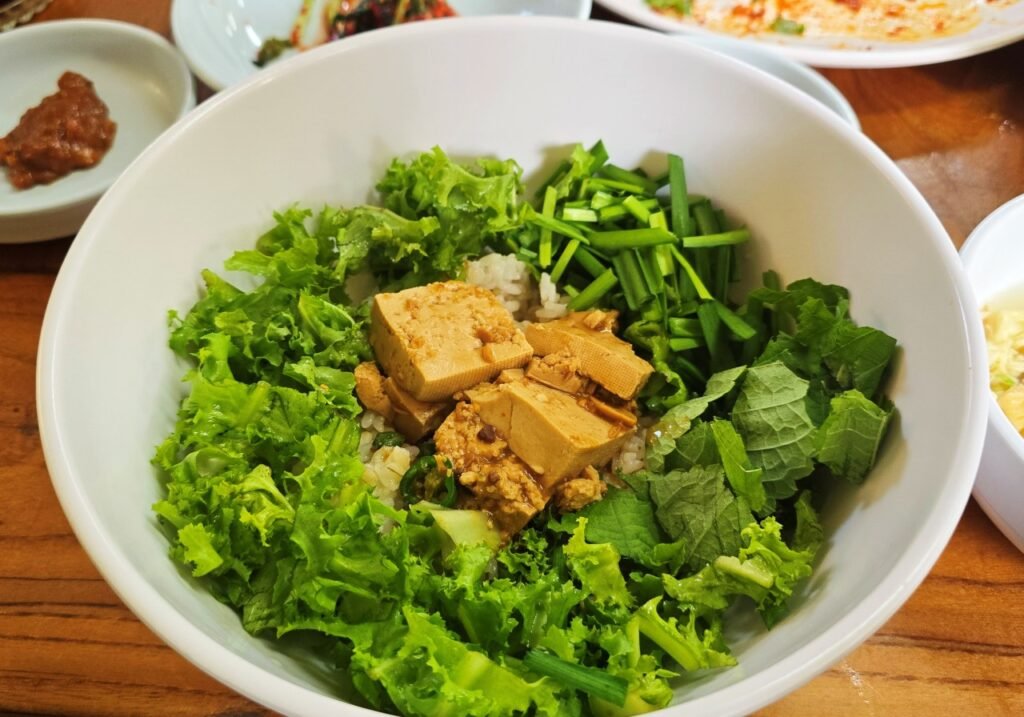
Toenmarujip Doenjang Yesul is the most distinctive bibimbap choice on this list. Instead of making gochujang the main flavor, its signature Doenjang Bibimbap is built around the deep, savory taste of Korean fermented soybean paste.
The experience is closer to a local Korean home-style meal than the polished, colorful bibimbap many first-time visitors picture before arriving in Seoul. Vegetables, rice, and the soybean-paste component are mixed together, creating a saltier, earthier, and more fermented flavor than a standard Jeonju-style bowl.
What to Order
Order the Doenjang Bibimbap.
This is not the restaurant I would choose for someone who wants the most conventional first bibimbap in Korea. Mokmyeoksanbang or a classic Jeonju-style restaurant makes more sense for that.
Come here when you specifically want to see how flexible bibimbap can be.
Rather than adding a large amount of gochujang, let the doenjang provide most of the seasoning. Mix a small amount through the rice and vegetables first, taste it, and add more if needed. Fermented soybean paste can be fairly salty and intense, especially if you are trying it for the first time.
Why It Works for Travelers
The restaurant is tucked inside the Insadong area, so it is easy to add to a day that already includes some of central Seoul’s most popular traditional neighborhoods.
A practical route could be:
Insadong → Toenmarujip Doenjang Yesul → Jogyesa Temple → Ikseondong
It is also a useful contrast to the more tourist-friendly restaurants elsewhere in this guide. The atmosphere is modest and old-fashioned rather than polished, which makes it a good choice for travelers who want a meal that feels closer to an everyday local Korean restaurant.
Seoul Plate Tip
Search “툇마루집 된장예술” on Naver Map.
Do not confuse it with “된장예술과술,” another restaurant in Jongno with a similar name. They are separate businesses in different locations.
Also, do not assume Doenjang Bibimbap is vegetarian or vegan simply because vegetables and soybean paste are the main ingredients. Korean doenjang dishes and accompanying soups or side dishes may use seafood- or meat-based ingredients.
If dietary restrictions are important, ask the restaurant directly before ordering.
Opening and break times can also differ between online listings, so check the latest Naver Map information on the day you visit.
5. Vegan Insa — Best for Vegan Bibimbap Near Ikseondong
Best for: Vegan and vegetarian travelers who want a Korean meal without ingredient guesswork
Area: Ikseondong / Jongno 3-ga
What to order: Vegan Bibimbap
Search on Naver Map: 비건인사
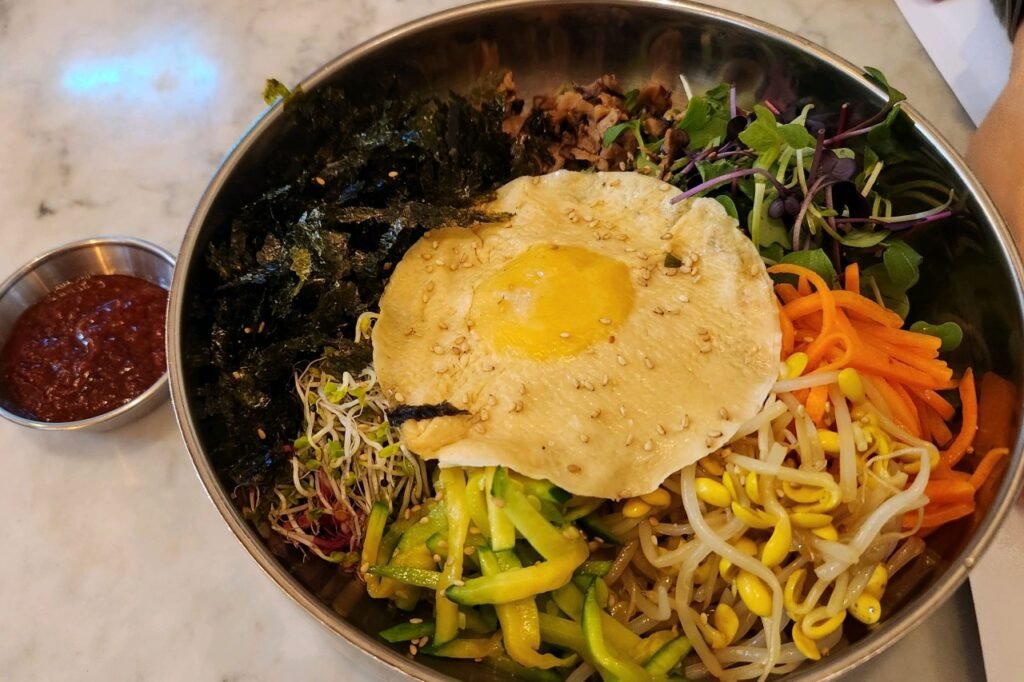
Vegan Insa is the easiest bibimbap recommendation on this list for travelers following a strict vegan diet. The entire restaurant is plant-based, so you do not need to remove egg or beef and then separately check the sauce, kimchi, soup, and side dishes for hidden animal ingredients.
That matters more in Korea than it may seem. A standard vegetable-heavy bibimbap can look vegan at first glance, but accompanying dishes and seasonings may still contain fish sauce, seafood-based stock, or other animal ingredients. At Vegan Insa, that uncertainty is largely removed while you can still order a Korean-style bibimbap rather than a Western-style vegan bowl.
What to Order
Start with the Bibimbap, currently listed at around ₩11,000.
I would choose this restaurant primarily because you need a fully vegan meal, rather than because it represents the most traditional bibimbap experience in Seoul.
If you do not follow a vegan diet and simply want your first classic bowl, Mokmyeoksanbang or one of the Jeonju-style restaurants earlier in this guide would be a stronger starting point.
For vegan travelers, however, Vegan Insa solves a much more important problem: you can concentrate on enjoying the meal instead of trying to confirm every ingredient.
Why It Works for Travelers
Vegan Insa is in the Ikseondong area, making it particularly convenient for travelers already exploring the historic center of Seoul.
It fits naturally into a day around Ikseondong Hanok Village, Changdeokgung Palace, Jongmyo Shrine, or Insadong, and the hanok-style setting feels more connected to the surrounding neighborhood than a generic modern vegan café.
This also gives it a different role from Toenmarujip Doenjang Yesul earlier in this guide. Choose Toenmarujip for an unusual fermented-soybean bibimbap experience; choose Vegan Insa when being fully plant-based is the priority.
Seoul Plate Tip
Search “비건인사” on Naver Map.
The restaurant has a scheduled afternoon break, so it is not a good place to arrive without checking the time first. Opening and closing times can also differ between online listings, so check the latest Naver Map information on the day you visit.
For strict vegans, this is one of the simplest restaurants in the guide because you do not need to rely on requests such as “no egg” or “no meat” to modify a standard bibimbap.
6. Myeongdong Busanjib — Best Halal-Focused Bibimbap in Myeongdong
Best for: Muslim travelers looking for a convenient Korean meal in Myeongdong
Area: Myeongdong
What to order: Bibimbap
Search on Naver Map: 부산집 명동
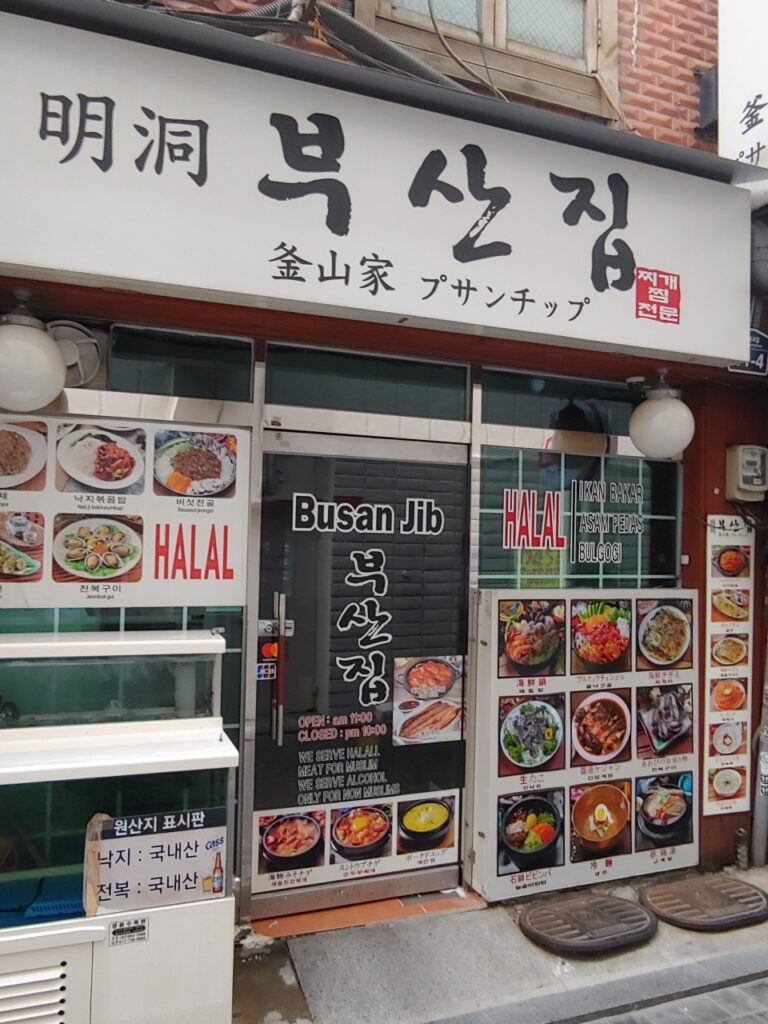
Myeongdong Busanjib earns its place in this guide for a different reason from the traditional bibimbap restaurants above. It is a practical option for Muslim travelers who want to try a familiar Korean dish while staying within the heart of Myeongdong.
Seoul’s official tourism guide describes the restaurant as serving Korean dishes prepared according to strict halal standards, with bibimbap among its main menu options. This makes it particularly useful when dietary requirements matter more than seeking out the cheapest or most specialized bibimbap restaurant in the city.
What to Order
Order the Bibimbap, currently listed at around ₩18,000.
The price is noticeably higher than several other bibimbap options in this guide, so I would not choose Myeongdong Busanjib purely for value if halal dining is not a priority.
For Muslim travelers, however, the calculation is different. Its central location and halal-focused preparation make it much easier to fit a Korean bibimbap meal into a Myeongdong itinerary without spending extra time researching individual meat, sauce, and cooking requirements at a standard restaurant.
If you follow particularly strict halal requirements or need current certification rather than halal-focused preparation, confirm the restaurant’s latest status directly before ordering.
Why It Works for Travelers
Location is the other major advantage.
Myeongdong Busanjib sits in the middle of the Myeongdong shopping area, so it works especially well if you are staying nearby or spending the day around Myeongdong Cathedral and the surrounding shopping streets.
There is little reason to cross Seoul specifically for this restaurant if halal dining is not important to you. But for a Muslim traveler already based in Myeongdong, having bibimbap and other Korean dishes available in one convenient location can make meal planning considerably easier.
Seoul Plate Tip
There are several Busanjib-branded restaurants very close to one another in Myeongdong, including separate Korean BBQ and fried-chicken restaurants.
If you are specifically coming for the bibimbap in this guide, check that you have selected the regular Busanjib restaurant rather than the nearby KBBQ or chicken branch.
The current Seoul tourism listing places it at 11-6 Myeongdong 8-gil. Older reviews and map listings may show different Busanjib locations or addresses, so checking the latest Naver Map pin before walking there is especially useful here.
Current official hours are listed as 11:00–22:00, with last order at 21:20, but check the same-day listing before visiting.
7. Buchon Yukhoe — Best for Yukhoe Bibimbap at Gwangjang Market
Best for: Raw beef fans and travelers exploring Gwangjang Market
Area: Gwangjang Market / Jongno 5-ga
What to order: Yukhoe Bibimbap
Search on Naver Map: 부촌육회 본점
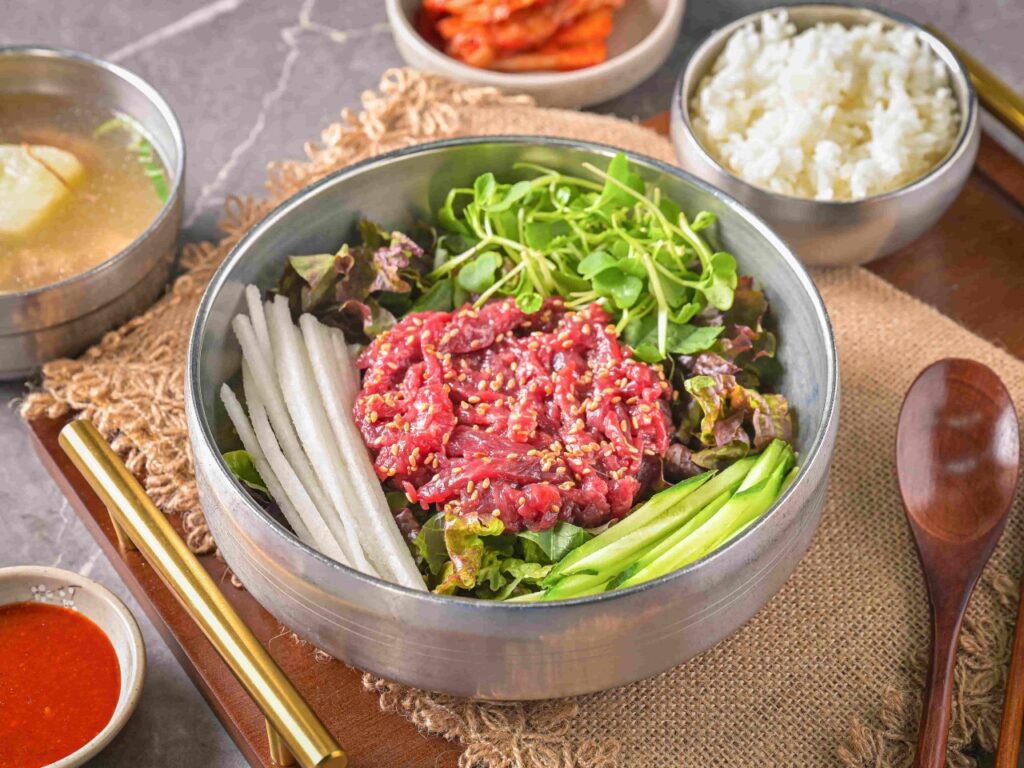
Buchon Yukhoe is the strongest choice in this guide for travelers who specifically want to try yukhoe bibimbap. Located in Gwangjang Market’s famous raw beef alley, the restaurant has been serving Korean beef dishes since 1965 and has been recognized by the Michelin Guide for its combination of quality and value.
Unlike the vegetable-focused or Jeonju-style bowls earlier in this guide, the main attraction here is the yukhoe itself. The raw beef is seasoned with sesame oil and pear, then served with rice and vegetables to create a richer and more meat-focused version of bibimbap.
What to Order
For a full meal, order the Yukhoe Bibimbap.
This is a better choice than ordering plain yukhoe if you want something substantial enough to count as lunch or dinner. The combination of seasoned raw beef, vegetables, and rice lets you experience Buchon Yukhoe’s specialty in a complete one-bowl meal.
A regular portion should be enough for most travelers. A larger version may also be available if you want more raw beef, but check the current menu before ordering because prices and portion options can change.
When the bowl arrives, add the sauce gradually rather than pouring everything in at once. The beef is already seasoned with sesame oil, so too much sauce can easily overpower the flavor of the yukhoe.
Why It Works for Travelers
Buchon Yukhoe fits especially well into a Gwangjang Market visit because yukhoe is already one of the foods the market is best known for.
Instead of treating bibimbap as a separate restaurant stop elsewhere in Seoul, you can combine two Korean food experiences in one meal: Gwangjang Market-style yukhoe and bibimbap.
If you are planning to explore the market before or after your meal, see our Gwangjang Market food guide for first-time visitors for what else to eat, how to plan your food stops, and which dishes are easiest to try on a first visit.
It is also a particularly useful final entry in this guide because it offers something genuinely different from the other restaurants. Choose this place when raw beef is part of the appeal, not simply because you want the most conventional first bowl of bibimbap.
If this is your first Korean meal and you are unsure about eating raw beef, one of the classic Jeonju-style or cooked options earlier in this guide will be a better starting point.
Seoul Plate Tip
Search “부촌육회 본점” on Naver Map.
Buchon Yukhoe has more than one dining space around Gwangjang Market, so checking the Korean name and exact map pin helps avoid confusion.
The restaurant is popular and queues can form during peak meal periods. If yukhoe bibimbap is your main reason for visiting, going outside the busiest lunch or dinner hours may make the experience easier.
Also remember that yukhoe means raw beef. Do not order yukhoe bibimbap expecting the beef to cook after mixing—it remains raw.
How to Choose the Right Bibimbap
Still unsure where to go? The easiest way to choose is to match the restaurant with the bibimbap style you want and the neighborhood already on your Seoul itinerary.
Choose Mokmyeoksanbang if:
- This is your first bibimbap in Korea
- You are visiting Myeongdong or Namsan
- You want several bibimbap styles to choose from
- You prefer a traditional Korean setting
Choose Jeonju Hoegwan if:
- You specifically want hot-stone bibimbap
- You enjoy crispy rice at the bottom of the bowl
- You are visiting City Hall, Deoksugung, or Namdaemun Market
Choose Hanguk Jip if:
- You are visiting Lotte World or Jamsil
- You are traveling with children
- You want an easy indoor meal during a shopping or sightseeing day
Choose Toenmarujip Doenjang Yesul if:
- You enjoy fermented soybean flavors
- You have already tried classic bibimbap and want something different
- You are exploring Insadong or central Jongno
Choose Vegan Insa if:
- You follow a vegan or strict vegetarian diet
- You do not want to check individual sauces, side dishes, or toppings for animal ingredients
- You are visiting Ikseondong, Changdeokgung, or Jongno
Choose Myeongdong Busanjib if:
- Halal-focused Korean dining is a priority
- You are staying or shopping in Myeongdong
- You want a convenient Korean meal without making a separate trip across Seoul
Choose Buchon Yukhoe if:
- You already enjoy beef tartare or other raw beef dishes
- You specifically want to try yukhoe bibimbap
- You are visiting Gwangjang Market
How to Order and Eat Bibimbap
Bibimbap is one of the easier Korean meals to order once you recognize a few common menu words.
If this is one of your first restaurant meals in Korea, our beginner’s guide to ordering food in Korea also explains menus, kiosks, table ordering, payment, and useful restaurant etiquette.
Step 1: Check the Bibimbap Style
Before ordering, look for words such as:
- Bulgogi: Cooked marinated beef
- Yukhoe: Seasoned raw beef
- Dolsot: Hot stone pot
- Jeonju: Jeonju-style bibimbap
- Sanchae: Mountain vegetables or wild greens
- Gondeure: Korean thistle greens
The most important one for first-time visitors is yukhoe. Do not order yukhoe bibimbap expecting cooked beef.
Step 2: Start With Less Sauce
Do not pour all of the gochujang into your bowl immediately.
Start with a small amount, mix the bowl, and taste it first. The vegetables may already be seasoned, and adding too much gochujang can make the meal much spicier and saltier than you expected.
If you have a low spice tolerance, ask for the gochujang separately when possible.
Step 3: Mix the Entire Bowl
Bibimbap is meant to be mixed thoroughly.
Use your spoon to bring the rice from the bottom together with the vegetables, sauce, sesame oil, egg, and meat or other toppings. Continue mixing until the ingredients are evenly distributed rather than eating each topping separately.
Step 4: Taste Before Adding More
After mixing, take a few bites before adding more sauce.
A good bibimbap should not taste only of gochujang. Sesame oil, seasoned vegetables, rice, and the main topping should still be noticeable.
Step 5: Give Hot-Stone Bibimbap Time to Crisp
If you ordered dolsot or another hot-stone bibimbap, leave some rice against the hot bowl for a little longer.
This creates the toasted, crispy rice that makes hot-stone bibimbap different from a regular bowl.
Do not touch the stone bowl itself. It can remain extremely hot throughout the meal.
Useful Korean Ordering Phrases
You do not need to speak Korean to order bibimbap, but these phrases can be useful at smaller restaurants.
One bibimbap, please.
비빔밥 하나 주세요.
Bibimbap hana juseyo.
One stone-pot bibimbap, please.
돌솥비빔밥 하나 주세요.
Dolsot bibimbap hana juseyo.
Please serve the gochujang separately.
고추장 따로 주세요.
Gochujang ttaro juseyo.
Is this spicy?
이거 매워요?
Igeo maewoyo?
Does this contain meat?
고기 들어가요?
Gogi deureogayo?
For allergies, religious dietary requirements, or strict vegan restrictions, do not rely only on a short Korean phrase or automatic translation. Confirm the ingredients with the restaurant whenever the restriction is important.
How to Add Bibimbap to Your Seoul Itinerary
The best bibimbap restaurant is often the one that fits naturally into the neighborhood you are already exploring.
There is usually no reason to spend a large part of your day crossing Seoul only to complete a restaurant checklist.
Myeongdong and Namsan Route
Myeongdong shopping → Mokmyeoksanbang → Namsan Park → N Seoul Tower
Choose this route when bibimbap is part of a first sightseeing day in central Seoul.
City Hall and Namdaemun Route
Deoksugung Palace → Seoul Plaza → Jeonju Hoegwan → Namdaemun Market
This works particularly well if you want hot-stone bibimbap and are already visiting the City Hall area.
Insadong and Ikseondong Route
Changdeokgung Palace → Ikseondong → Vegan Insa or Toenmarujip Doenjang Yesul → Insadong
Choose Vegan Insa when fully plant-based dining is the priority. Choose Toenmarujip when you want a more unusual doenjang-based bibimbap.
Myeongdong Halal-Focused Route
Myeongdong shopping → Myeongdong Busanjib → Myeongdong Cathedral → Cheonggyecheon
This is the most practical route in this guide for travelers prioritizing halal-focused Korean dining.
Gwangjang Market Route
Gwangjang Market → Buchon Yukhoe → Cheonggyecheon Stream → Dongdaemun Design Plaza
Choose this route if raw beef is part of the experience you want. Buchon Yukhoe makes the most sense as part of a wider Gwangjang Market visit rather than as an isolated restaurant stop.
Jamsil Route
Lotte World → Hanguk Jip → Seoul Sky → Seokchon Lake
This is one of the easiest options for families, rainy days, or travelers who want to keep most of the day indoors around Jamsil.
Before leaving your hotel, save the Korean restaurant name and at least one nearby landmark on Naver Map. This makes it much easier to confirm that you have found the correct branch.
Final Thoughts: Where Should First-Time Visitors Eat Bibimbap?
For the easiest all-around first experience, Mokmyeoksanbang remains our strongest choice. It offers several bibimbap styles and fits naturally into a Myeongdong and Namsan sightseeing day.
Choose Jeonju Hoegwan if you specifically want sizzling hot-stone bibimbap and crispy rice.
Choose Hanguk Jip when Lotte World and Jamsil are already part of your itinerary, while Toenmarujip Doenjang Yesul is the more interesting choice if you want to explore the fermented flavor of doenjang rather than standard gochujang-centered bibimbap.
Vegan Insa is the simplest choice for fully plant-based dining, and Myeongdong Busanjib is the most practical option in this guide when halal-focused Korean food is the priority.
For travelers who already enjoy raw beef, Buchon Yukhoe offers the most distinctive yukhoe bibimbap experience and fits naturally into a Gwangjang Market food day.
Whichever restaurant you choose, start with less gochujang than you think you need, mix the bowl thoroughly, and choose a restaurant that fits your actual itinerary rather than traveling across Seoul only for a famous name.
FAQ
What is the best bibimbap in Seoul for first-time visitors?
Mokmyeoksanbang is our strongest all-around first choice because it offers several bibimbap styles and works naturally with a Myeongdong and Namsan itinerary.
If crispy hot-stone bibimbap is specifically what you want, Jeonju Hoegwan is the better choice.
Is bibimbap spicy?
Bibimbap does not have to be very spicy. Much of the heat usually comes from gochujang, so start with a small amount and add more only after mixing and tasting the bowl.
What is the difference between regular bibimbap and dolsot bibimbap?
Regular bibimbap is generally served in a metal or ceramic bowl and keeps the rice soft.
Dolsot bibimbap is served in a very hot stone bowl, which keeps the meal hot and can create a crispy toasted layer of rice at the bottom.
Is bibimbap vegetarian or vegan?
Not automatically.
A vegetable-heavy bibimbap may still contain egg, beef, animal-based broth, or sauces and side dishes made with animal ingredients.
Travelers following a strict vegan diet should choose a dedicated vegan restaurant such as Vegan Insa or confirm ingredients directly.
Does yukhoe bibimbap contain raw beef?
Yes.
Yukhoe is Korean-style seasoned raw beef. If you want cooked beef instead, look for bulgogi bibimbap or another cooked-meat version.
Can solo travelers eat bibimbap in Seoul?
Yes. Bibimbap is usually served as an individual bowl, making it one of the easiest Korean restaurant meals for solo travelers.
For more one-person meal ideas and practical restaurant tips, see our guide to solo dining in Seoul.
How much does bibimbap cost in Seoul?
Many of the restaurants in this guide currently fall roughly within the ₩10,000–₩18,000 range for their recommended bibimbap.
Premium ingredients such as yukhoe, restaurant location, and different serving styles can increase the price. Check the current menu before visiting.
Where can I eat bibimbap near Myeongdong?
Mokmyeoksanbang is a strong choice when you are combining bibimbap with Namsan sightseeing.
Myeongdong Busanjib is another convenient option when halal-focused Korean dining is a priority.
How This Guide Was Checked
This guide was prepared and reviewed by H. Jung, the Korea-based editor of Seoul Plate.
Restaurant names, branch locations, signature bibimbap styles, menu choices, reference prices, and practical visitor information were cross-checked using official Seoul and Korea tourism information, restaurant sources, and current Korean map listings.
The restaurants were selected for different traveler needs rather than treated as a simple ranking from first to seventh. Location, bibimbap style, dietary needs, ease of fitting the restaurant into a sightseeing route, and usefulness for first-time visitors were all considered.
When sources differed on details such as operating hours, break times, prices, or dietary information, this guide avoided presenting uncertain information as permanent.
Menus, ingredients, prices, opening hours, and branch information can change. Check the latest listing for the specific restaurant shortly before visiting.