Mangwon Market Food Guide: 8 Must-Try Foods for First-Time Visitors
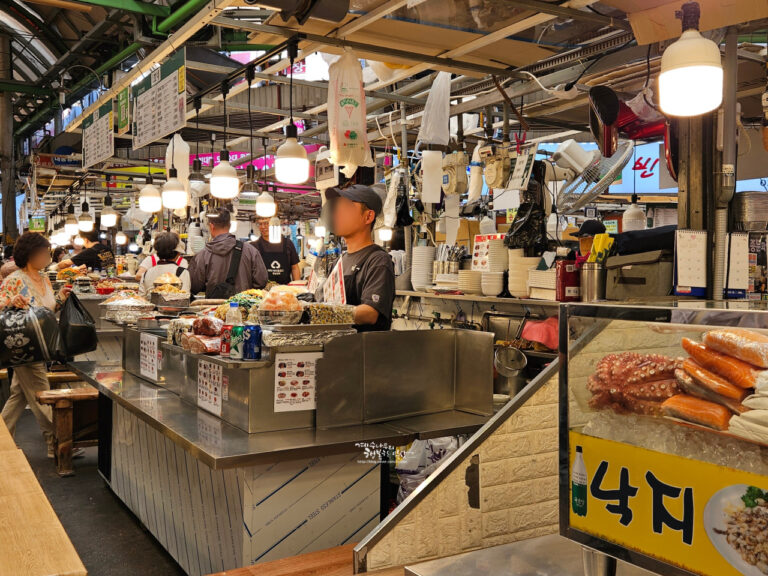
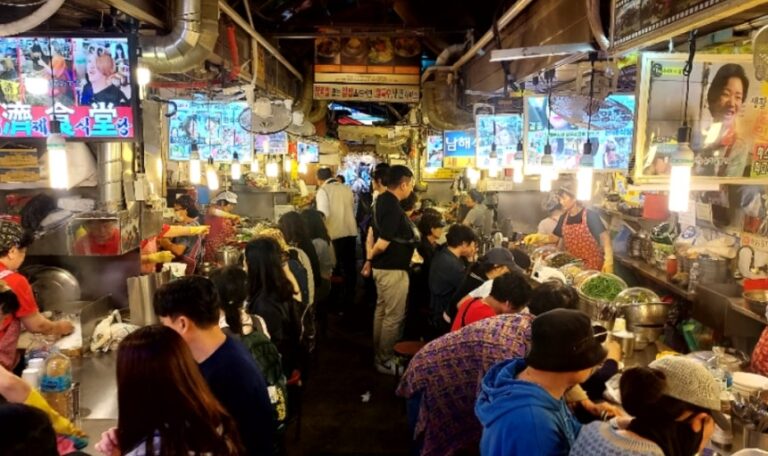
Mangwon Market is one of the easiest places in Seoul to turn a traditional-market visit into a relaxed food crawl.
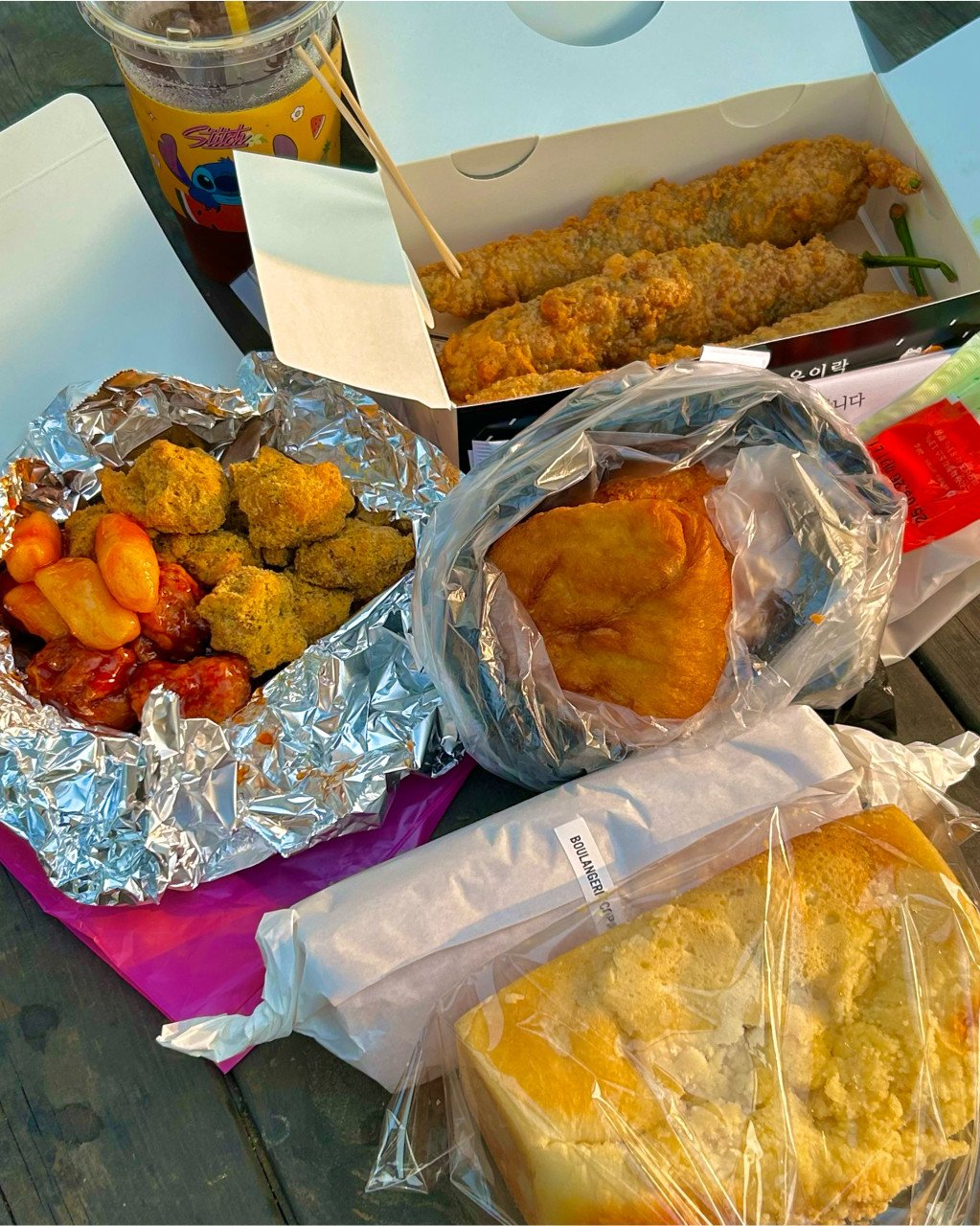
Mangwon Market food ranges from stuffed fried peppers and handmade dumplings to noodles, gimbap, hotteok, and other easy-to-share market snacks.
Located in Mapo-gu near Hongdae, Hapjeong, and Mangwon Hangang Park, the market is compact enough to explore without feeling overwhelming but still has a wide range of foods worth trying.
You can start with a large stuffed fried pepper, share handmade dumplings or dakgangjeong, try tteokgalbi or an inexpensive croquette, sit down for a bowl of kalguksu, and finish with hotteok.
Many of the foods are also easy to take away, which makes Mangwon Market particularly convenient if you want to continue toward the Han River afterward.
This guide covers eight food stops that offer different experiences rather than eight versions of the same market snack.
You do not need to visit all eight. For most first-time visitors, choosing three to five stops and sharing portions is the best way to enjoy the market without becoming full too early.
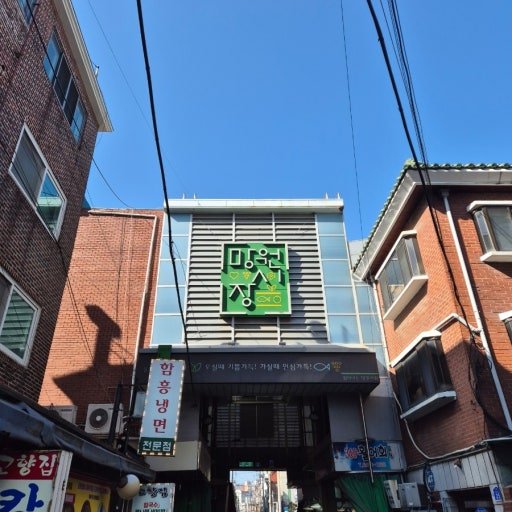
Table of Contents
Best Mangwon Market Foods at a Glance
| Place | Best For | What to Try | Eating Style |
|---|---|---|---|
| Wooyirak | Mangwon’s signature fried snack | Stuffed fried pepper | Dine-in or takeaway |
| Jinseong Mandu | Large handmade dumplings | Pork and kimchi mandu | Takeaway |
| Q’s Dakgangjeong | Korean fried chicken in a smaller portion | Dakgangjeong | Takeaway |
| Mangwon Tteokgalbi | Savory grilled meat | Original tteokgalbi | Takeaway |
| Mangwon Handmade Croquette | Cheap old-school market snack | Savory croquette | Takeaway |
| Hoonhoon Hotteok | Sweet finish | Corn or injeolmi hotteok | Takeaway |
| Hongdukkae Son Kalguksu | A proper sit-down meal | Hand-cut kalguksu | Dine-in |
| Songine | Distinctive gimbap and classic bunsik | Fried squid gimbap | Casual / takeaway |
Menus, prices, opening hours, regular closed days, and available flavors can change. Check the latest information on NAVER Map shortly before visiting.
Smaller Korean businesses can also be difficult to find using English spelling alone. Our guide to using NAVER Map in Korea explains how to search with Korean business names and confirm the correct location.
Is Mangwon Market Worth Visiting for Food?
Yes, especially if you want a market that still feels connected to an everyday Seoul neighborhood.
Mangwon Market is used for produce, seafood, meat, side dishes, groceries, and daily shopping, but several food businesses have also become destinations of their own.
For travelers, one of its biggest advantages is scale.
The variety of Mangwon Market food makes it easy to build a meal around several small portions instead of one large restaurant order.
The market is smaller and easier to navigate than some of Seoul’s most famous traditional markets. Instead of committing to one long food alley, you can move between individual shops and decide what to eat as you go.
It is also well suited to sharing.
Fried peppers, mandu, dakgangjeong, tteokgalbi, croquettes, gimbap, and hotteok can all be divided between two or more people, making it easier to sample several foods in one visit.
Mangwon Market also has a location advantage: Mangwon Hangang Park is close enough that takeaway food can become part of the itinerary.
Eat a few things inside the market, buy another item or two to go, and continue toward the Han River.
If you enjoy Seoul’s traditional markets, you can also compare Mangwon with our Gwangjang Market food guide and Namdaemun Market food guide.
8 Best Foods to Try at Mangwon Market
1. Wooyirak — Best for Mangwon Market’s Signature Fried Pepper
Best for: Trying one of Mangwon Market’s most recognizable foods
What to order: Original stuffed fried pepper
Korean food name: 고추튀김
Spice level: Usually mild to moderate, but individual peppers and sauces can vary
Search on NAVER Map: 우이락 망원본점
Why It Stands Out
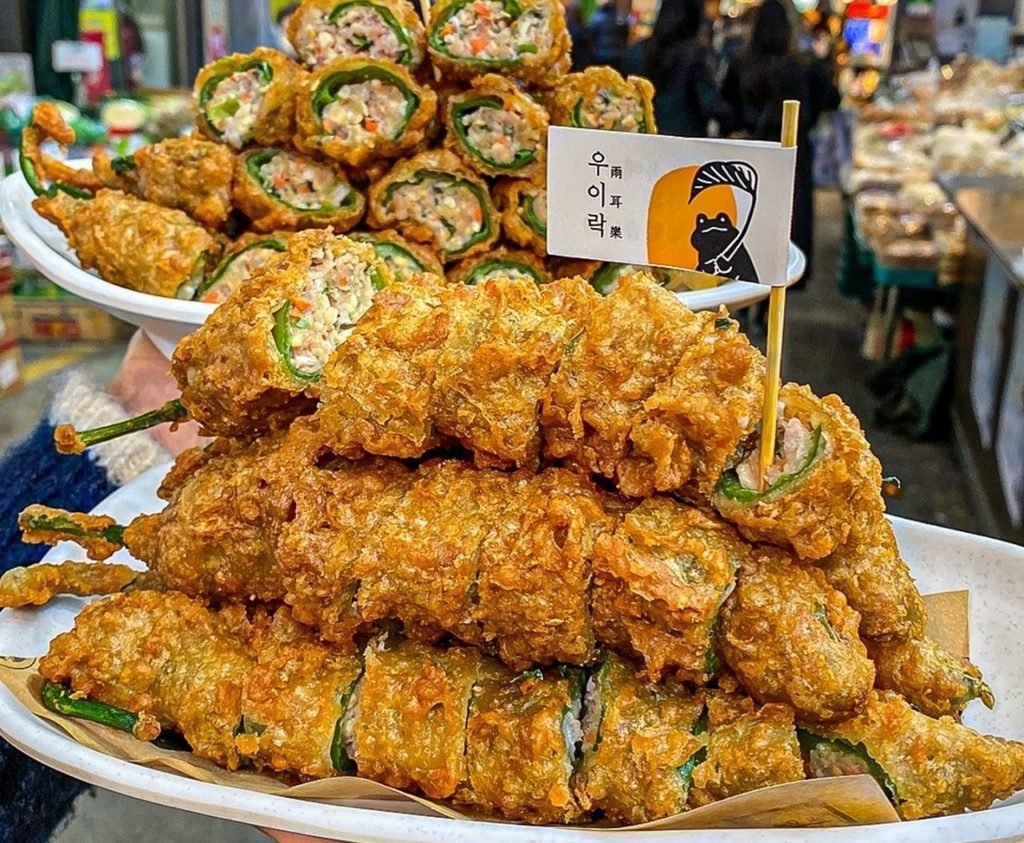
Wooyirak is one of the clearest first stops for a food-focused visit to Mangwon Market.
Its signature dish is a large green pepper filled with a savory mixture, coated in batter, and fried until crisp.
This is much more substantial than the small pieces of vegetable tempura commonly sold at Korean snack shops. The pepper adds freshness and texture, while the filling turns it into something closer to a small meal than a light fried snack.
First-time visitors may see the word “chili” and expect extreme heat.
That is not necessarily the case. Korean green peppers vary in spice level, and the original version is generally approachable. Individual peppers can still be hotter than others, and flavored sauces may add additional heat.
What to Order
Start with the original stuffed fried pepper.
It lets you taste the crisp batter, juicy filling, and pepper without a stronger sauce dominating the dish.
Sharing is a good idea if you plan to visit several shops. These fried peppers are more filling than they initially appear.
Before You Visit
Wooyirak can work either as your first stop or as one of the main savory stops of the day.
If you are planning a long food crawl, resist the temptation to order several variations immediately.
Choose Wooyirak if: You want one food that feels strongly associated with a Mangwon Market visit.
2. Jinseong Mandu — Best for Large Handmade Korean Dumplings
Best for: A filling but easy Korean market food
What to order: Pork mandu and kimchi mandu
Korean food name: 만두 / 왕만두
Spice level: Pork is mild; kimchi mandu is usually spicier
Search on NAVER Map: 진성만두 망원시장
Why It Stands Out
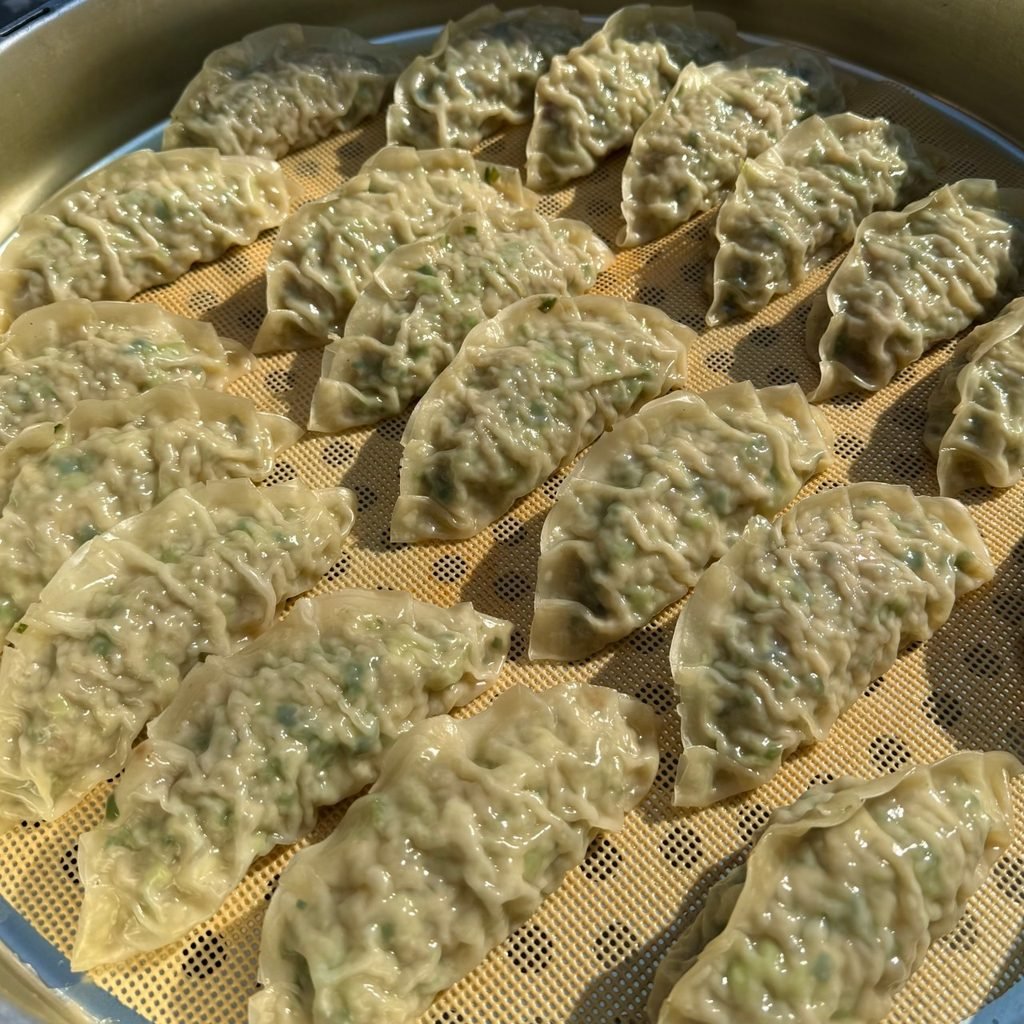
Jinseong Mandu is easy to recommend to first-time visitors because mandu is familiar enough to understand immediately while still giving you a distinctly Korean market-food experience.
The dumplings are large, with relatively thin wrappers and generous fillings.
Pork mandu has a savory, mild flavor and is the safer choice for anyone avoiding spice.
Kimchi mandu has a sharper and more seasoned filling with some chili heat, making the two varieties useful to compare.
What to Order
Try both pork mandu and kimchi mandu if the current ordering options make that practical.
If you are sensitive to spicy food, prioritize pork.
These are much larger than bite-sized dumplings, so a few can become surprisingly filling during a multi-stop food crawl.
Before You Visit
Mandu also travels relatively well.
If you are already getting full, buying a small portion for later can make more sense than eating everything immediately.
Choose Jinseong Mandu if: You want an approachable Korean food that is filling without requiring a sit-down meal.
3. Q’s Dakgangjeong — Best for Korean Fried Chicken Without a Full Chicken Order
Best for: Sampling Korean fried chicken during a market crawl
What to order: Dakgangjeong in one or two flavors
Korean food name: 닭강정
Spice level: Depends heavily on the sauce
Search on NAVER Map: 큐스닭강정
Why It Stands Out
Korean fried chicken restaurants often serve portions large enough to become an entire meal.
Dakgangjeong works better when you want to keep exploring.
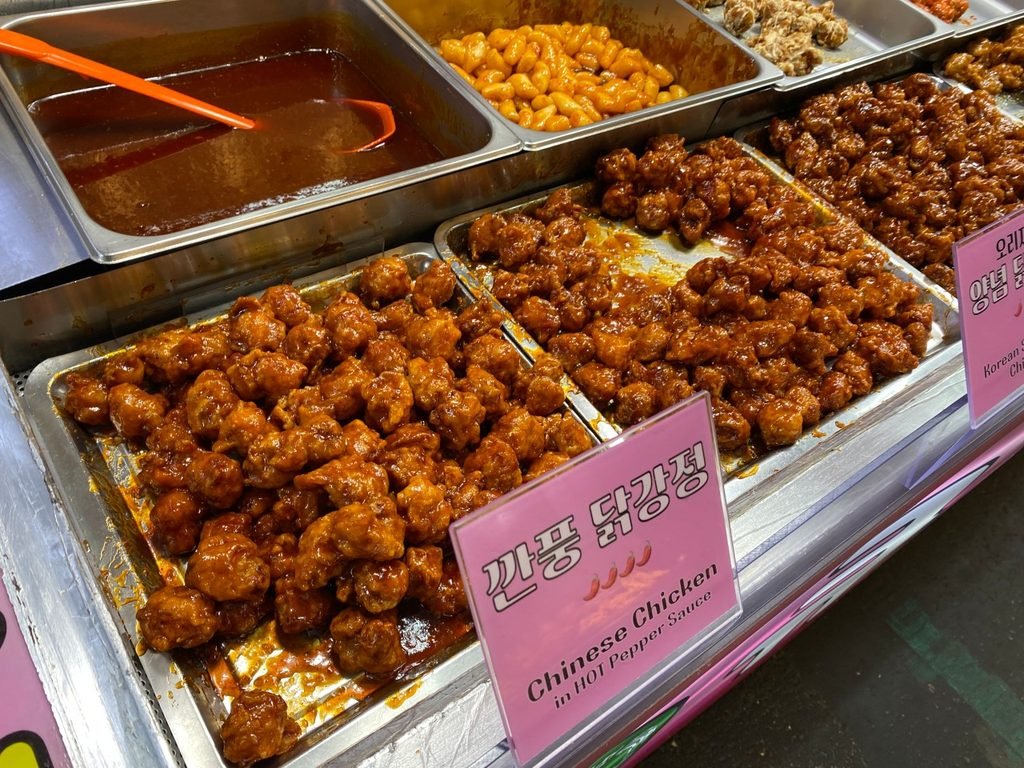
Small pieces of fried chicken are coated in sauce and served in portions that are easier to share while walking through the market.
Q’s Dakgangjeong is a long-running name associated with Mangwon Market and is known for offering several sauce choices.
That variety makes it particularly convenient for first-time visitors who want to sample Korean-style sauced chicken without committing to a full restaurant order.
What to Order
Choose a smaller portion and try more than one flavor if the current menu allows it.
A sweet or soy-based option is generally easier for travelers who avoid chili heat. Red sauces can range from sweet to genuinely spicy, so appearance alone is not a reliable guide.
If you need a mild option, ask:
안 매운 맛이 뭐예요?
Which flavor is not spicy?
For a full restaurant-style chicken experience elsewhere in the city, see our guide to the best Korean fried chicken in Seoul.
Before You Visit
Dakgangjeong is one of the most convenient foods on this list to take away.
If you plan to continue toward Mangwon Hangang Park, consider saving part of your order for later.
Choose Q’s Dakgangjeong if: You want to try Korean fried chicken without ordering an entire chicken.
4. Mangwon Tteokgalbi — Best for a Savory Meat Snack
Best for: A meat-focused option between fried snacks
What to order: Original tteokgalbi
Korean food name: 떡갈비
Spice level: Usually mild unless you choose a spicy variation
Search on NAVER Map: 망원떡갈비
Why It Stands Out
The name tteokgalbi can be confusing if you already know that tteok usually means rice cake.
This dish is not centered around rice cakes.
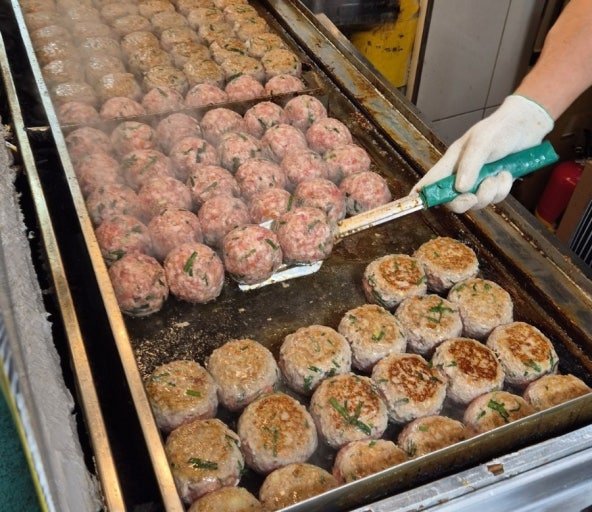
Tteokgalbi is made from seasoned minced meat shaped into thick patties and cooked until browned on the outside and juicy inside.
Its flavor is generally savory and slightly sweet, making the original version one of the easier market foods for visitors who prefer mild dishes.
It also adds welcome variety if you have already eaten battered or deep-fried foods.
What to Order
Start with the original tteokgalbi.
The original is the best introduction to the meat and seasoning before trying stronger or spicy variations.
Because each patty is substantial, sharing works particularly well during a food crawl.
Before You Visit
Treat tteokgalbi as one of your more filling stops.
If you have already eaten Wooyirak’s fried pepper and several mandu, one shared portion may be enough.
Choose Mangwon Tteokgalbi if: You want something meaty and mild without sitting down for Korean BBQ.
5. Mangwon Handmade Croquette — Best for an Inexpensive Old-School Market Snack
Best for: Everyday Korean bakery-style market food
What to order: A savory croquette; add kkwabaegi if sharing
Korean food name: 고로케 / 꽈배기
Spice level: Depends on the filling
Search on NAVER Map: 망원수제고로케
Why It Stands Out
A Korean-style market croquette may be different from the croquette you expect.
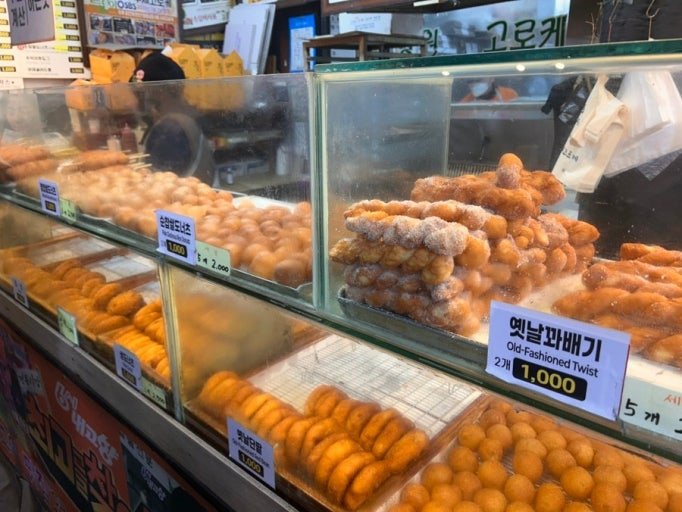
Rather than being only a breaded potato patty, many Korean croquettes are closer to fried bread stuffed with savory fillings.
Depending on what is available, you may see vegetable, curry, kimchi, potato, or other seasoned versions.
This type of inexpensive bakery snack represents the everyday side of Korean market culture rather than a destination restaurant experience.
That is part of its appeal.
What to Order
Choose one savory croquette that sounds good instead of buying several varieties at once.
If you are sharing, add a kkwabaegi, the twisted Korean doughnut often coated lightly with sugar.
The simple sweetness of kkwabaegi makes a good contrast with a savory filled croquette.
Before You Visit
Think of this as a smaller stop between the market’s more famous foods.
Not every worthwhile market snack needs to become a full meal or a long wait.
Choose Mangwon Handmade Croquette if: You want a cheap, casual snack with an old-school Korean market feel.
6. Hoonhoon Hotteok — Best for a Sweet Finish
Best for: Dessert after savory market food
What to order: Corn or injeolmi hotteok
Korean food name: 호떡
Spice level: None
Search on NAVER Map: 훈훈호떡
Why It Stands Out
Hotteok is one of Korea’s classic street snacks.
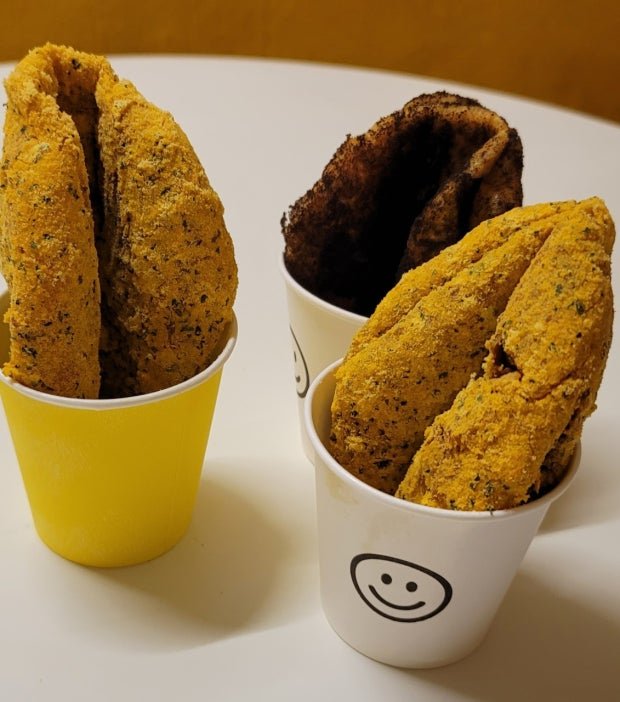
The basic idea is simple: chewy dough is cooked until browned and crisp outside with a sweet filling inside.
Hoonhoon Hotteok makes the experience more distinctive by offering several flavored versions rather than concentrating only on traditional brown-sugar hotteok.
Depending on the current menu, options may include corn, injeolmi, seeds, and other variations.
For first-time visitors, injeolmi is especially interesting because it introduces the nutty roasted-soybean flavor commonly used in Korean desserts.
What to Order
Choose corn hotteok if you want one of the shop’s more distinctive combinations.
Choose injeolmi hotteok if you want a flavor that feels particularly connected to Korean dessert culture.
Available flavors may change, so check the menu when you arrive.
Before You Visit
Save this stop for later in your food crawl if possible.
A hot, sweet pancake works especially well after several savory foods.
Fresh hotteok can also contain very hot filling, so give it a moment before taking a large bite.
Choose Hoonhoon Hotteok if: You want dessert without leaving the market.
7. Hongdukkae Son Kalguksu — Best for a Proper Sit-Down Meal
Best for: A warm meal instead of continuous snacking
What to order: Hand-cut kalguksu
Korean food name: 손칼국수
Spice level: The noodles are generally mild; side kimchi can be spicy
Search on NAVER Map: 홍두깨손칼국수
Why It Stands Out
Most foods in this guide are designed for quick eating, sharing, or takeaway.
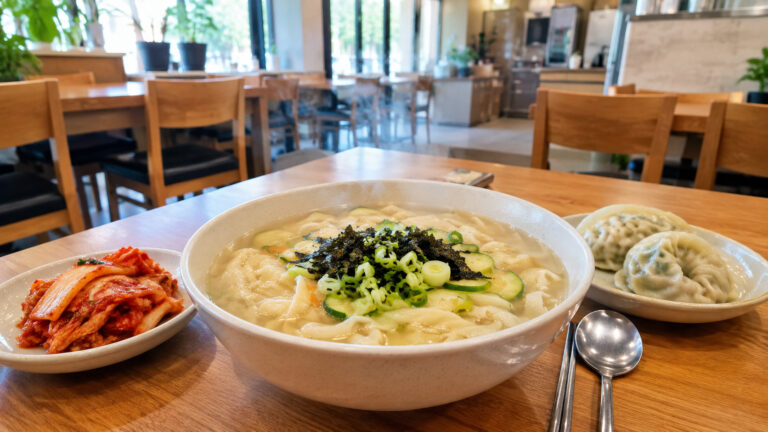
Hongdukkae Son Kalguksu gives you a chance to sit down for a proper meal.
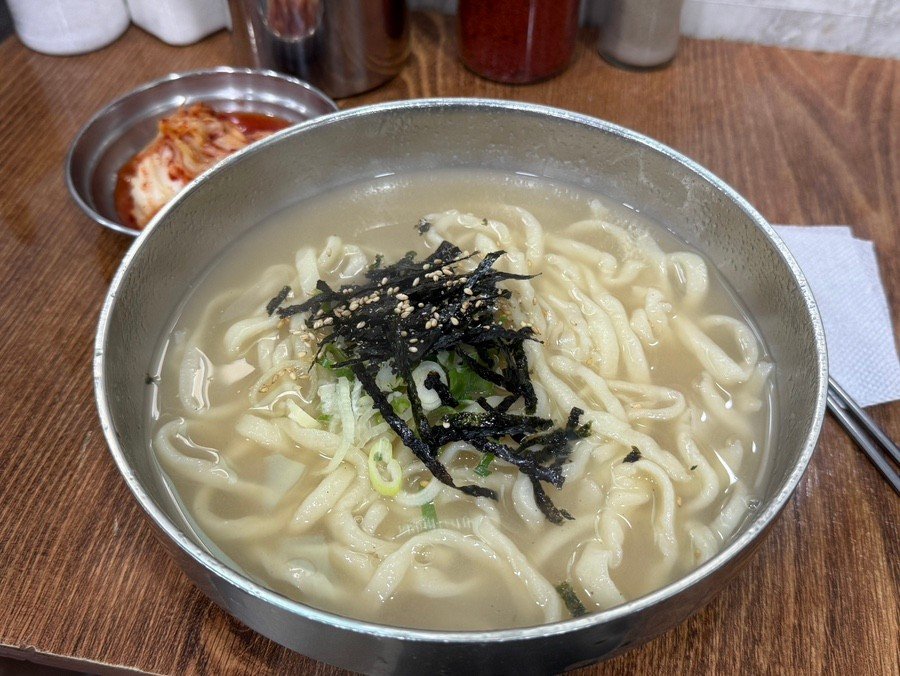
Kalguksu means Korean knife-cut noodles. Wheat dough is rolled and cut into noodles, creating a slightly irregular shape and a softer, pleasantly chewy texture.
Served in warm broth, it is classic Korean comfort food and works particularly well on cold or rainy days.
What to Order
Start with son kalguksu, the hand-cut noodle soup.
If sujebi is available and you want to try another traditional Korean flour-based dish, it uses hand-torn pieces of dough instead of long noodles.
For more noodle options around the city, see our guide to the best kalguksu in Seoul.
Before You Visit
Timing matters here.
A full bowl of noodles can quickly end a market food crawl, so Hongdukkae works best as either:
- Your main lunch after one small snack, or
- Your final substantial savory meal before dessert
It is also one of the better options on this list for solo travelers because each person can simply order an individual bowl.
Choose Hongdukkae Son Kalguksu if: You want to stop grazing and sit down for a warm, filling meal.
8. Songine — Best for Fried Squid Gimbap and Classic Bunsik
Best for: Distinctive gimbap and a classic Korean snack-shop experience
What to order: Fried squid gimbap
Korean food name: 오징어튀김김밥
Spice level: The gimbap is generally approachable; tteokbokki and some side dishes are spicier
Search on NAVER Map: 송이네
Why It Stands Out
Songine represents bunsik, the casual category of inexpensive Korean foods that includes gimbap, tteokbokki, fish cake, sundae, and fried snacks.
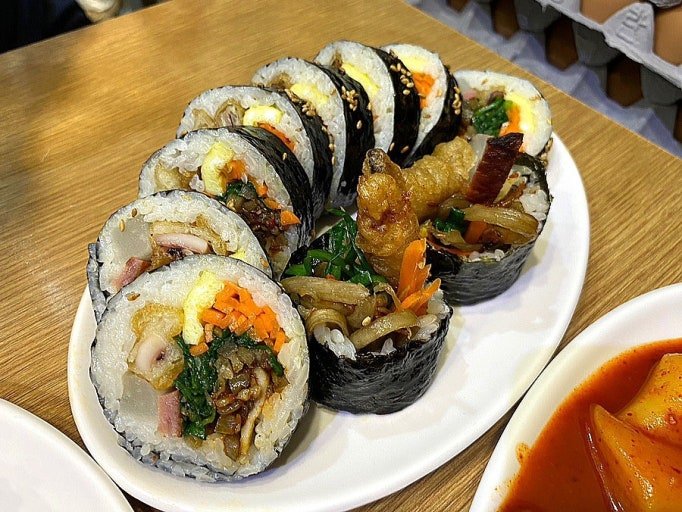
You could come here simply for a familiar plate of tteokbokki, but the more interesting choice for a first-time visitor is the fried squid gimbap.
The combination is easy to understand but less common than standard vegetable, tuna, or ham gimbap.
A crisp piece of fried squid adds extra texture and richness to the rice roll, combining two familiar Korean market foods in one bite.
That makes it especially well suited to a Mangwon Market food crawl.
What to Order
Start with the fried squid gimbap.
It is the clearest signature choice and gives first-time visitors something more memorable than an ordinary gimbap roll.
If you want to compare a second, less familiar variation, consider the green-onion doenjang gimbap.
This version combines green onion with the savory fermented flavor of Korean soybean paste, giving it a distinctly different character from the fried squid version.
If you are visiting with several people, you can also add a small portion of tteokbokki or fried snacks for a broader bunsik experience.
For more gimbap styles around the city, see our guide to the best gimbap in Seoul.
Before You Visit
Bunsik is inexpensive and easy to over-order.
One roll of gimbap plus tteokbokki, sundae, and several fried foods can become a surprisingly large meal.
If you still have other Mangwon Market stops planned, make the fried squid gimbap the priority and add other dishes only if you are sharing.
Choose Songine if: You want to try a distinctive gimbap while also experiencing the atmosphere of a classic Korean bunsik shop.
How Many Mangwon Market Foods Should You Try?
You do not need all eight.
For most first-time visitors, three to five stops are enough.
The best way to enjoy Mangwon Market food is to mix different types of dishes rather than choosing several similar fried snacks.
A good plan for two people is to build the visit around four different categories:
One signature food
Start with Wooyirak.
One additional savory snack
Choose Jinseong Mandu, Q’s Dakgangjeong, Mangwon Tteokgalbi, or a croquette.
One full meal, if you want one
Choose Hongdukkae Son Kalguksu.
One dessert
Finish with Hoonhoon Hotteok.
Songine works well as an additional stop if gimbap or Korean bunsik is one of your priorities.
Trying fewer places while you are still hungry enough to enjoy them is better than rushing through eight shops just to complete a checklist.
A Simple Mangwon Market Food Crawl for First-Time Visitors
If you do not want to plan every stop individually, these combinations are easy starting points.
Option 1: Light Food Crawl
Wooyirak → Jinseong Mandu → Hoonhoon Hotteok
You get one Mangwon signature food, one classic Korean dish, and one dessert without turning the visit into a huge meal.
Option 2: Best for Variety
Wooyirak → Mangwon Tteokgalbi → Songine → Hoonhoon Hotteok
This moves from fried pepper to grilled meat, fried squid gimbap, and dessert without repeating the same style too often.
Option 3: Market Lunch
One small snack → Hongdukkae Son Kalguksu → Hoonhoon Hotteok
Choose this if you would rather eat one proper lunch than continuously snack.
Option 4: Takeaway for the Han River
Choose two or three portable foods such as:
- Dakgangjeong
- Mandu
- Tteokgalbi
- Croquettes
- Fried squid gimbap
Then continue toward Mangwon Hangang Park.
Foods such as noodle soup are better eaten immediately rather than carried to the river.
How Much Should You Budget?
Mangwon Market can be relatively inexpensive if you share.
For a food-focused visit, around ₩15,000 to ₩30,000 per person is a useful planning range for several snacks or a combination of snacks and one sit-down meal.
Your total will depend on whether you:
- Share each item
- Order full portions
- Add a noodle meal
- Buy drinks
- Purchase takeaway food for later
Treat this as a rough travel budget rather than a current menu-price list.
Prices can change, so check the menu at each shop before ordering.
Best Time to Visit Mangwon Market for Food
Late morning through the afternoon is usually the easiest period for a food-focused visit.
Individual businesses inside and around the market do not all follow the same schedule. Some may open later, close earlier, take a break, have a regular closed day, or sell out of popular items.
For that reason, the market being open does not guarantee that every shop in this guide will be serving food.
Weekday Late Morning
A good choice if you prefer fewer crowds and want time to look around before lunch.
Weekday Afternoon
Works well for a relaxed food crawl followed by Mangwon Hangang Park.
Weekend Lunch
Expect a livelier market and potentially longer waits at popular food shops.
Late Evening
Less reliable if there is one particular restaurant or snack you absolutely want to try.
If you have a must-visit shop, check its latest NAVER Map listing on the day of your visit.
How to Get to Mangwon Market
Mangwon Station on Seoul Subway Line 6 is the easiest starting point.
Use Exit 2 and search:
망원시장
on NAVER Map for the walking route from the station.
The market is only a short walk away.
Mangwon is also easy to combine with Hongdae, Hapjeong, or Yeonnam-dong during the same half-day.
A simple itinerary could be:
Hongdae or Yeonnam-dong → Mangwon Market → Mangwon Hangang Park
This gives you cafés or shopping, market food, and the Han River without spending much of the day crossing Seoul.
Mangwon Market or Gwangjang Market?
Both are worth visiting, but the experiences are different.
Choose Mangwon Market if you want:
- A smaller neighborhood-market atmosphere
- Portable snacks and takeaway food
- Mangwon Hangang Park afterward
- Easy access from Hongdae or Hapjeong
- Foods such as stuffed fried peppers, dakgangjeong, tteokgalbi, croquettes, and gimbap
Choose Gwangjang Market if you want:
- One of Seoul’s most famous traditional markets
- A busier and more intense market atmosphere
- Bindaetteok, yukhoe, mayak gimbap, and market food counters
- A central Seoul location near Jongno and Dongdaemun
Neither market is simply better.
Mangwon works especially well as part of a neighborhood afternoon, while Gwangjang makes more sense if visiting one of Seoul’s iconic traditional markets is itself the priority.
See our Gwangjang Market food guide for a closer comparison.
Practical Tips for First-Time Visitors
Share Before Ordering More
The easiest mistake to make at Mangwon Market is getting full too quickly.
Start with one item, share it, and decide what you want next.
Carry Some Cash as a Backup
Many businesses accept cards, but payment methods can vary, and overseas-issued cards may not work everywhere.
Having some Korean won available as a backup is useful when visiting a traditional market.
Save the Korean Shop Names
Romanized Korean business names can be spelled differently across websites.
Searching the Korean name shown in this guide is usually the safest way to find the correct location on NAVER Map.
Check Spice Levels Instead of Guessing
Red food is not automatically extremely spicy, and mild-looking dishes can still contain chili.
A useful phrase is:
안 매운 거 있어요?
Do you have something that is not spicy?
Do Not Assume Every Shop Has Seating
Several popular market foods are designed mainly for takeaway.
If sitting down is important to you, check recent shop photos before visiting.
Be Considerate in Narrow Market Aisles
Mangwon Market is still used by local shoppers.
If you stop to eat or take photos, move to the side rather than blocking a shop entrance or the main aisle.
Keep Track of Your Trash
Dispose of packaging at the shop where you purchased the food when appropriate or use a designated waste area.
Do not leave food containers at an unrelated business.
FAQ
What is Mangwon Market famous for?
Mangwon Market is known for a mix of everyday traditional-market shopping and popular foods including stuffed fried peppers, dakgangjeong, tteokgalbi, croquettes, mandu, noodles, gimbap, and hotteok.
What food should I try first at Mangwon Market?
Wooyirak’s stuffed fried pepper is the clearest signature choice for a first visit.
Other popular Mangwon Market food options include mandu, dakgangjeong, tteokgalbi, fried squid gimbap, and kalguksu.
Is Mangwon Market good for first-time visitors?
Yes.
The market is relatively compact, many foods are easy to share or take away, and it combines naturally with Hongdae, Hapjeong, and Mangwon Hangang Park.
Is Mangwon Market good for solo travelers?
Yes.
Takeaway snacks are easy to order alone, and noodle shops such as Hongdukkae Son Kalguksu offer individual meals.
The main disadvantage is that trying many different foods is easier when you have someone to share portions with.
Is Mangwon Market food spicy?
Not all of it.
Pork mandu, original tteokgalbi, many croquettes, kalguksu, gimbap, and hotteok can all be relatively approachable choices.
Kimchi mandu, some dakgangjeong sauces, tteokbokki, and certain pepper or sauce variations may be hotter.
Can I pay by card at Mangwon Market?
Many businesses accept cards, but payment methods can vary.
Carry some Korean won as a backup, especially if you are relying on an overseas-issued card.
Can I take Mangwon Market food to the Han River?
Yes.
Portable foods such as dakgangjeong, mandu, tteokgalbi, croquettes, and gimbap are particularly convenient for taking toward Mangwon Hangang Park.
Foods that need to be eaten immediately, such as noodle soup, are better enjoyed inside the market.
How much time do I need at Mangwon Market?
Around 1.5 to 2 hours is comfortable for a food-focused visit.
Allow longer if you plan to sit down for a meal, shop around the market, or continue toward the Han River afterward.
Is Mangwon Market close to Hongdae?
Yes.
Both are in Mapo-gu and are easy to combine during the same half-day itinerary.
Final Thoughts
Mangwon Market is best enjoyed as a food crawl rather than a checklist.
You do not need to visit every famous shop or order a full portion at every stop.
For a simple first visit, start with Wooyirak’s stuffed fried pepper, add one savory food such as mandu, dakgangjeong, or tteokgalbi, and finish with hotteok.
If gimbap is high on your list, Songine’s fried squid gimbap gives you a more distinctive market version than an ordinary convenience-store or neighborhood gimbap.
If you want a proper meal, make Hongdukkae Son Kalguksu the center of the visit and keep the other stops small.
The location is also part of Mangwon Market’s appeal.
Instead of ending your day when you leave the market, pick up one or two takeaway foods and continue toward Mangwon Hangang Park, or combine the visit with Hongdae and Hapjeong.
That combination of neighborhood streets, traditional-market food, and easy access to the Han River is what makes Mangwon different from Seoul’s larger central markets.
How This Guide Was Checked
This guide was prepared by H. Jung, the Korea-based editor of Seoul Plate.
Mangwon Market access information, the featured food categories, and the businesses included in this guide were cross-checked using current market information, Korean tourism resources, restaurant listings, and recent visitor information available in August 2026.
The eight places were selected to give first-time visitors different food experiences rather than repeating similar dishes across multiple shops.
Menus, prices, opening hours, regular closed days, available flavors, and payment policies can change. Check the latest information on NAVER Map shortly before visiting, especially if one particular shop is essential to your itinerary.