Korean Convenience Store Food Guide: What to Eat at CU, GS25, and 7-Eleven
Korean convenience store food is one of the most useful discoveries you can make while exploring Seoul. These stores are more than places to buy bottled water and snacks — for travelers, they can provide a quick breakfast, an inexpensive lunch, a late-night meal, coffee, desserts, toiletries, and simple foods to take back to a hotel.
CU, GS25, and 7-Eleven are three of the most recognizable convenience store brands in Korea. You’ll often find several branches during a day of sightseeing in Seoul, but the selection can vary significantly from one store to another.
That’s why the best strategy isn’t to search for one specific viral product. It’s better to understand the main food categories, how to recognize beginner-friendly options, and how to use the microwave and hot-water station correctly.
This guide explains what to eat at Korean convenience stores, how CU, GS25, and 7-Eleven differ, and which meal combinations work best for first-time visitors.
Quick answer: Start with a tuna-mayo triangle kimbap, a mild lunchbox, regular kimbap, dumplings, a sandwich, or a simple dessert. Check the package carefully before choosing anything marked with flames, red peppers, “hot,” or “buldak.”
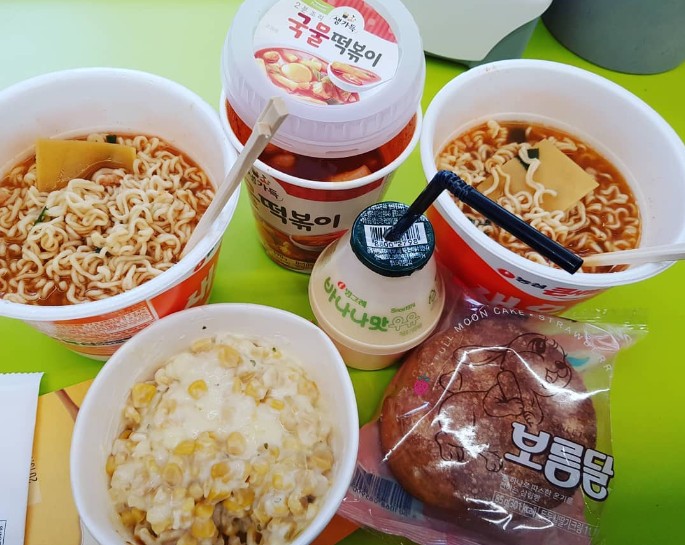
Table of Contents
Why Korean Convenience Stores Are Worth Visiting
A convenience store meal shouldn’t replace every restaurant experience in Seoul, but it can be genuinely useful when:
- You need breakfast before restaurants open.
- You arrive late at your hotel.
- You have only 20 minutes between attractions.
- You want to try several Korean snacks without ordering a full meal.
- You need a mild or familiar option after eating spicy food.
- You’re traveling alone and don’t want to order a large shared dish.
- You need food for a train ride or hotel breakfast.
Convenience stores are especially helpful on busy sightseeing days. You can buy a small meal near a subway station, eat before entering an attraction, or take packaged food back to your accommodation.
For a wider introduction to foods worth trying during your trip, see:
15 Must-Try Korean Foods in Seoul for First-Time Visitors
CU vs. GS25 vs. 7-Eleven: Quick Comparison
There’s no single best convenience store chain for every traveler — the condition, size, location, and current stock of an individual branch usually matter more than the brand name itself.
| Brand | Good Starting Point | Best for Beginners Who Want | Important Note |
|---|---|---|---|
| CU | Triangle kimbap, lunchboxes, sandwiches, desserts | A broad selection of simple meals and snacks | Product availability varies by branch |
| GS25 | Fresh meals, rice dishes, snacks, private-label products | A complete convenience store meal | Check the shelf and refrigerator rather than relying on one viral item |
| 7-Eleven | Coffee, rice meals, snacks, promotional products | A light meal with coffee or dessert | Selection may differ considerably between small and large branches |
CU’s official product listings divide food into categories such as lunchboxes, sandwiches and burgers, rice balls and kimbap, instant food, snacks, ice cream, and drinks, and its official site also promotes the Pocket CU app along with separate 1+1 and 2+1 event listings.
GS25 officially promotes fresh-food products and its YOUUS private-label range. Its Our Neighborhood GS app handles nearby-store pickup, delivery, payment, and product storage — though account requirements and English accessibility for short-term visitors are worth checking separately.
The Korean 7-Eleven website lists product promotions, store search tools, 1+1 and 2+1 listings, and Seven Cafe details — though product availability and facilities still come down to the individual branch.
Practical recommendation: Enter whichever branch looks larger, cleaner, and better stocked. A large branch near an office district, subway station, university, or hotel area will usually give you more choices than a very small store.

Best Korean Convenience Store Foods for Beginners
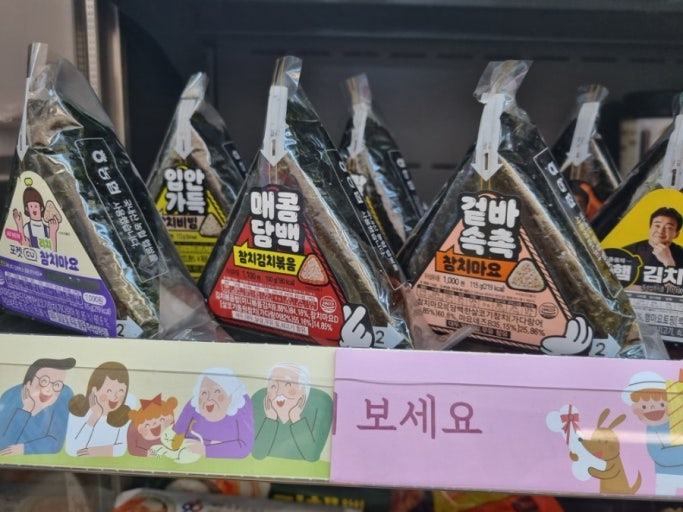
1. Triangle Kimbap
Triangle kimbap is one of the easiest Korean convenience store foods to try. It’s a triangular portion of rice wrapped in seaweed with a filling in the middle.
Common flavor styles include:
- Tuna mayonnaise
- Chicken
- Bulgogi-style meat
- Kimchi
- Spicy pork
- Jeonju bibimbap-style filling
For a first purchase, tuna mayonnaise is usually one of the safest choices. It’s mild, familiar, easy to eat, and doesn’t require a microwave unless the package specifically recommends heating.
Kimchi, spicy pork, and bibimbap-style versions can be much hotter than they appear. Check for red packaging, pepper images, or words such as “spicy,” “hot,” or “buldak.”
The seaweed is packaged separately from the rice to keep it crisp. Follow the numbered arrows on the wrapper instead of tearing it open randomly.
2. Regular Kimbap
Regular kimbap is a longer roll cut into several pieces, usually containing rice, vegetables, egg, and one or more fillings.
It’s a useful choice when you want:
- A quick breakfast
- Food that’s easy to carry
- A meal that doesn’t require much preparation
- Something less soupy than instant noodles
Possible fillings include tuna, ham, egg, vegetables, meat, or spicy ingredients. Don’t assume every vegetable-looking kimbap is vegetarian, since egg, fish cake, meat, or seafood-based seasoning may be included.
Convenience-store gimbap is useful when you need something fast, but freshly prepared rolls can be very different. See our guide to the best gimbap in Seoul if you want to try specialist shops instead.
3. Convenience Store Lunchboxes
A Korean convenience store lunchbox, called a dosirak, usually contains rice with several side dishes — meat, egg, kimchi, vegetables, sausages, dumplings, or fried food, depending on the product.
A dosirak is one of the easiest ways to put together a full Korean convenience store lunch without sitting down at a restaurant.
Before heating one:
- Read the microwave instructions.
- Check whether any sauce packet, plastic lid, foil, or separate side item must be removed.
- Open the film only as instructed.
- Use the listed heating time instead of guessing.
Some side dishes may be spicy even when the main meat is mild, so take a look at the full tray before buying.
4. Cup Noodles
Cup noodles are an iconic Korean convenience store experience, but they’re also one of the easiest foods to choose incorrectly.
Not every Korean ramen is extremely spicy. Beginners should look for:
- Mild soup noodles
- Beef or chicken-flavored broth
- Udon-style cups
- Small cup sizes
- Packaging without large red pepper or flame graphics
Be more cautious with:
- Buldak-style noodles
- Products labeled “hot,” “spicy,” or “extra spicy”
- Dark red packaging
- Challenge-style products
- Large cups when you only want a snack
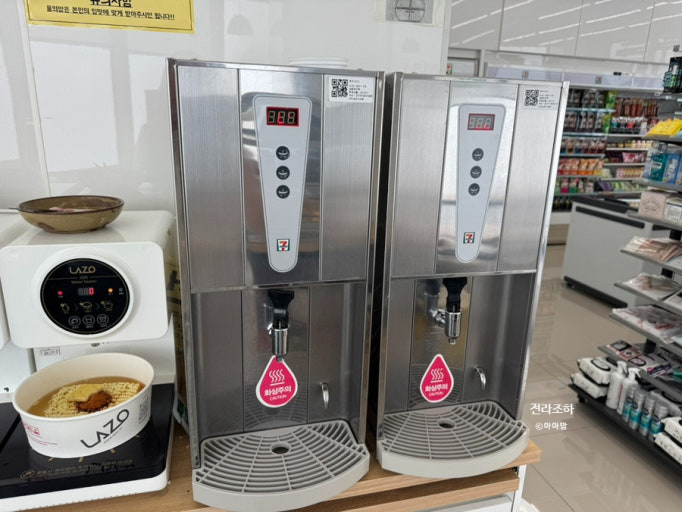
Buy the noodles before using the hot-water station. Open the lid to the indicated line, remove the seasoning packets, follow the package directions, and add water only to the fill line.
5. Tteokbokki Cups
Convenience store tteokbokki usually comes in a microwavable cup containing rice cakes and sauce.
It can be fun to try, but beginners should know two things: Korean rice cakes are much chewier than pasta, and even ordinary-looking tteokbokki sauce may be quite spicy.
Don’t choose it as your only meal if you’re highly sensitive to spice — pair it with mild kimbap, a boiled egg, cheese, or a dairy drink instead.
If you’d rather try tteokbokki made fresh at a restaurant, see:
Best Tteokbokki Places in Seoul for Tourists
6. Dumplings and Hot Snacks
Refrigerated or frozen dumplings can be an easy side dish. Some stores also sell hot-bar-style fish cakes, sausages, fried chicken, or other heated snacks near the counter.
These are useful when rice or noodles don’t feel filling enough, though counter-side hot-food availability depends on the individual branch and time of day.
Check whether the product needs:
- Microwave heating
- Sauce
- A skewer
- Chopsticks
- A spoon
If you’d rather have Korean fried chicken from a dedicated restaurant, see:
Best Korean Fried Chicken in Seoul for First-Time Visitors
7. Sandwiches and Burgers
Convenience store sandwiches and burgers aren’t uniquely Korean, but they’re useful when you need something familiar.
They’re a practical choice for:
- Early departures
- Airport or train travel
- Visitors who don’t eat spicy food
- A meal without soup or strong smells
- Children or cautious eaters
Check the filling carefully — egg, mayonnaise, ham, tuna, cheese, spicy sauce, and sweet sauces are all common.
8. Boiled Eggs and Small Protein Sides
Boiled eggs, smoked eggs, chicken breast, cheese, yogurt, and small sausage products can turn a light snack into a more balanced meal. They pair particularly well with cup noodles, triangle kimbap, salads, sandwiches, or tteokbokki.
Don’t microwave eggs unless the package explicitly says the product is designed to be heated that way.
9. Korean Desserts and Ice Cream
Convenience store desserts change frequently, but common categories include cream bread, roll cakes, castella-style cakes, mochi-style desserts, puddings, yogurt, ice cream bars and cups, and seasonal collaboration desserts.
Viral desserts can sell out quickly — treat them as a bonus rather than building your entire visit around one item.
10. Korean Drinks
Beginner-friendly drinks may include banana-flavored milk, bottled coffee, sweet rice drinks, fruit drinks, yogurt drinks, barley tea, corn tea, and sparkling water.
Check whether a coffee is sweetened — many canned and bottled coffee products contain milk and sugar even when the packaging looks similar to black coffee.
What to Eat at CU
CU is a good first stop when you want to compare several meal categories in one place. Its official product pages organize food into lunchboxes, sandwiches and burgers, rice balls and kimbap, instant food, snacks, ice cream, and drinks.
A beginner-friendly CU meal could include:
- Tuna-mayo triangle kimbap
- A mild meat or egg lunchbox
- Regular kimbap
- Dumplings
- A sandwich
- Yogurt or a cream-based dessert
- Get Coffee (CU’s own in-house coffee brand) or banana-flavored milk
Best CU Strategy for First-Time Visitors
Don’t start by hunting for one famous limited-edition product — inspect the refrigerated rice and meal section first, then build a simple combo:
- Main: Triangle kimbap, regular kimbap, sandwich, or lunchbox
- Side: Egg, dumplings, yogurt, or a small snack
- Drink: Water, tea, milk, or coffee
The Pocket CU app can help with store and product info, though English support isn’t guaranteed for every visitor — treat it as a nice-to-have, not your main way of finding food.
What to Eat at GS25
GS25 is a strong choice when you want to build a full convenience store meal. Start with the fresh-food refrigerators and look for rice dishes, lunchboxes, kimbap, sandwiches, and YOUUS-brand products, GS25’s own private label line.
A beginner-friendly GS25 meal could include:
- Mild triangle kimbap
- A rice-based lunchbox
- Regular kimbap
- A sandwich or burger
- Cup noodles with a boiled egg
- A YOUUS snack or drink
- A refrigerated dessert
Best GS25 Strategy for First-Time Visitors
Look for food that clearly shows the main ingredients through a photograph or transparent package, and try not to grab several heavy items at once — a large lunchbox, a full-size ramen, a sausage, a fried snack, and a dessert together adds up to a lot more food than it looks like on the shelf.
The Our Neighborhood GS app covers a lot of ground — pickup orders, delivery, payment — but it’s built primarily for local, registered users, so don’t count on it working smoothly during a short visit.
What to Eat at 7-Eleven
Korean 7-Eleven branches can be useful for coffee, light meals, rice products, snacks, and promotional items.
A beginner-friendly 7-Eleven meal could include:
- Triangle kimbap
- A lunchbox or rice meal
- A sandwich
- Mild cup noodles
- A pastry or dessert
- Seven Cafe coffee, recently relaunched with a new bean blend in late 2025
- A promotional snack or drink
Best 7-Eleven Strategy for First-Time Visitors
Check the coffee and food sections together — a sandwich, rice item, or pastry paired with Seven Cafe coffee works well as breakfast or an afternoon break.
The official Korean website lists monthly promotions and store-search tools, but a product showing up online doesn’t guarantee it’s sitting on the shelf at the branch you actually walk into.
Easy Convenience Store Meal Combinations
Quick Korean Breakfast Tuna-mayo triangle kimbap Boiled egg Banana-flavored milk or bottled tea
This combo is mild, portable, and easy to eat before a morning attraction.
For more morning meal options, see:
Best Korean Breakfast in Seoul: 10 Early-Opening Local Restaurants
Simple Lunch Convenience store lunchbox Water or unsweetened tea Small yogurt or fruit cup
Choose this Korean convenience store lunch option when you need a complete meal but don’t have time to wait at a restaurant.
Mild No-Ramen Meal Regular kimbap Dumplings Yogurt drink
Good for travelers who want Korean food without any spicy soup involved.
Late-Night Hotel Meal Small cup noodles Triangle kimbap Boiled egg Bottled water
Go with a small ramen cup first — combined with rice, a large cup can be surprisingly filling.
Spicy Snack Combination Tteokbokki cup Mild kimbap Cheese or boiled egg Dairy or yogurt drink
Dairy can take some of the edge off tteokbokki’s spicy sauce, though it won’t make a genuinely hot batch completely mild.
No-Microwave Combination Sandwich Triangle kimbap that doesn’t require heating Yogurt Bottled drink
Handy when there’s no customer microwave, it’s already busy, or you’re taking the food elsewhere.
First Convenience Store Dessert Break One packaged dessert Coffee or tea A small savory snack
Skip buying several cream desserts at once — they’re often richer and sweeter than they look.
How to Order, Heat, and Eat Convenience Store Food
Take a Lap Around the Store First
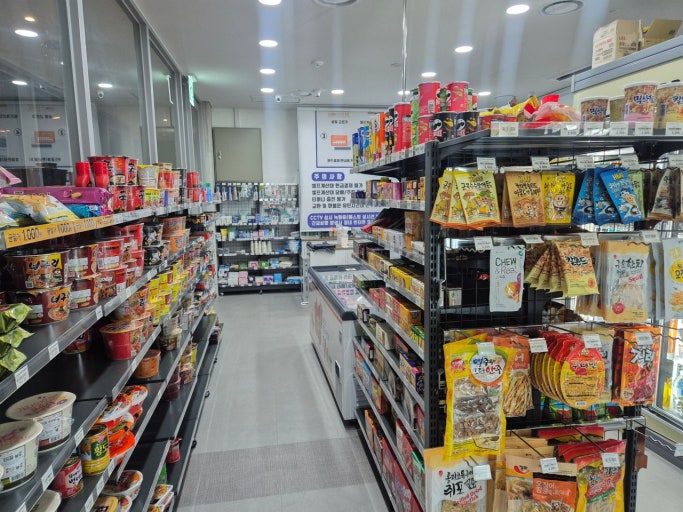
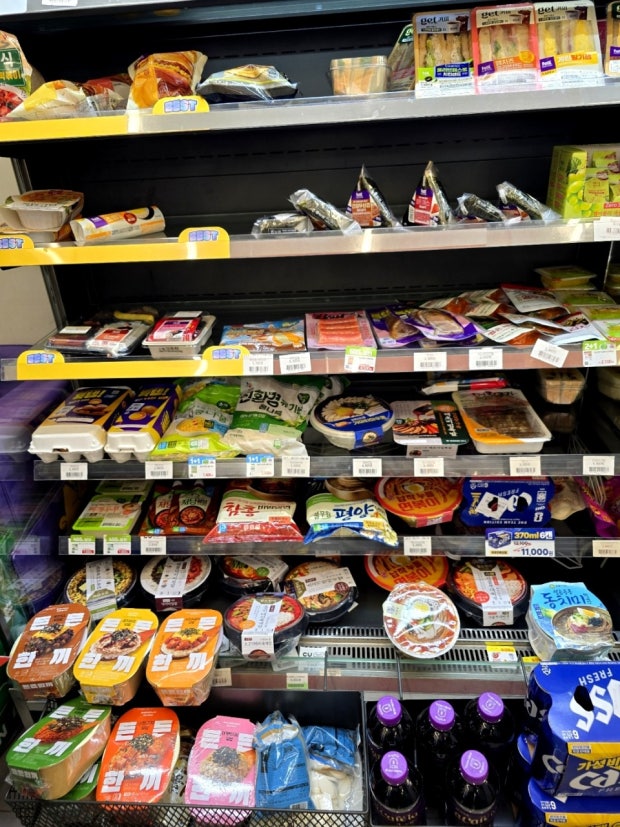
Convenience stores often split food into several areas — refrigerated meals, instant noodles, snacks, drinks, frozen food, counter-side hot food, and desserts. Walk through the whole store once before you fill your basket. You’ll often spot a better option a few aisles over from wherever you first stopped.
Double-Check the Price Tag Matches the Product
Packaging can look nearly identical between items with different prices or promotions, so take a second to confirm the shelf label you’re reading actually belongs to the product in your hand.
Always Pay Before You Open or Heat Anything
This is one of the most important habits for first-time visitors: pay first, then use the microwave, open the package, or pour hot water. Preparing food before paying isn’t how it works here.
Grab Utensils Before You Sit Down
Depending on what you buy, you might need chopsticks, a spoon, a fork, a straw, or a small bag. These aren’t always inside the package — they may be sitting near the microwave, offered at the counter, or something you need to ask for. A few useful phrases:
- Jeonja-reinji eodi isseoyo? — Where is the microwave?
- Igeo maewoyo? — Is this spicy?
- Sutgarak juseyo. — A spoon, please.
- Jeotgarak juseyo. — Chopsticks, please.
Read the Package Before You Microwave It
Don’t guess the microwave time. Check whether the lid needs to come off, whether the film should be partly opened, whether a sauce packet needs removing first, and whether the container is even microwave-safe. Never microwave metal, foil, or anything the package doesn’t clearly mark as microwave-safe.
Take Your Time at the Hot-Water Station
For cup noodles: pay first, open the lid only as far as instructed, add the seasoning as directed, fill to the marked line, close the lid, and wait out the stated time. The water and the cup can get extremely hot, so don’t overfill it and carry it carefully.
Check Whether You Can Actually Eat There
Some branches have tables or window seating; plenty of others are takeaway-only. Facilities vary from store to store, so look for a visible eating area — or just ask a staff member — before opening your food inside.
For more help with Korean counters, kiosks, and payment situations in general, see:
How to Order Food in Korea: A First-Timer’s Guide to Menus, Kiosks, and Payment
How Korean Convenience Store Deals Work
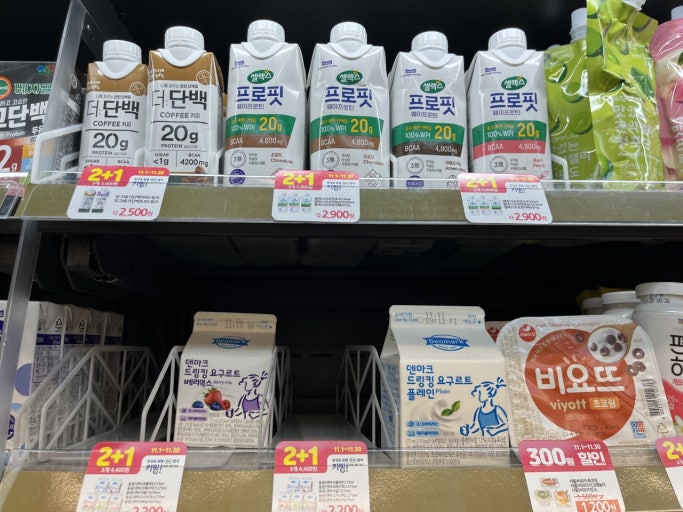
Korean convenience stores frequently use promotional labels such as:
- 1+1: Buy one and receive one additional item
- 2+1: Buy two and receive one additional item
The free item usually needs to be part of the same promotion — don’t assume any product of the same brand or size automatically qualifies. Before you head to the register, check:
- The exact flavor
- Package size
- Promotion period
- Shelf label
- Whether mixed flavors are allowed
- Whether all required items were scanned
Common Promotion Mistake
The most common mix-up: a traveler sees a 2+1 label, picks up two items, pays, and walks out — without realizing a third item should have come along for free. A 2+1 deal means taking three qualifying products to the register, not two; the saving comes from the extra item you didn’t grab, not a discount on the two you did.
If you’re ever unsure, just show the items to the cashier before paying and ask whether the promotion applies.
Some apps let you save promotional items for later pickup instead of carrying them around right away, but these features are generally built for registered local users. Unless you’ve already confirmed the app works for you, it’s simplest to just take everything at the register.
Foods and Situations Beginners Should Avoid
A few small assumptions trip up a lot of first-time visitors. Here’s what’s worth keeping in mind.
Skip the Extremely Spicy Stuff for Your First Meal
Don’t reach for challenge-style ramen or buldak products just because they’re famous online. Try a small portion only after you already have water, a mild rice item, egg, cheese, a dairy drink, or something else nearby that you know you can handle.
If spice just isn’t for you at all, it’s worth building your restaurant meals around dependable options rather than gambling on packaging every time:
Best Non-Spicy Korean Restaurants in Seoul for First-Time Visitors
Don’t Build Your Whole Visit Around One Viral Product
Limited-edition items sell out, get discontinued, or only show up at certain branches. Shop by category, not by chasing one product name.
Opening Hours Vary — Check Before You Count on One
A convenience store near your hotel may close overnight or run different late-night procedures. Check when you arrive rather than assuming it’ll be available later.
Not Every Store Has Somewhere to Sit
Plenty of convenience stores are designed for takeaway only, even ones with a microwave. Don’t assume a dining area exists until you actually see one.
Buy Chilled Food Close to When You’ll Actually Eat It
Lunchboxes, sandwiches, kimbap, dairy products, and desserts shouldn’t sit unrefrigerated through a long sightseeing day. Buy them shortly before you plan to eat.
“Vegetable” Doesn’t Always Mean Vegetarian
Products that look vegetable-based may still contain egg, fish cake, meat stock, seafood seasoning, mayonnaise, or other animal-derived sauces. If you’re vegetarian, halal, or managing allergies, rely on the ingredient list and certifications rather than appearance alone.
Common Convenience Store Mistakes
1. Choosing Food Only by Package Color
Bright packaging doesn’t always signal flavor clearly. Use a translation app, or check the food photo and ingredient list before deciding.
2. Buying Too Much Food
A lunchbox, ramen, kimbap, hot snack, and dessert together can easily add up to more than one meal. Start with one main dish and one side, and go back for more if you’re still hungry.
3. Throwing Everything Into One Bin
Waste stations differ by store — look for separate areas for general waste, liquids, food waste, bottles, cans, and packaging, and ask staff if the labels aren’t clear.
How to Add a Convenience Store Stop to Your Seoul Itinerary
No matter which part of Seoul you’re exploring, convenience store food is never more than a few minutes away. Here’s how it fits naturally into a few popular itinerary stops — as a short, practical break between major meals and attractions, not a replacement for them.
Gyeongbokgung, Bukchon, and Ikseondong
Buy a light breakfast before visiting Gyeongbokgung Palace, especially if you plan to arrive near opening time.
Recommended combination:
- Triangle kimbap
- Boiled egg
- Bottled tea or water
After sightseeing, move on to a proper café or restaurant in Bukchon or Ikseondong rather than using the convenience store as your only food experience.
Best Cafes Near Gyeongbokgung Palace: Hanok, Coffee, and Dessert Stops
Best Cafes in Ikseondong Hanok Village for First-Time Visitors
Myeongdong and Namdaemun Market
A convenience store can provide water, breakfast, or a mild snack before visiting Namdaemun Market.
It can also be useful after a spicy market meal when you want yogurt, milk, ice cream, or a simple dessert.
What to Eat at Namdaemun Market: Food Guide for First-Time Visitors
Just don’t let convenience store food replace a planned Korean barbecue dinner — save your appetite for the real thing. If you haven’t picked a spot yet:
Best Korean BBQ Near Myeongdong Station for First-Time Visitors
Gwangjang Market and Dongdaemun
Use a convenience store for bottled water or a small breakfast before visiting the market.
After trying several market foods, avoid buying a full lunchbox immediately — a coffee, tea, or dessert may be enough.
What to Eat at Gwangjang Market for First-Time Visitors
Seongsu
Seongsu is better known for cafés, shopping, pop-ups, and converted industrial spaces. A convenience store is most useful here for water, a small snack, or food before heading back to your hotel.
Best Cafes in Seongsu for First-Time Visitors
Hotel Areas and Late-Night Arrivals
A convenience store near your accommodation is useful for:
- Water
- A late-night meal
- Breakfast for the next morning
- Coffee
- Toiletries
- Snacks for a train or airport journey
Check its opening hours and facilities during the day instead of waiting until late at night.
Final Tips for Choosing Korean Convenience Store Food
Your first Korean convenience store meal doesn’t need to be adventurous.
Start with a mild rice item, one side dish, and a drink. Once you’re comfortable with the packaging and heating system, branch out into tteokbokki, stronger ramen, seasonal desserts, and promotional products.
The most reliable approach:
- Choose the nearest well-stocked branch.
- Check the refrigerated meal section first.
- Pick one main item and one side.
- Look carefully for spice indicators.
- Pay before heating or opening anything.
- Follow the package instructions.
- Confirm that seating is available before eating inside.
- Treat limited-edition products as optional discoveries.
CU, GS25, and 7-Eleven all offer enough variety for a quick meal. For most travelers, the best convenience store is simply the branch that has the food, facilities, and opening hours they need at that moment.
Frequently Asked Questions
Which Korean convenience store is best for food?
CU, GS25, and 7-Eleven all sell rice dishes, snacks, drinks, and quick meals. The size and stock of the individual branch usually matter more than the brand. Choose a larger, well-stocked store rather than traveling across Seoul for one chain.
What is the safest Korean convenience store food for beginners?
Tuna-mayo triangle kimbap, regular kimbap, a mild lunchbox, sandwiches, boiled eggs, dumplings, yogurt, and banana-flavored milk are approachable starting points. Check the package because ingredients and spice levels vary.
Do Korean convenience stores have microwaves and hot water?
Many branches provide a microwave or hot-water station, but facilities vary. Some stores have seating, while others are takeaway-only. Check inside the branch before buying food that requires preparation.
Can I use an international credit card?
International cards may work at many locations, but acceptance is not confirmed for every store, card network, or transaction. Carry a backup payment method and check with the cashier if a payment is declined.
What do 1+1 and 2+1 mean?
1+1 generally means you receive two qualifying products while paying for one. A 2+1 promotion generally requires you to take three qualifying products, with one included at no additional charge. Check the exact shelf label because flavors, sizes, and promotion periods may differ.
Is Korean convenience store food halal or vegetarian?
Do not assume a product is halal or vegetarian based on its name or appearance. Rice, vegetable, and noodle products may contain meat, fish, seafood seasoning, egg, or animal-derived sauces. Look for clear certification and ingredient information.
Can I eat convenience store food inside the store?
Only some branches provide tables or designated eating areas. Do not assume indoor dining is allowed. Look for visible seating or ask the staff before opening your food.
How This Guide Was Checked
This guide was prepared by H. Jung, the Korea-based editor of Seoul Plate. Convenience store food categories, basic preparation methods, promotional formats, and brand-specific information were reviewed using current information from CU, GS25, 7-Eleven Korea, and product information available in Korea. Individual products, prices, promotions, and stock vary significantly by branch and season, so this guide focuses on food types and shopping strategies rather than guaranteeing specific items.